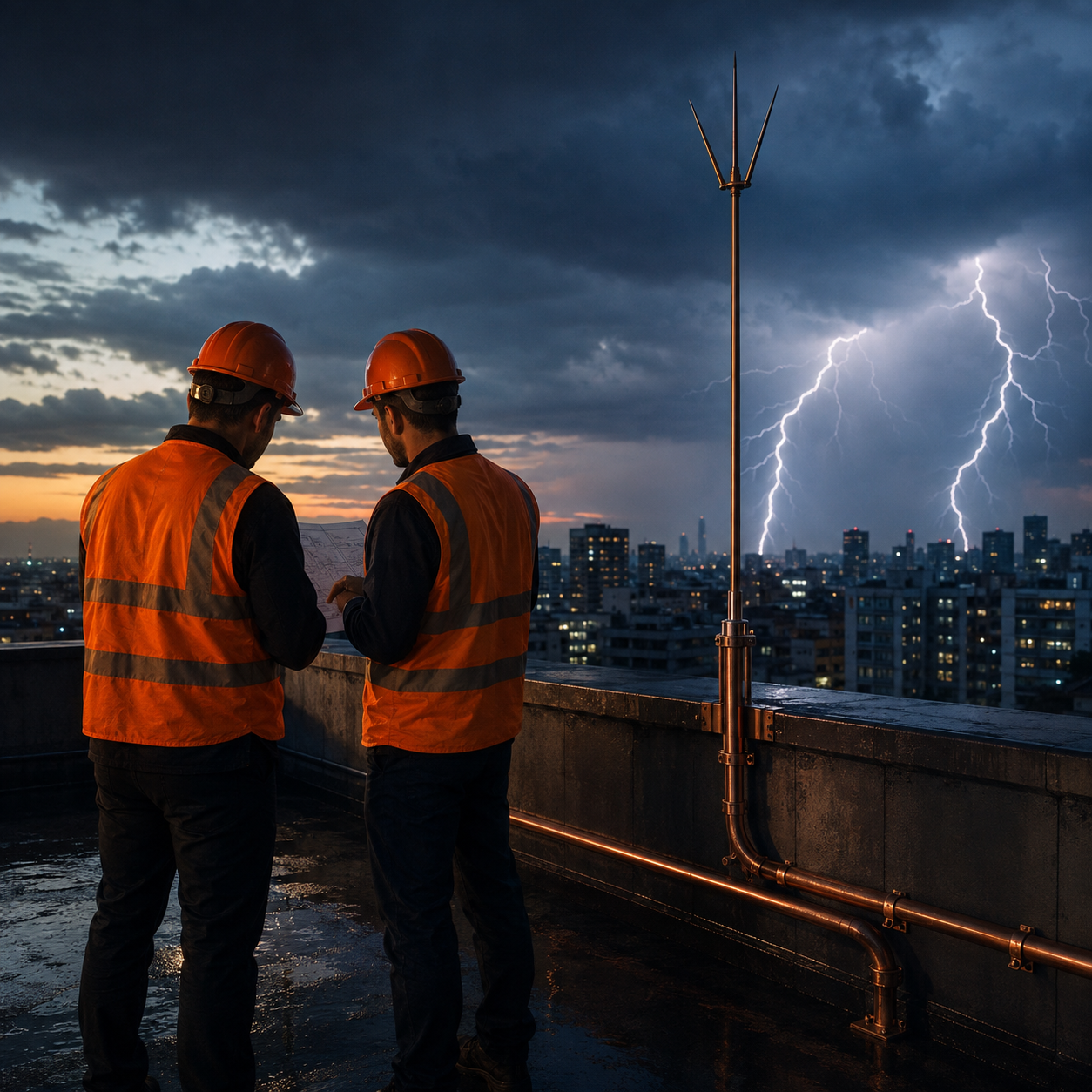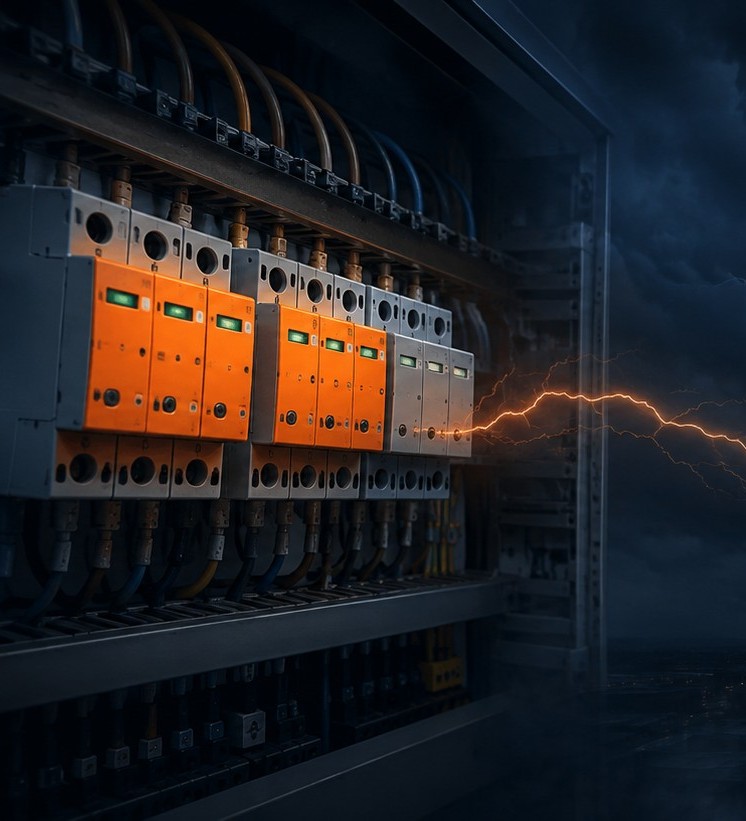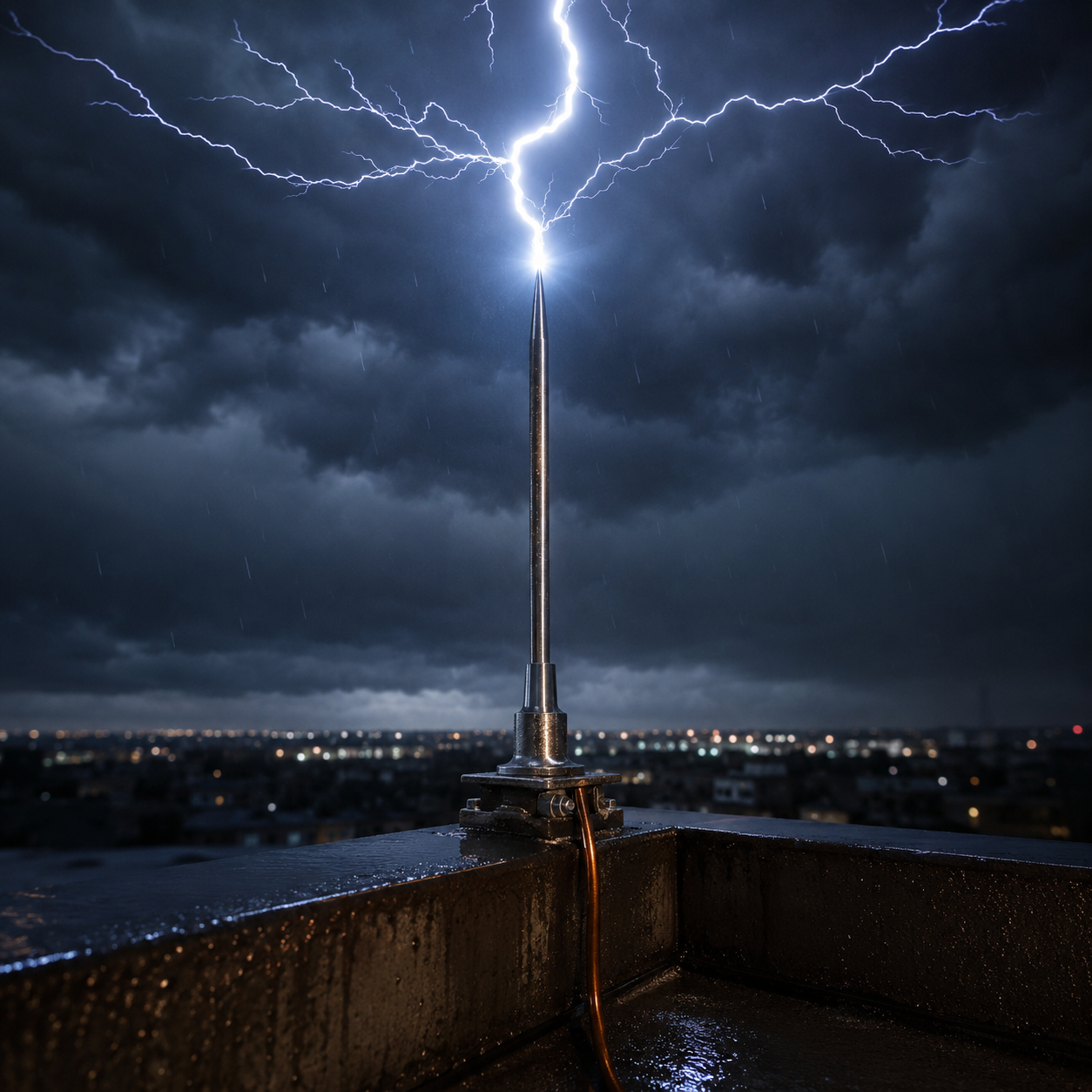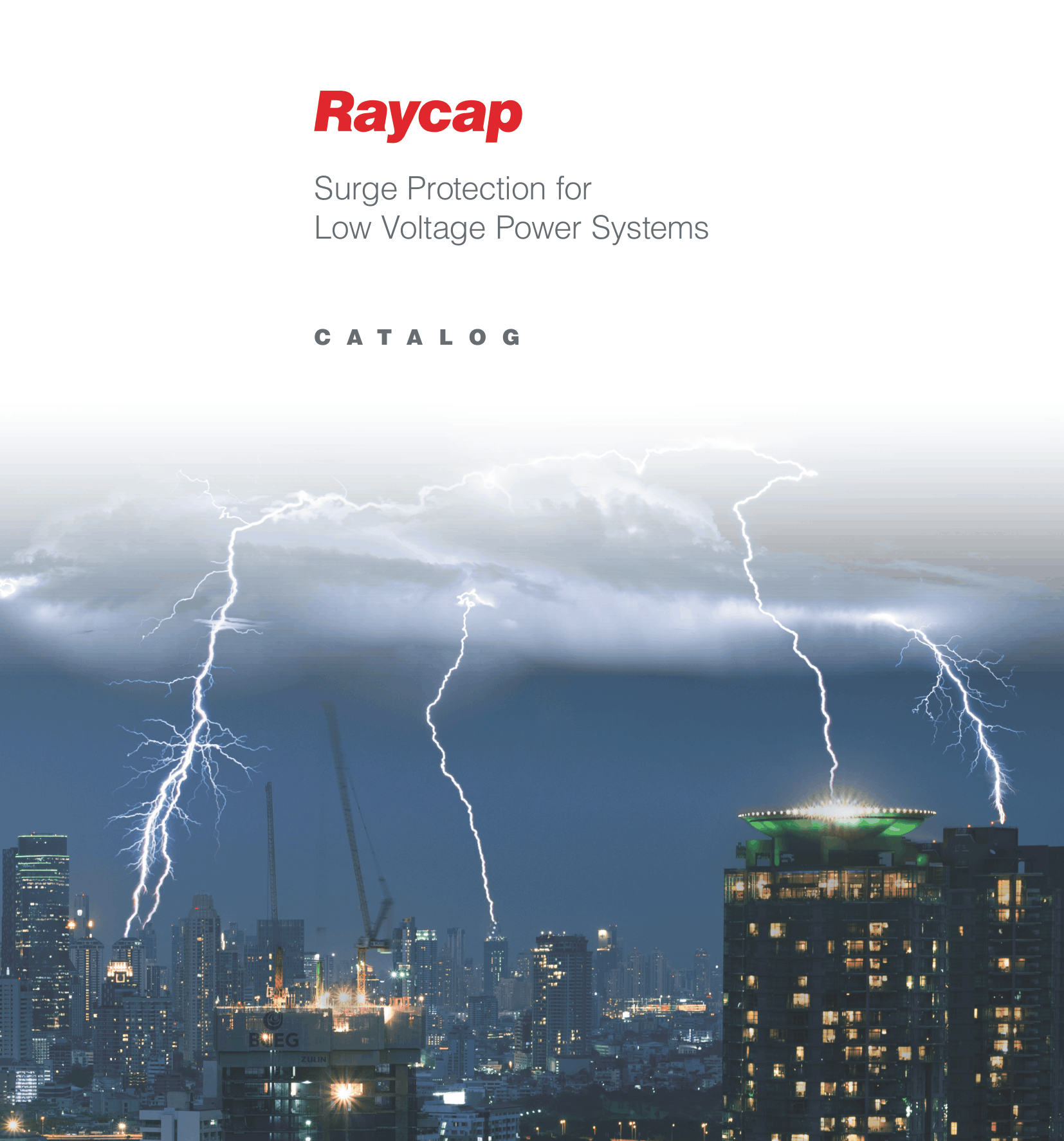
Renewable energy facilities are the investment type most exposed to lightning: they sit on open terrain, at the highest point of their surroundings, and are typically spread out over several kilometres. What's more, every outage means directly lost production.
Why Is This So Critical?
A solar power plant, by its very nature, spreads across a wide area and lies open to the sky. A wind turbine, meanwhile, is the highest point on its site — with a tower height exceeding a hundred metres, it all but invites a strike. In both cases, the structure is not a building to be protected but a machine that generates revenue.
What makes protection genuinely difficult on these sites is the DC side. On the AC grid, current passes through zero every half-cycle, so any arc that forms is naturally extinguished. DC has no such zero crossing; the arc does not self-extinguish. For this reason, a wrongly selected DC SPD can turn into a fire source rather than a source of protection. This is a known cause of fires on solar and wind sites.
Another challenge is that personnel are not continuously present on site. If nobody sees an SPD's indicator turn red once it has reached the end of its service life, the plant can keep generating unprotected for months.
Direct Loss of Revenue
Every inverter that goes offline means energy that is neither generated nor sold. Downtime translates directly into lost revenue.
Fire Risk on the DC Side
Because the arc does not self-extinguish in DC, an SPD with inadequate disconnection behaviour is a serious hazard.
High Exposure
Open terrain, tall towers, and a large surface area — all three raise the likelihood of a direct strike and of induction.
Remote, Unstaffed Sites
A fault can go unnoticed for days. A monitoring-free protection system is, in practice, no protection at all.
Where Is Protection Installed on Site?
On an energy plant, protection is built as an unbroken chain from the panel to the grid connection point. Any missing link weakens the whole chain.
The first point where the strings coming from the panels are combined, and the most critical protection stage on the DC side. Selection comes down to two questions: is there external lightning protection on site (Type 1 / Type 2), and what is the system voltage (1100 V / 1500 V DC)?
In boxes with many strings, the 5Y models — which protect two or three strings with a single device instead of a separate SPD per string — give a clear saving in panel space and cabling. The 5Y family, however, is for 1100 V DC only; 1500 V sites use the standard series.
The inverter is the most expensive and most sensitive piece of equipment on the plant. It needs protection on both the DC input and the AC output; protecting only one side counts for nothing against a surge arriving from the other.
Pre-enclosed solutions speed up on-site installation and remove the need to design a panel from scratch.
The point where the plant connects to the grid is exposed to surges arriving from both the site and the grid itself. Solutions that maintain continuity and keep protecting after successive strikes are preferred here — stopping the plant to swap out a module is not an option.
Wind turbines are distinctive enough a structure to have their own lightning protection standard (IEC 61400-24). The current path starts at the air terminals on the blades and is carried to earth through the internal blade conductor, the hub, the nacelle, and the tower.
On the electrical side, the points requiring protection are the pitch and yaw systems, the generator, the power converter, condition-monitoring sensors, and the communication lines running through the tower. The control electronics inside the nacelle are the hardest piece of equipment on site to reach — a fault here means the cost of a crane and a labour crew.
This is the plant's nervous system. Data and measurement cables running for kilometres can be even more exposed to induction than the power lines themselves. String-monitoring cards, weather stations, and metering lines all need their own, separate protection.
Just as important is monitoring the status of the SPDs themselves. Remote-contact and monitoring units report a module that has reached end of life back to the control centre, so the plant does not run unprotected without anyone knowing.
On large sites, earthing is not a matter of a single rod but of network design. Panel support structures, combiner boxes, inverter plinths, and the substation must all be tied into one common equipotential network. Otherwise a potential difference builds up between points, and the protection devices cannot do their job.
Soil resistivity varies from site to site, and even from point to point within the same site. For this reason, design begins with measurement; and because ground moisture changes with the seasons, periodic re-measurement is also required.
Featured Solutions for Renewable Energy
The ProTec PV Family
Type 1 and Type 2 options for 1100 V and 1500 V DC systems, single- and multi-string configurations, and pre-enclosed box solutions. All are developed specifically for photovoltaic systems under EN 50539-11 and IEC/EN 61643-31 — standards that general-purpose DC SPDs are not subject to.
Strikesorb and Rayvoss
With no fuse and no thermal disconnector, they keep working after successive strikes, and swapping a module does not require stopping the plant. On remote, unstaffed sites this cuts maintenance cost directly.
Protection Status Monitoring
If nobody notices an SPD reaching the end of its service life, the plant keeps generating unprotected. Monitoring units carry protection status into SCADA, so you know exactly where intervention is needed before anyone sets foot on site.
How We Proceed for Your Site
- Review of site and project data Installed capacity, system voltage (1100/1500 V DC), combiner architecture, inverter type, and site topography are assessed.
- Risk assessment and protection level Risk is calculated under TS EN / IEC 62305-2; for wind plants, IEC 61400-24 is also taken into account.
- Coordinated design of the DC and AC sides String, inverter, substation, and SCADA lines are planned as a single protection chain.
- Earthing network design and installation Soil resistivity is measured, the equipotential network is built, and connections are made permanent by exothermic welding.
- Measurement, reporting, and monitoring setup Commissioning measurements are reported, and protection status is tracked continuously via the monitoring system.
Let's Draw Up a Protection Plan for Your Plant
Solar or wind — let's identify together where the risk lies on your site. Contact us for a project review and a preliminary assessment.