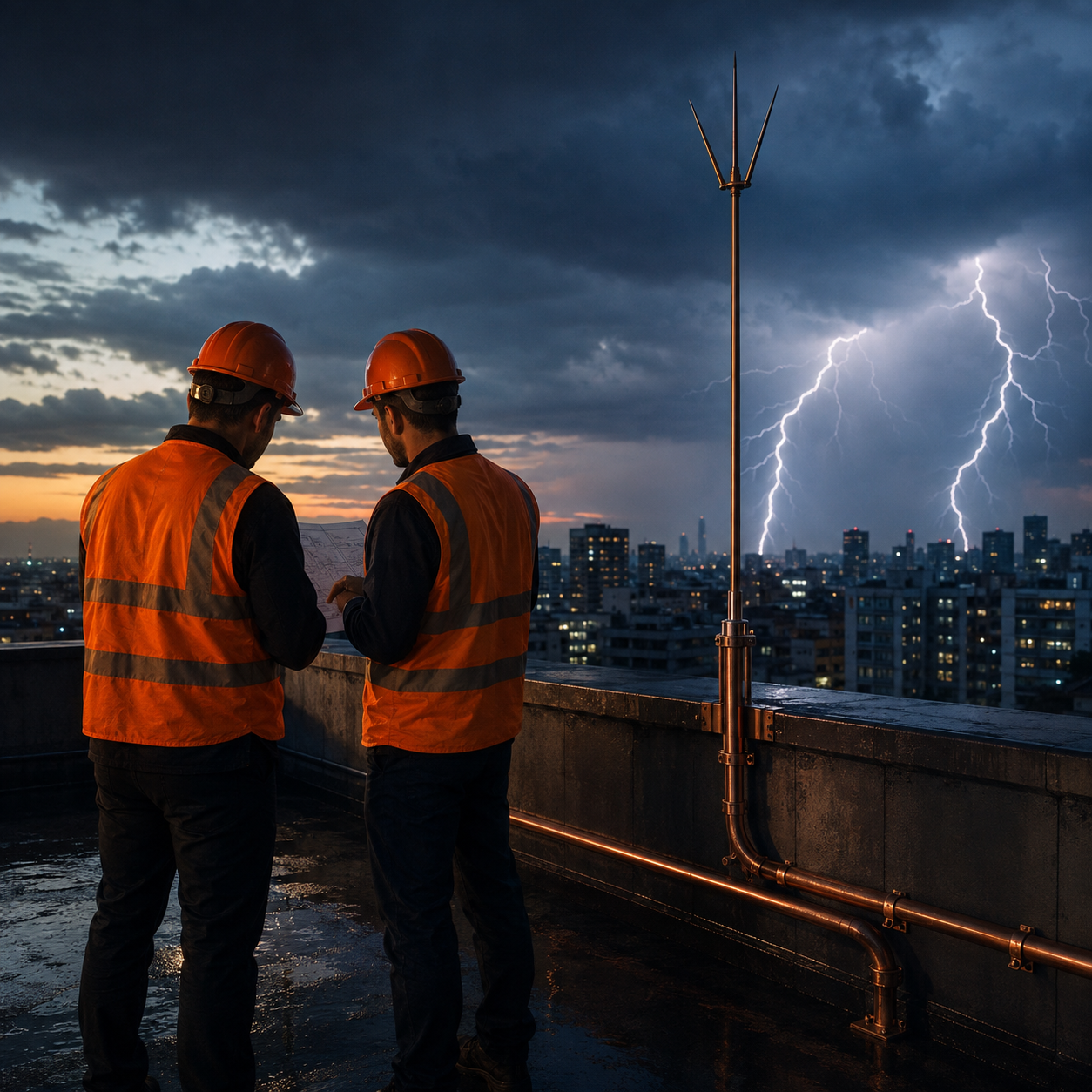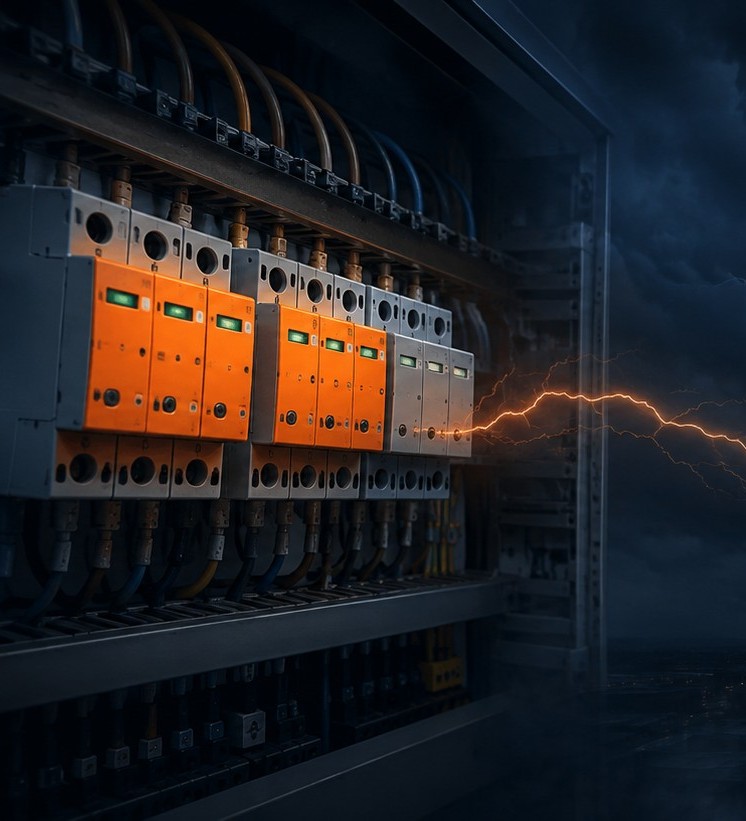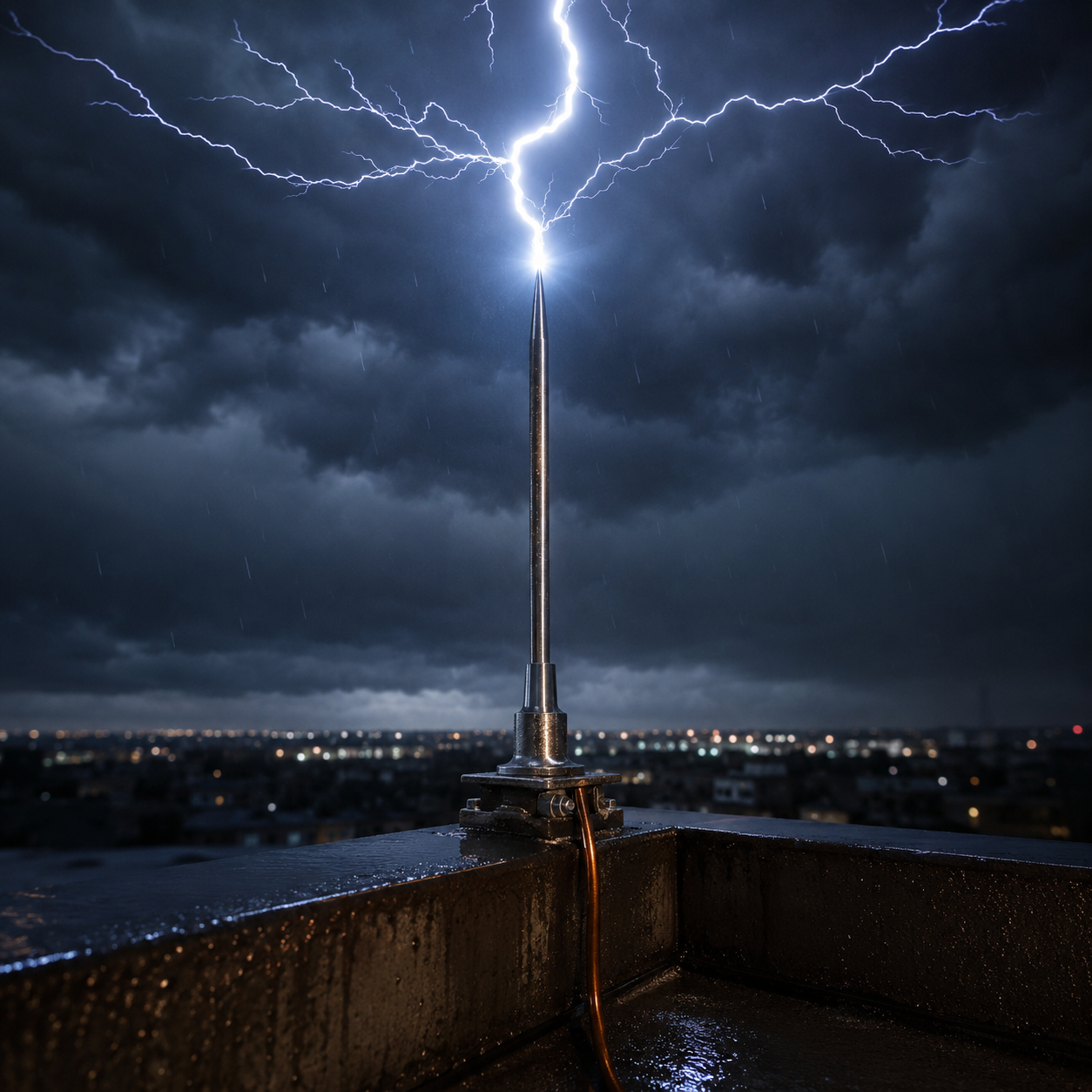
Every facility carries a different lightning risk; the protection therefore cannot be the same either. A solution that is acceptable in an office building creates a serious risk in a facility with an explosive atmosphere. In the same way, a system designed for a standard building will not deliver the expected protection at a solar plant spread over a wide area.
At Yılkomer, every project begins by assessing the physical and technical characteristics of the facility together. Below you will find the main application areas where the standard approach is not enough and dedicated engineering is required.
Our Specialist Application Areas
Solar Power Plants (PV)
A solar plant forms a conductive structure spread over a wide area, which increases both the probability of a direct strike and the voltages induced in the cable routes. The protection design has to position the air termination system without casting shade on the panels and while maintaining the separation distance, bond the panel mounting structure, and protect the DC side with SPDs suited to its own characteristics. In DC circuits a wrongly selected SPD creates a fire risk instead of providing protection.
Wind Power Plants
Wind turbines are, by their very structure, systems that attract lightning; the question is not whether they will be struck but what happens when they are. The continuity of the current path running from the receptors on the blade through the nacelle and down the tower, the transfer of current across the rotating connections, and the earthing network at the base of the tower are all designed together. The control panels and communication lines are protected separately. You can review the Silivri wind farm application as one of our completed projects in this field.
Facilities Containing Flammable, Explosive and Chemical Substances (ATEX)
In these facilities the real danger is not the current itself but a single spark. For this reason the air termination system is usually arranged so that it does not touch the structure — using catenary wires or free-standing masts. At tank farms, equipotential bonding, static electricity earthing and isolating spark gaps on gas lines are indispensable. The design is handled together with the ATEX zone classification of the facility.
Security Systems
Outdoor cameras, card-access units and barriers are exposed to surges through both the power line and the data line. Because a camera mast is often the highest point in its surroundings, it also carries the risk of a direct strike. Protection is built in three layers: earthing of the mast, an SPD on the supply line, and a signal SPD on the data/PoE line. In systems where only the power side is protected, the damage comes through the data line.
LED Lighting Systems
The driver boards of LED luminaires are sensitive to surge voltage and, in road, site, stadium or park lighting, they are directly exposed to surges arriving over long supply lines. SPDs applied per luminaire or per group of poles significantly reduce individual luminaire failures and the maintenance cost that comes with them. In large-area lighting installations this protection is one of the items that pays for itself fastest.
Hospitals
In hospitals two things are critical at the same time: patient safety and continuity of service. Imaging equipment, operating theatre equipment and intensive care systems represent both a high capital value and a failure that can have immediate consequences for life. In medical locations, equipotential bonding is subject to far stricter rules than in other building types; the SPD design must comply with those rules and be coordinated and monitorable.
Why Is a Custom Solution Necessary?
Four typical situations where a standard approach falls short:
- When the structure geometry is unusual — Large open sites, very tall structures, systems containing rotating parts.
- When the environmental risk is high — Explosive atmospheres, chemical substances, facilities with a high fire load.
- Kesintisizlik kritikse — Hastane, veri merkezi, üretim hattı; kaybın cihaz bedelinden büyük olduğu yerler.
- When the electrical architecture is non-standard — DC systems, PoE supply, long field signal lines.
How We Work
- Site survey. Site survey.
- Risk assessment. The protection level is determined under TS EN 62305-2, taking into account any additional sector-specific standards.
- Custom system design. The air termination, down conductor, earthing, equipotential bonding and SPD layers are configured specifically for the facility.
- Material selection and supply. Any special products the application requires are sourced from our global partners.
- Installation. Installation is carried out by teams familiar with the site conditions, within the framework of the occupational safety rules.
- Measurement, reporting and periodic inspection. The system is documented and an inspection schedule is drawn up.