Related Products
Our main products used in equipotential bonding systems

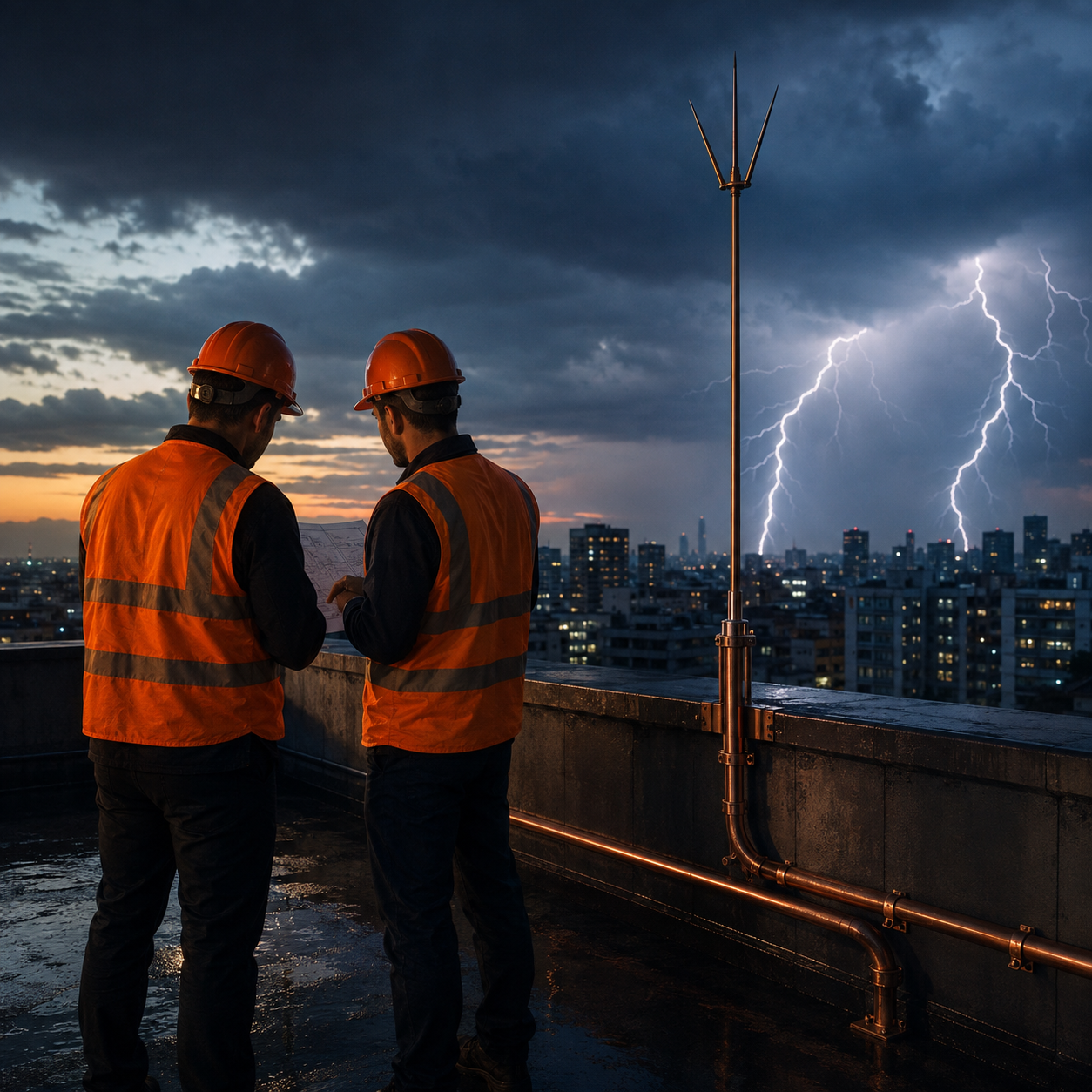
During a lightning strike the real damage is caused not by the current itself, but by the potential difference that arises between different points of the structure. As the current discharges into the earth, the voltage of the earthing system rises to thousands of volts in an instant. If a water pipe, cable tray or data line inside the structure is still at its original potential at that moment, the difference looks for the shortest path to discharge — and that path often runs through a piece of equipment or through a person.
Equipotential bonding is done precisely to eliminate this difference. By connecting all conductive parts inside the structure to a common potential, it ensures that they all rise together at the moment of the strike. If no difference arises, no flashover occurs.
Alongside supplying equipotential bonding equipment, Yılkomer also carries out the design and installation in accordance with the standards.
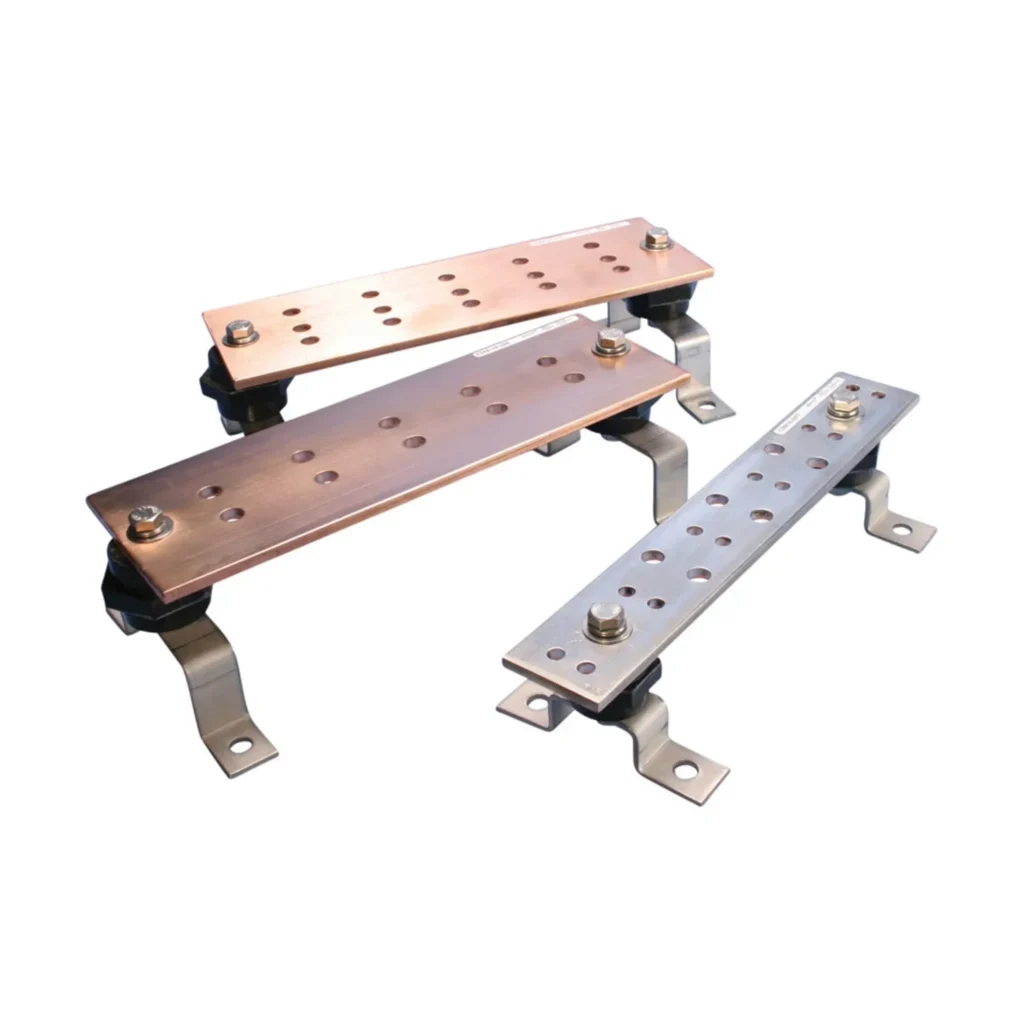
This is the centre of the system; it is usually located at the building entrance, at the point closest to the earth termination system. The earthing conductor, the down conductors of the external lightning protection system, the protective conductor of the electrical installation and every metal service entering the structure all come together here. A main bar placed in the wrong position lengthens the bonding conductors unnecessarily and reduces the effectiveness of the system.
In tall buildings and large facilities a single bar is not enough. Local bars positioned on each floor, in switchgear rooms, plant rooms and wet areas collect the metal parts in that zone locally and carry them to the main bar. This staged arrangement keeps the bonding conductors short.
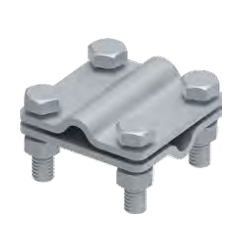
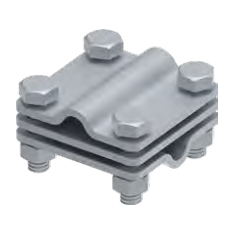
Pipework, cable trays, ventilation ducts and metal structural elements are connected to the bars with conductors of appropriate cross-section and pipe clamps. A clamp fitted without first removing the paint, rust and insulating layer at the contact point looks complete but electrically it does not exist.
Some systems cannot be connected directly to earth — natural gas lines and cathodically protected pipelines are the main examples. At these points an isolating spark gap is used: under normal operation it keeps the two sides electrically separate, while during a lightning strike it becomes conductive and closes the potential difference.
Our main products used in equipotential bonding systems
Tell us about your project and we will get back to you shortly.
Your calculation is ready. Leave your contact details and your risk assessment will appear right away.
Your answers from the tool have been added to your request automatically. Leave your contact details and we will confirm the recommendation and prepare your quote.