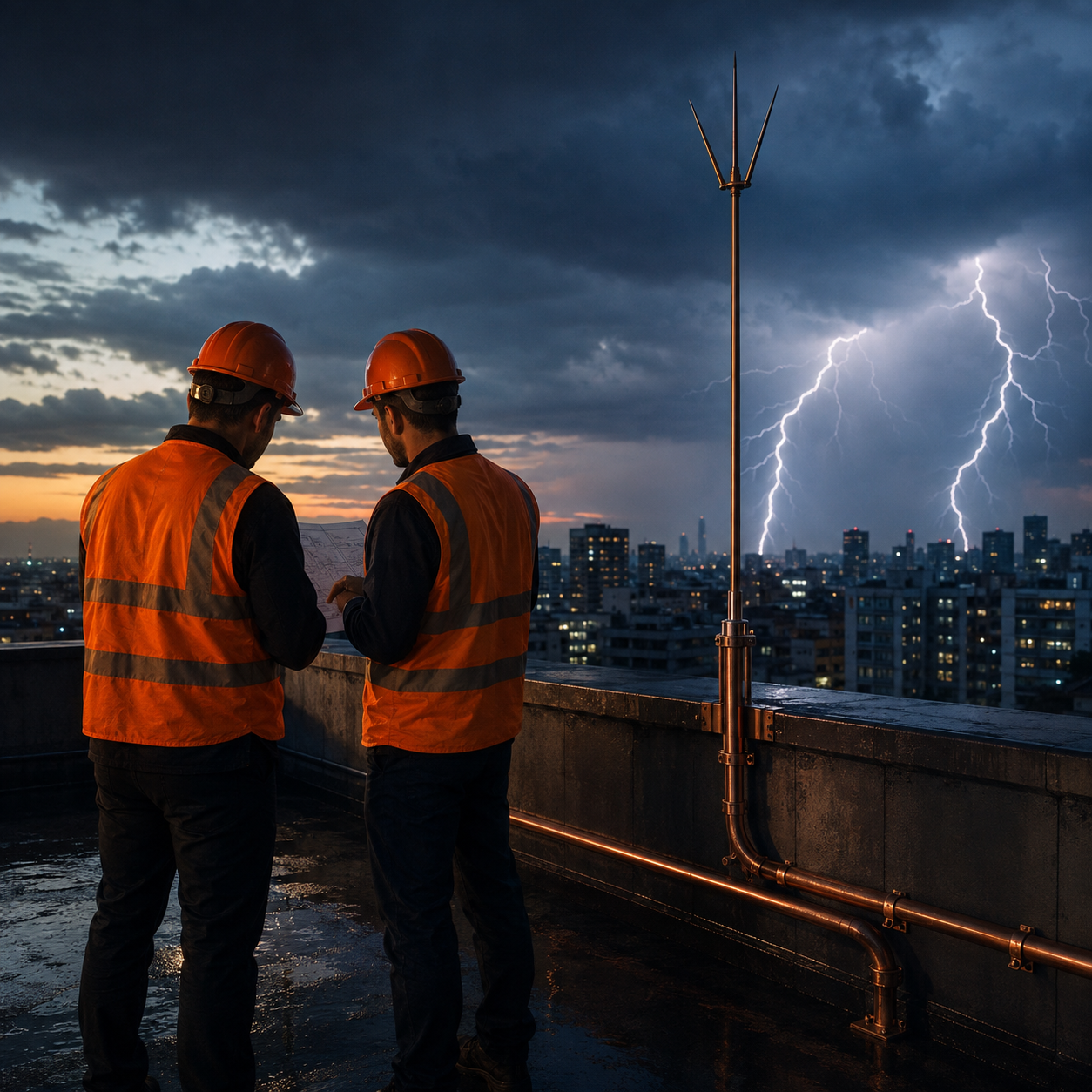
At open sea, nothing around you stands higher. A yacht's mast, out in the middle of a flat sea surface, is the sole point of attachment — and unlike on land, help can be hours away.
Why Is the Risk Higher at Sea?
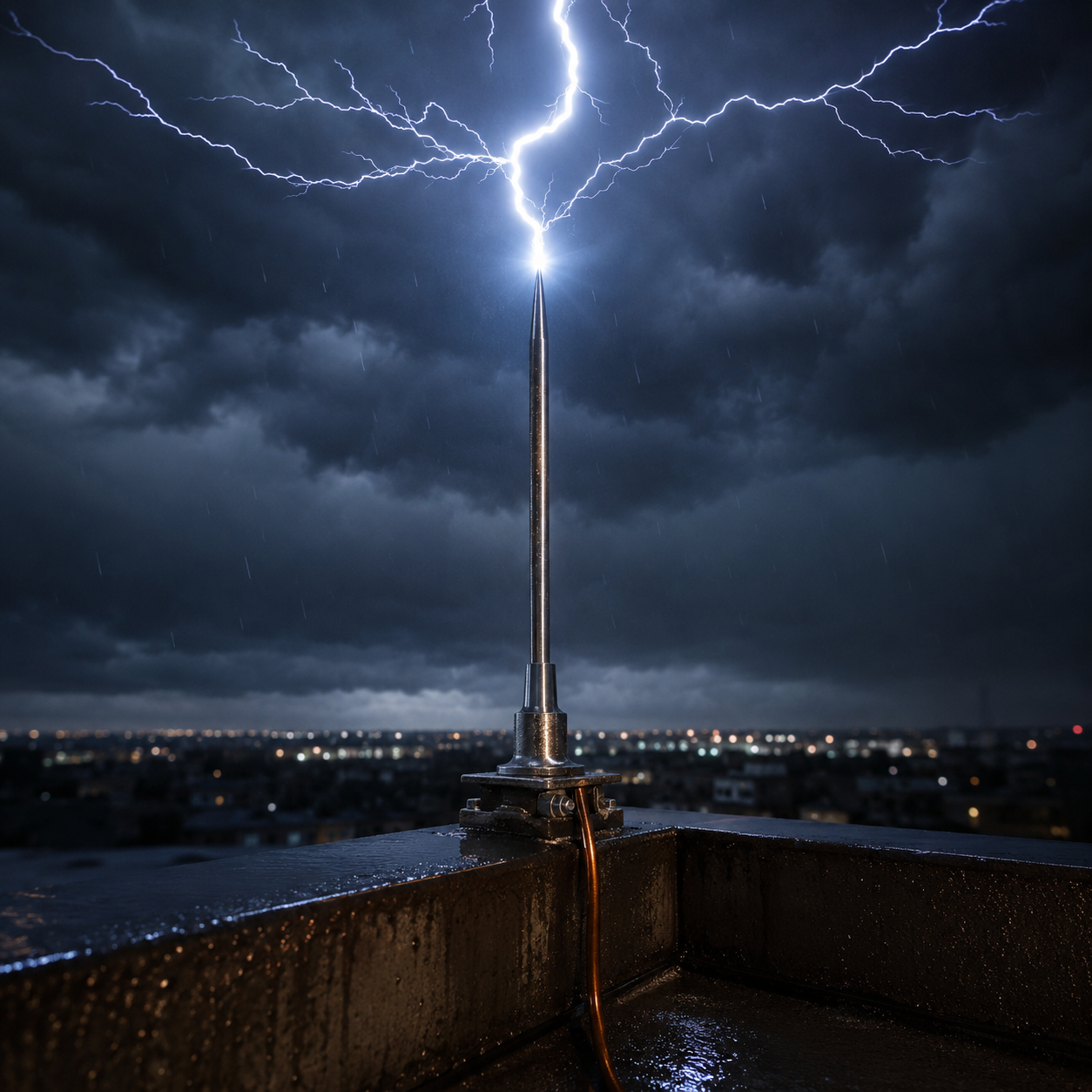
Lightning seeks out the highest point. On land this is usually a building, a tower or a tree; at open sea it is the vessel itself. A sailing yacht's mast is the only protrusion for kilometres around. The sea surface is also a highly conductive plane — which increases the likelihood that the discharge path will pass through the boat.
The second, less obvious risk is the saltwater environment. Salt air and seawater corrode metal connections quickly. A corroded connection may measure sound yet still present high resistance at the moment of a strike. Galvanic corrosion also forms wherever dissimilar metals are in contact, threatening both the earthing system and the hull itself.
The third is the sheer density of electronics modern vessels carry. Radar, GPS, AIS, VHF, autopilot, sonar, satellite communication, engine control units and battery management systems — all of these are sensitive, low-voltage devices. Losing them underway is not a matter of comfort; it is a matter of navigational safety.
Extreme Exposure
At open sea, the vessel is the only high point around — and the only target.
Navigational Safety
Losing radar, GPS and VHF all at once creates a serious safety situation at open sea.
Corrosion
In a saline environment, connection resistance rises over time; the wrong choice of material leads to galvanic corrosion.
Access and Repair
Replacing an antenna at the masthead costs many times more than its land-based equivalent.
Where Is Protection Installed?
In marine applications, protection falls under two separate headings: on-board systems and shore-based facilities (marinas, piers, shipyards). The conditions and the solutions for each are different.
The masthead is both the point of attachment and the location of the most valuable equipment: radar, the VHF antenna, the wind sensor, navigation lights. Every cable running down from it can become a current path during a discharge.
For this reason, protecting the coaxial lines takes priority over protecting the power line. The coaxial SPD must not degrade RF performance and must be matched to the working frequency range — the wrong device attenuates the signal.
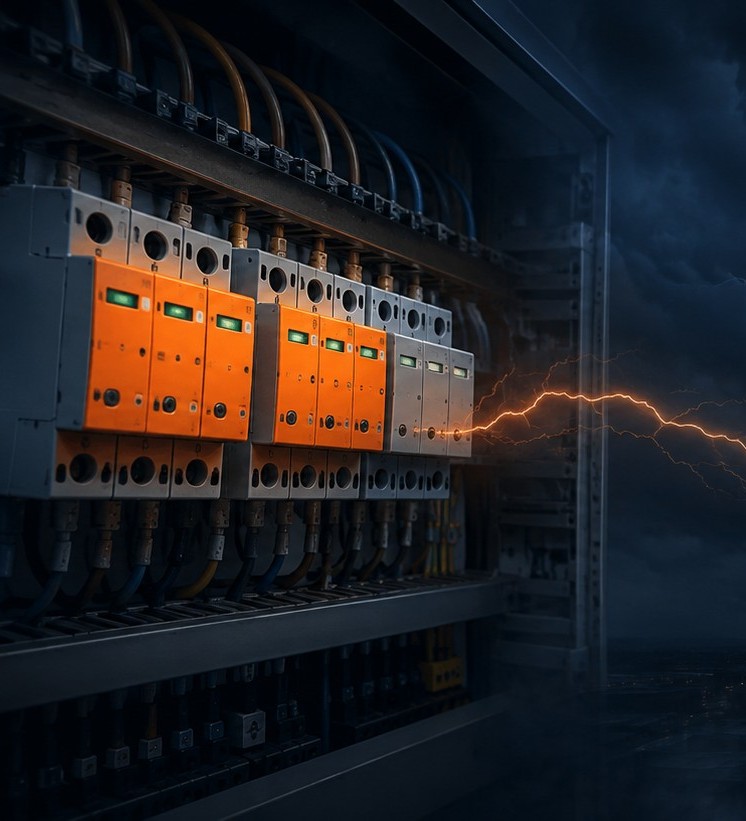
Modern vessels combine 12, 24 and 48 V DC systems, battery banks, inverters and chargers all in one space. Protection on the DC side is critical for the same reason it is on land: a DC arc does not extinguish itself. A protection device with inadequate disconnection behaviour poses a serious risk in an enclosed vessel environment that also contains flammable material.
Engine control units, the autopilot and battery management systems must also be protected on their own signal lines.
A marina is a demanding electrical facility: an open site, a saline environment, long supply runs over water, and a constantly changing set of users. A surge arriving through the shore power pedestals can affect every vessel plugged in.
For this reason protection is designed on two levels: the marina's own main distribution, and each pier arm protected individually. EV charging points and on-board charging units are part of the same plan.
Shipyards combine the most demanding features of an industrial facility with those of the marine environment: cranes and travel lifts, welding and paint shops, fuel points, and power lines running across open ground.
Fuel and paint storage areas require a flammable and explosive atmosphere assessment; the protection level is raised in these zones. Cranes and lifting equipment carry a dual risk, being both tall structures and hosts to sensitive control systems.
In a marine environment, material selection is as decisive as product selection. A connection that would last a decade without issue on land can lose its function within a few years in salt air.
Two points are critical. The first is galvanic incompatibility: contact between dissimilar metals in a humid, saline environment triggers rapid corrosion because of the potential difference between them. The second is enclosure rating: at points exposed to the outdoor environment, corrosion-resistant enclosures should be the preferred choice.
For this reason, connection methods, conductor material and panel enclosures are determined together at the design stage.
At shore-based facilities, earthing is installed by conventional methods; but because the salinity and moisture content of coastal soil vary seasonally, periodic measurement matters even more.
On board a vessel the matter is different: protection rests on bonding the boat's metal masses to a common potential and directing the discharge path to a point in contact with the water. The aim here is not only to protect the equipment but to prevent a side flash from occurring inside the hull.
Featured Solutions for Marine Applications
Outdoor and Salt-Air Solutions
At coastal facilities, enclosure selection matters as much as the protection device itself. Corrosion-resistant, fibreglass-bodied solutions built for outdoor use noticeably extend product life in pier, haul-out and open-site applications.
RF, Coaxial and Data Line Protection
Radar, VHF, AIS and satellite communication are exposed to surges arriving through the antenna. Coaxial line protection closes this path without degrading signal performance. NMEA and data bus lines, in turn, require their own protection stages.
On-Board DC Protection
DC-side protection matched to 12–48 V battery banks, inverters and charging systems. In an enclosed vessel environment containing flammable material, choosing a device with reliable disconnection behaviour is decisive.
How We Proceed
- Defining the scope On-board, shore-based, or both — the protection plan is built accordingly.
- Site survey and risk assessment A TS EN / IEC 62305-2 risk assessment is carried out for shore-based facilities; for vessels, an inventory of the existing electrical and electronic systems is drawn up.
- Material and enclosure selection Conductor material, connection method and protection rating suited to the saline environment are determined, with galvanic compatibility taken into account.
- Joint design of the power, DC and RF lines The three lines are planned together, not separately.
- Installation, measurement and periodic inspection Because of corrosion in the marine environment, periodic measurement is even more critical than at shore-based facilities.
A Protection Plan for Your Vessel or Marina
Yacht, marina, pier or shipyard — whatever the scale, let's assess the risk together. Contact us for a site survey and a preliminary assessment.