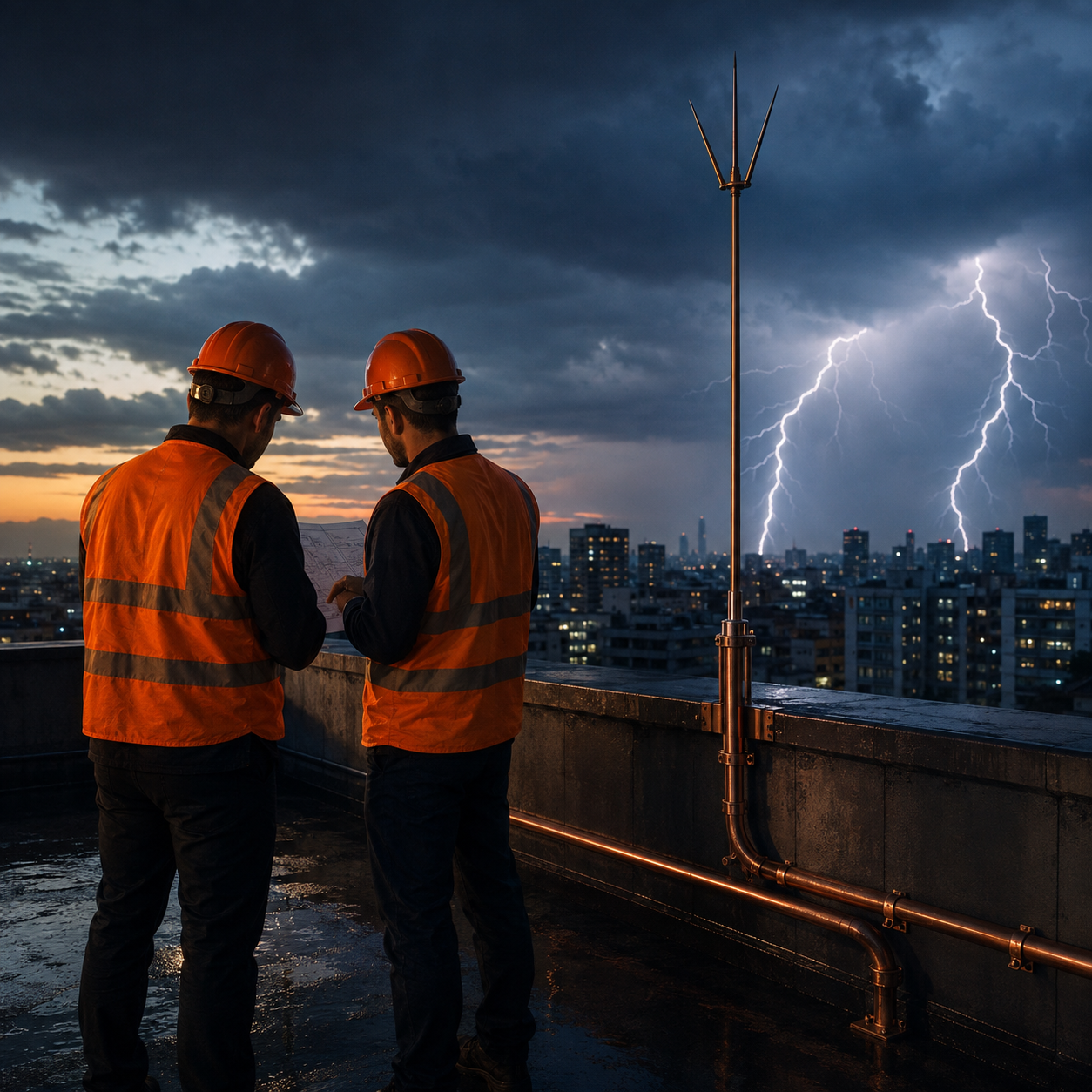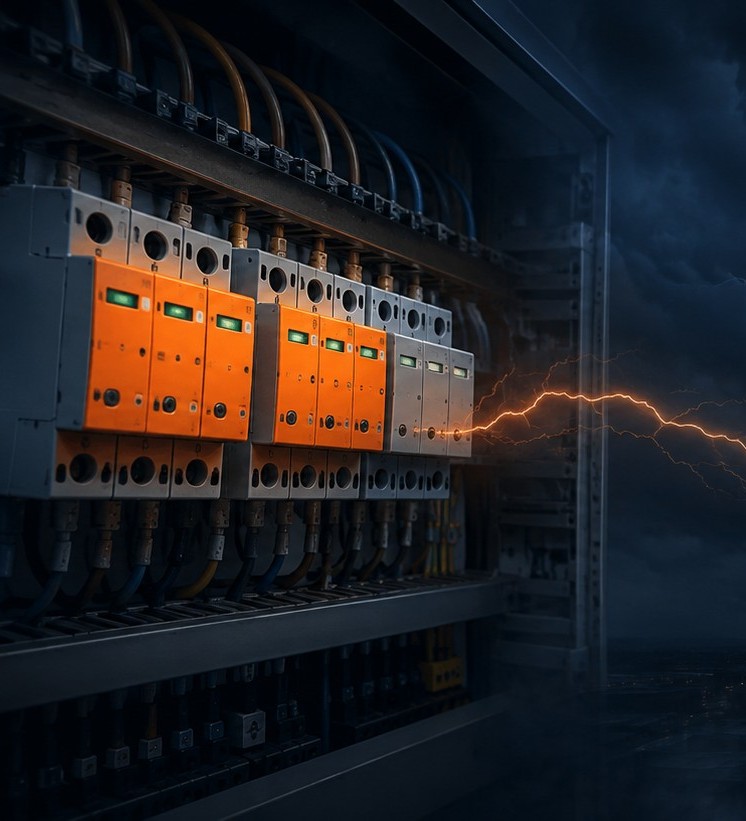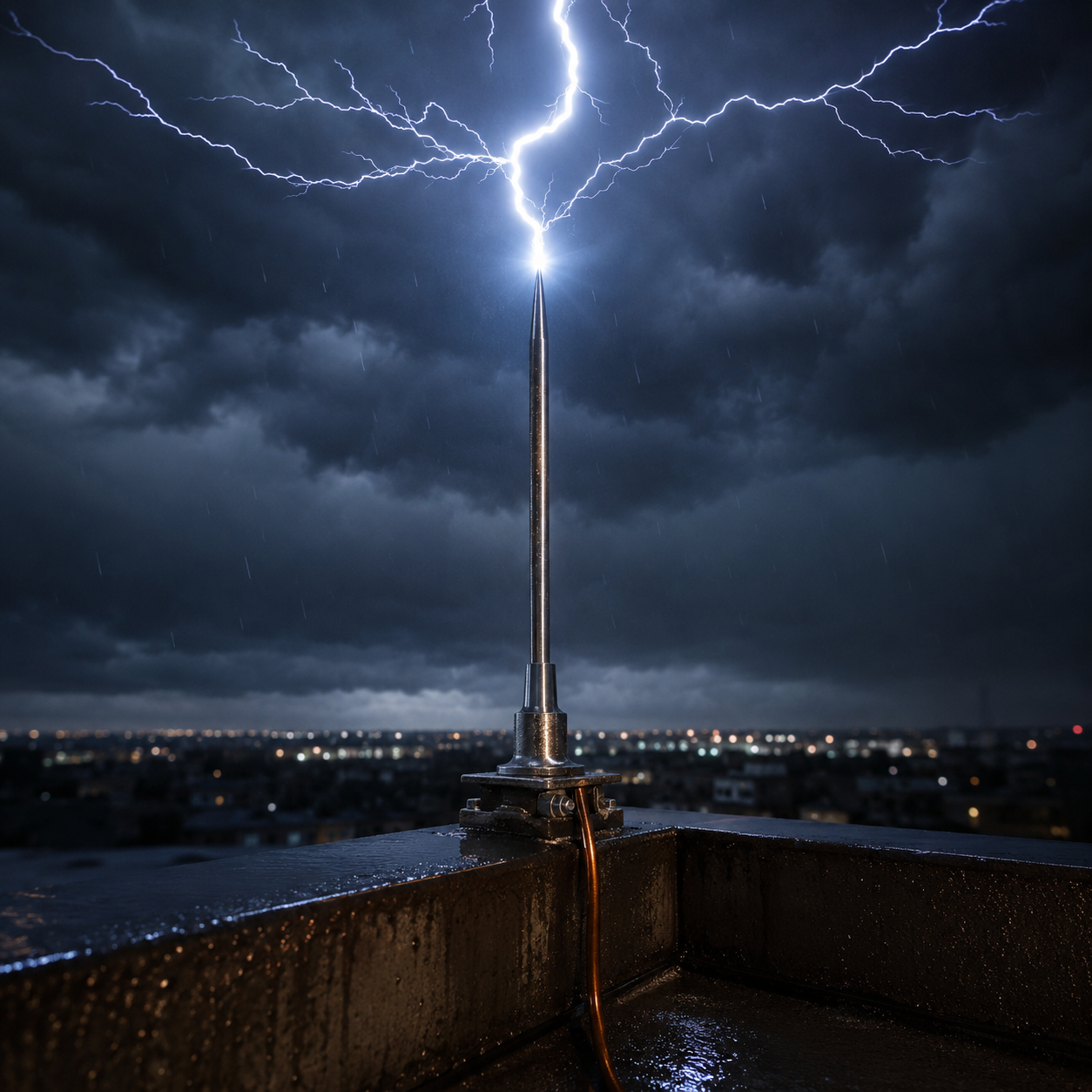
Lightning protection and earthing require continuous verification. A system that worked correctly on the day it was installed can lose its function over the years — through corrosion, a loosened connection or a conductor cut during renovation work. This loss is not visible to the eye; it shows up only in measurement.
At this point the electrical issues have to be approached from a broad perspective: the problems need to be laid out through measurement and reporting, and solutions sought from there. As Yılkomer, we carry out the measurement and analysis of your facility with state-of-the-art, currently calibrated measuring systems and our expert team. The reporting that follows prevents potential failures — above all those caused by lightning and transient overvoltage surges.
The calibration of our measuring instruments is carried out in laboratories accredited by TÜRKAK, the Turkish Accreditation Agency.
Earthing and Continuity Measurements
- General earthing measurement — Determination of the resistance value of the facility’s earthing system.
- System earthing measurement — The network neutral point and components earthed for operational reasons.
- Functional earthing measurement — Verification of the reference earth of electronic systems.
- Soil resistivity measurement — The electrical characteristics of the ground; for new designs and for the evaluation of existing systems.
- Electrical continuity tests — The integrity of the connection between the air termination system, the down conductors and the earthing.
- Equipotential bonding inspection — Inspection of the busbar connections and the bonding of metal services.
- Fault current measurement — The functionality of the residual current protection system.
Lightning Protection System Inspection
- Faraday cage measurement and system inspection — Compliance of the mesh geometry, the number of down conductors, continuity and connection points with the standard.
- ESE air terminal measurement and system inspection — Assessment of the head condition, the down conductor route, the separation distance and the earthing connection.
Electrical Installation Measurement and Inspection
- Loop impedance measurement — The tripping reliability of the protective device in the event of a fault.
- Insulation resistance measurement — The condition of the cable and installation insulation.
- Electrical installation inspection and reporting — Assessment of the compliance of the entire installation with the regulations.
- Thermal imaging inspection — Detection of overheating connections, unbalanced loads and overloaded circuits before a failure occurs.
- Relay testing — Setting and function tests of the protection relays.
- Transformer turns ratio measurement — Verification of the transformer winding ratios.
- Energy analysis and reporting — Assessment of power quality, harmonics and the load profile.
Ambient and Environmental Measurements
- Electric field measurement
- Magnetic field measurement
- Electromagnetic radiation (RF) measurements
- Noise measurement
- Humidity and temperature measurement
- Wind measurement
These measurements are carried out for occupational health and safety obligations, for areas housing sensitive equipment, and for projects where site conditions have to be documented.
What Do You Receive After the Measurement?
- Measurement report — With every measurement point, the instrument used, the measurement conditions and the resulting values.
- Compliance assessment — Comparison of the measured values against the limits in the relevant standard and regulation.
- Non-conformity list — The deficiencies identified, with photographs and location information.
- Improvement recommendations — The corrective action proposed for each non-conformity, together with its priority.
- Calibration certificates — The calibration certificates of the instruments used, appended to the report.
- Inspection schedule — The date of the next measurement.
When Should You Have Measurements Carried Out?
- When the inspection period falls due — Regularly, at the interval prescribed by the regulations.
- When a new system is commissioned — A verification measurement before handover.
- After renovation or excavation work — Underground conductors are damaged most often during this kind of work.
- After a lightning strike — For the cases where the system did its job but was degraded in the process.
- When equipment failures cannot be explained — The source of recurring board and power supply failures is often on the earthing side.
- Before an inspection — Spotting the deficiencies before the inspector does is always cheaper.