Rayvoss S
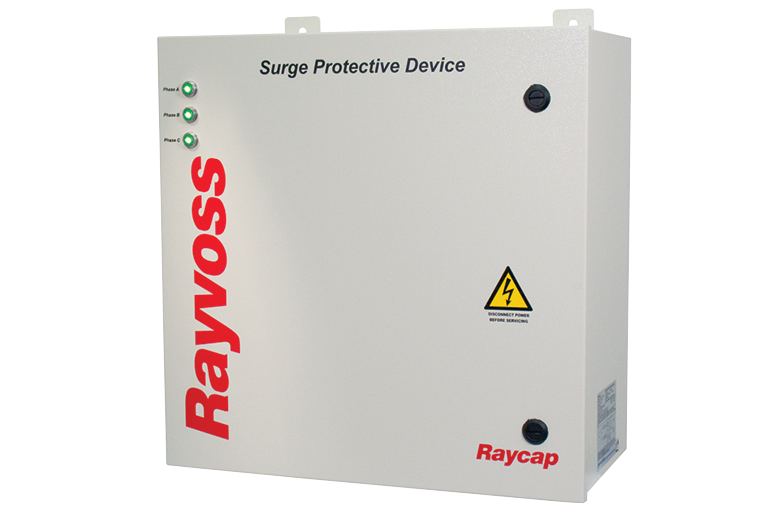
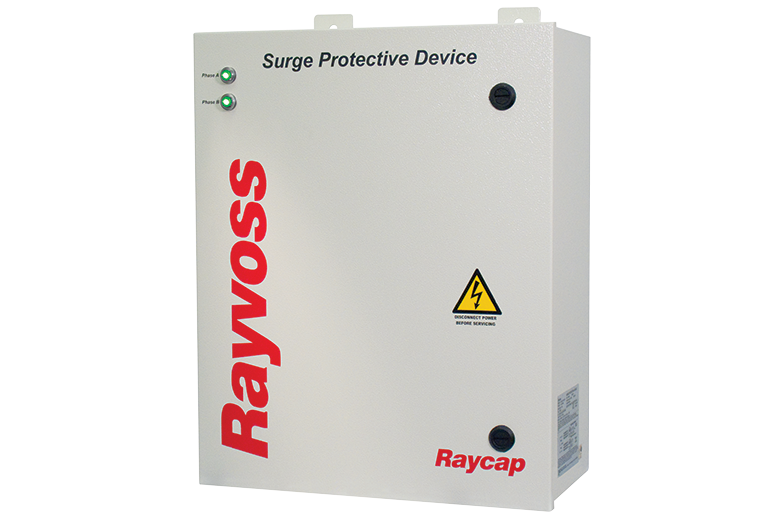
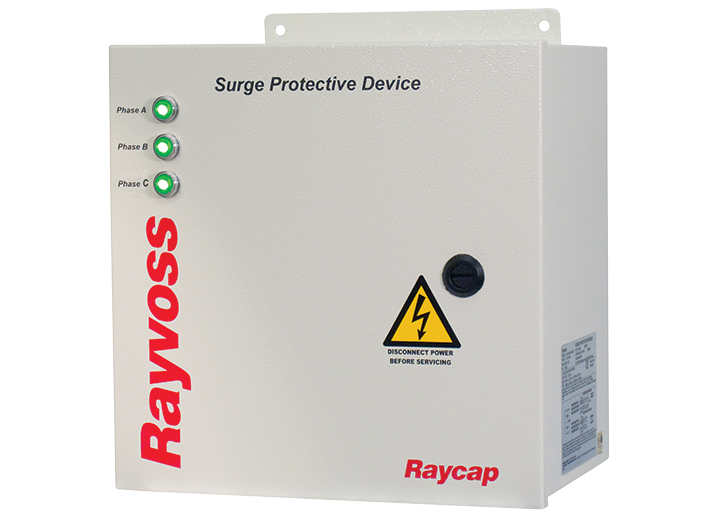
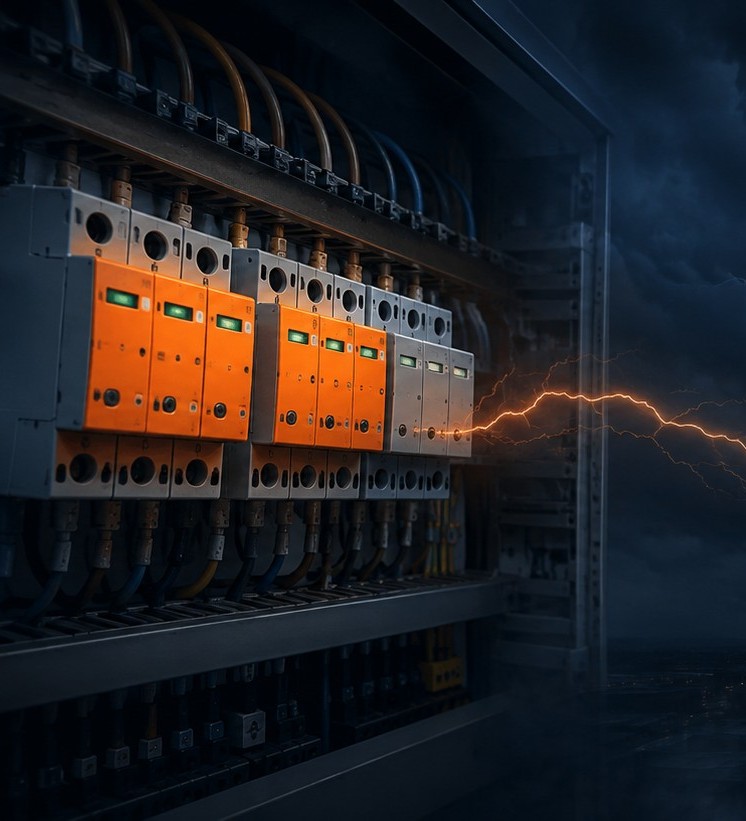
The Raycap Rayvoss® "S" Series is a surge suppression system designed for high-risk and critical power protection applications. It features patented Strikesorb® 40 protection modules, is resistant to outdoor conditions with a NEMA 4 enclosure, and is offered in a wide operating voltage range from 60 V to 1000 V.
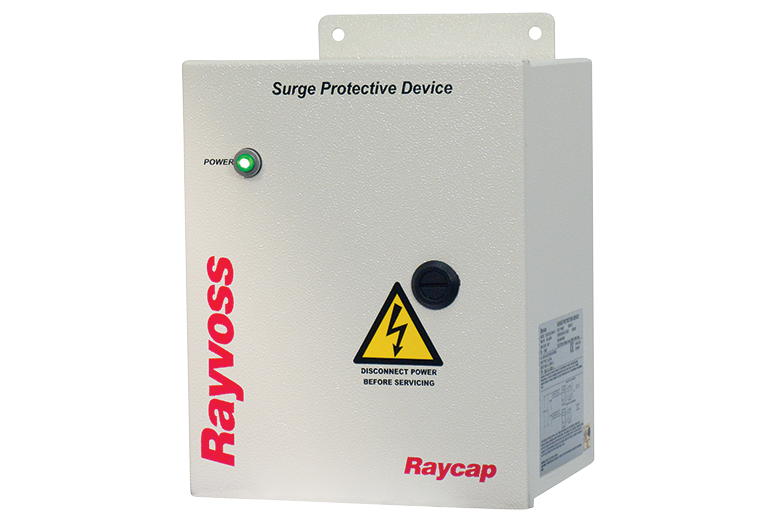
The Rayvoss® "S" Series is a complete surge suppression system designed for high-risk and critical power protection applications. The system incorporates Raycap's patented Strikesorb® 40 protection modules and is available with various operating voltage options.
Strikesorb, the high-surge capacity protection element within Rayvoss systems, repeatedly dissipates excess energy from lightning and grid-sourced surge events without performance degradation or aging. This eliminates the problem of declining protection levels over time, common in conventional systems.
A key design differentiator of the system is its lack of internal fuses. Cables can be connected directly to the internal busbars, eliminating voltage drop across a fuse. This results in advantages such as lower clamping voltage, zero maintenance, and no replaceable parts. Rayvoss can also be mounted in-line, eliminating the need for long cable runs and ensuring the lowest possible clamping voltage.
- Patented Strikesorb® 40 protection modules
- Full listing to UL 1449 5th Edition safety standard
- NEMA 4 enclosure — resistant to outdoor conditions
- Fuse-free design
- Direct connection of cables to internal busbars
- Elimination of fuse-induced voltage drop → lower clamping voltage
- Zero maintenance, no replaceable parts
- In-line mounting capability
- UL listed installation with 16 mm² (#6 AWG), 50 A rated cable
- Reduced cable inductance and clamping voltage with large cross-section cable use
- Operation without aging or performance degradation during successive surges
Operating Voltage Options (AC, rms)
60 V · 120 V · 240 V · 277 V · 400 V · 480 V · 600 V · 1000 V
Rayvoss S is preferred in critical power applications where risk is high and downtime is costly:
- Data centers — Critical power distribution points and feeds requiring maximum uptime
- Industrial facilities and production lines — Main power supply and process-critical panels
- Frequency inverters (VFD) and motor control systems — Protection at drive supply points
- Power generation and distribution facilities — Substations and field distribution points
- Renewable energy plants — AC side protection in solar and wind power sites
- Telecommunication infrastructures — High-exposure field installations
- Outdoor installations — Locations requiring external mounting due to NEMA 4 enclosure
- Hospital and critical infrastructure facilities — Systems where interruption directly translates to service loss