In defense facilities, a system going offline means more than lost production. Radar goes blind, communications drop, surveillance stops. In these facilities protection is part of mission continuity.
Why Is This a High-Risk Sector?
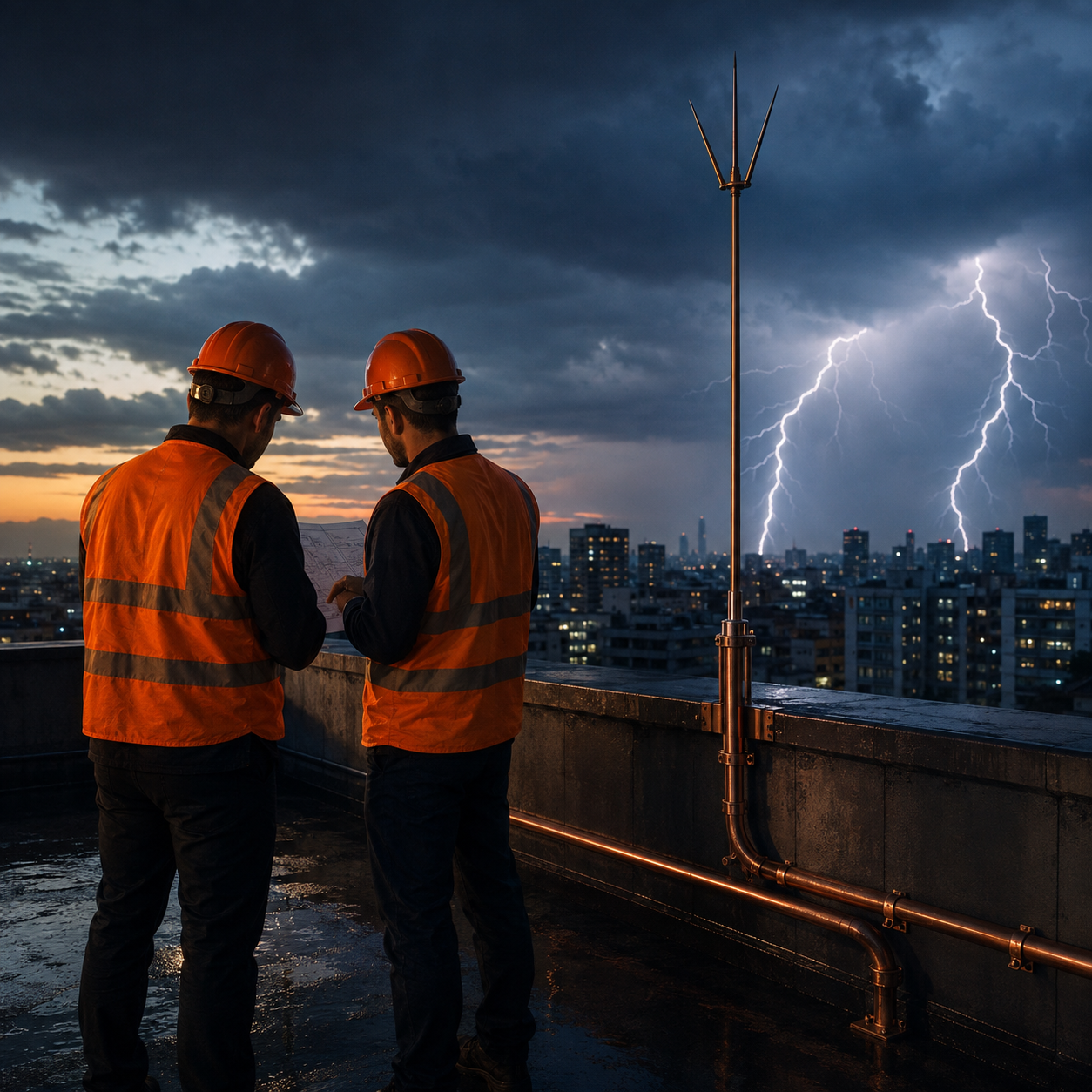
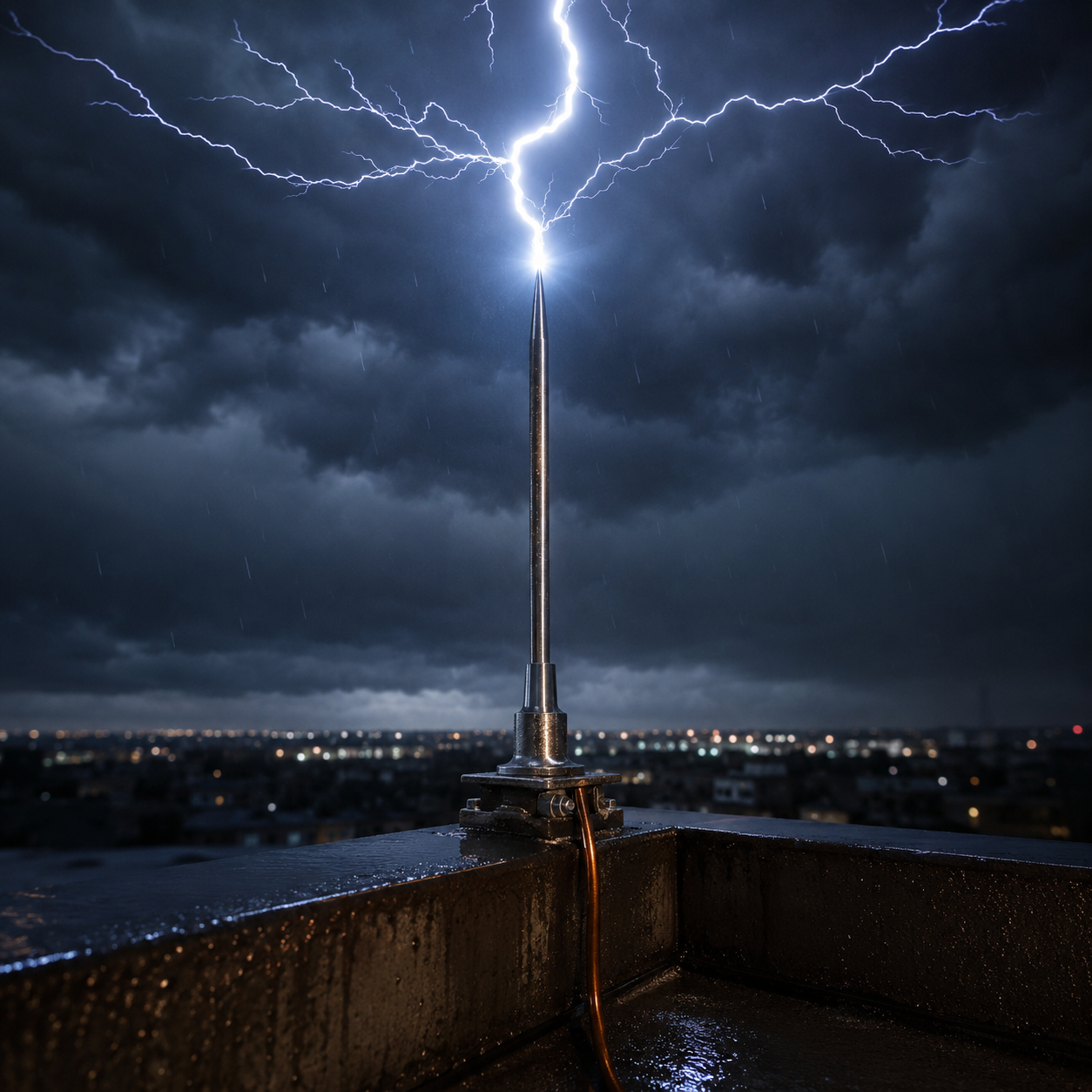
Defense industry facilities stand apart from other sectors for three distinct reasons when it comes to lightning. The first is exposure: radar towers, antennas, and communication masts are the highest points in their surroundings and are typically sited in open terrain, on elevated ground. Lightning seeks out the highest point.
The second is content: munitions stores, explosives production lines, and fuel facilities fall into the structure class that requires the highest protection level under TS EN / IEC 62305. Here the acceptable risk threshold is far lower than for an ordinary industrial facility.
The third is consequence: in a production facility, a failure means downtime; in a defense facility, a failure can mean loss of mission capability and threat to life. For this reason, design is driven not by the logic of "adequate protection" but of "protection that admits no interruption."
Mission Interruption
Loss of radar, communication, or surveillance systems means a direct loss of operational capability.
Explosion Risk
Spark formation is unacceptable in munitions and fuel facilities; the highest protection level is required.
High Exposure
Towers, antennas, and open-terrain facilities are the structures most exposed to a direct lightning strike.
Sensitive Electronics
RF receivers, signal-processing cards, and encrypted communication equipment operate at low voltage-withstand thresholds.
Where Is Protection Installed on Site?
Protection on defense sites requires designing the whole compound, not a single building. Each building group carries a different risk, and therefore a different required protection level.
These are the highest and most exposed points of the compound, carrying the greatest likelihood of a direct strike. Three lines must be protected together here: the power feed, the coaxial/RF line, and the control/data line. Protecting only the power side counts for nothing against a surge arriving from the antenna.
These structures are assessed under LPL I, the highest protection level defined by the standard. The air termination system is designed to the 20-metre rolling sphere method, with a mesh spacing of 5 × 5 metres.
What matters here is not air termination alone. The separation distance (s) calculation, equipotential bonding, and connection methods that prevent spark formation are just as critical as the air termination system itself. A single spark that could form between metal structural elements is an unacceptable risk in these facilities.
For server rooms, control centres, and data lines, what matters is not just protecting the device but keeping it running without interruption. For this reason, protection technologies preferred in these areas are ones that do not blow a fuse after a fault and do not require a power interruption to swap out a module.
Defense-industry production lines house far more sensitive measurement and test equipment than civil industry does. A test rig that loses calibration is not just an equipment cost — it means every product already tested on that rig has to be re-tested.
Open-air test ranges are also the areas at greatest risk of induced voltage, owing to long cable runs.
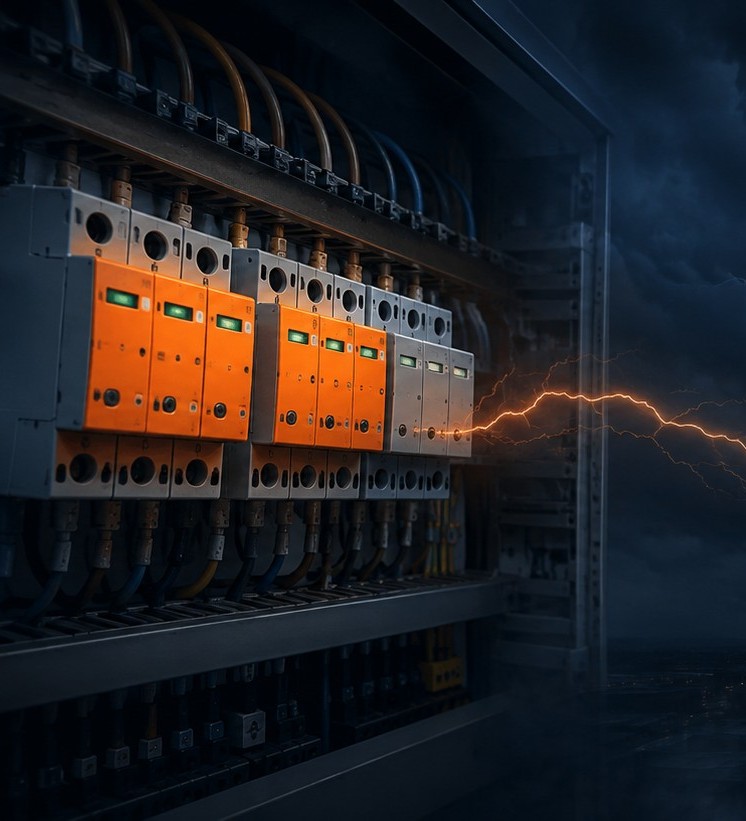
In critical facilities, the most dangerous situation is protection failing without anyone noticing. An SPD that has reached the end of its service life looks perfectly sound from the outside. Monitoring devices remove this blind spot and bring protection status into the central system.
Lightning early warning systems, in turn, allow personnel working outdoors and ongoing operations to be moved to safety before a storm arrives.
Featured Solutions for Defense Facilities
Strikesorb and Rayvoss
With no fuse and no thermal disconnector, they continue to provide protection after successive strikes, and swapping a module does not require cutting power to the system. This is the decisive property at remote positions that are not continuously staffed, and at centres where interruption is not permitted.
Coaxial, Data, and Signal Protection
In radar and antenna systems, the surge most often arrives not from the power line but from the antenna itself. Coaxial-line protection closes off this path without degrading RF performance. Separate protection stages are installed for data and control lines.
Design Under LPL I
For munitions, explosives, and fuel facilities, the air termination system is engineered to the 20-metre rolling sphere method with a 5 × 5 metre mesh spacing; the separation distance is calculated, and connection methods that do not create sparks are used. Design comes before product selection.
How We Proceed
- Compound-wide risk assessment Each building group is assessed separately; a munitions store and an administrative building do not call for the same protection level.
- Protection level determined per building An LPL I–IV level is defined for each building based on the TS EN / IEC 62305-2 result.
- Joint design of power, RF, and data lines The three lines are handled in a coordinated design rather than separately; a single unprotected line weakens the whole chain.
- Installation and commissioning Installation is scheduled around the facility's operational calendar.
- Measurement, reporting, and periodic inspection Earthing resistance and continuity measurements are reported, and protection status is continuously tracked through the monitoring systems.
Let's Draw Up a Protection Plan for Your Facility
Let's assess the risk of every building group on your compound individually. Contact us for a site survey and a preliminary assessment.