
Lightning Rod System
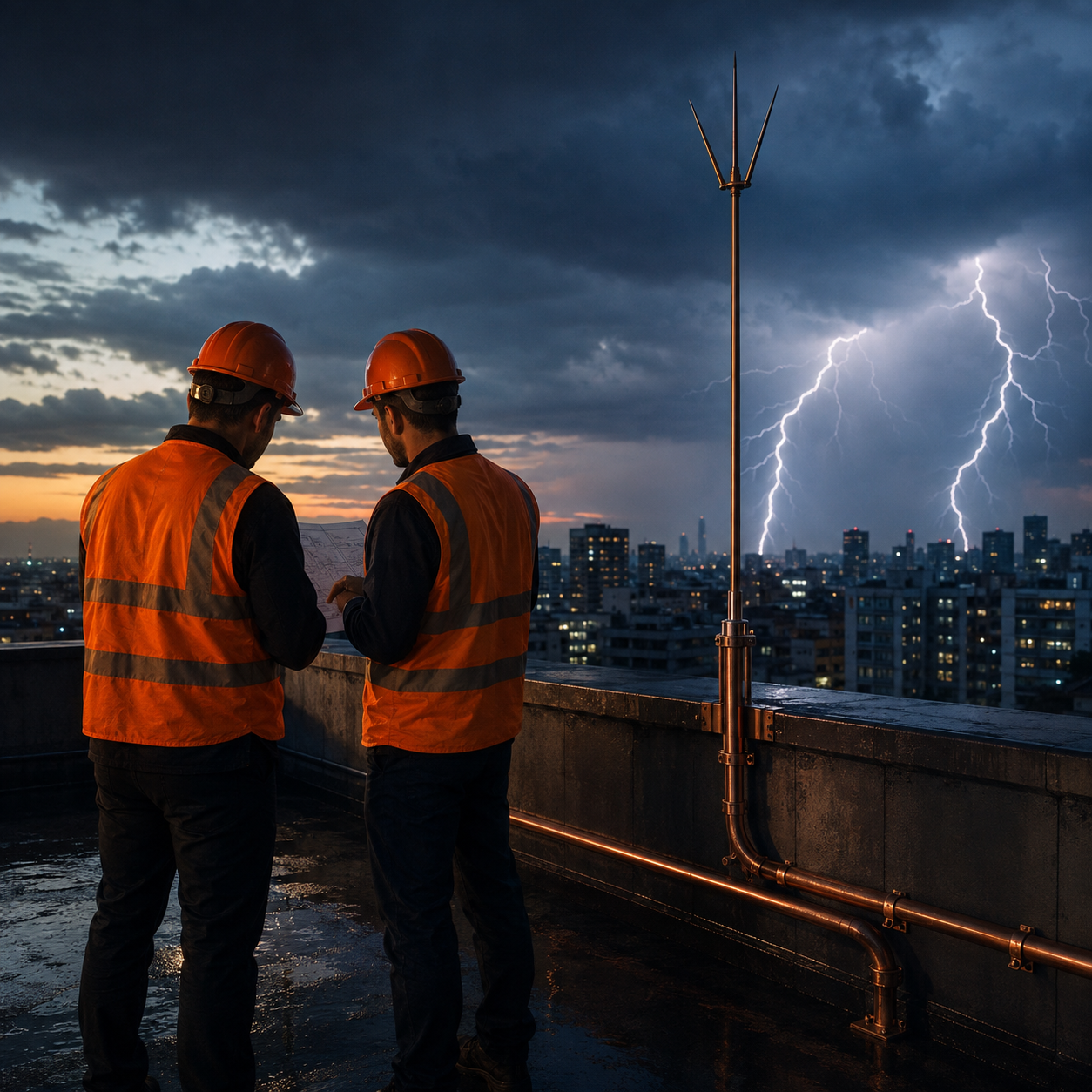
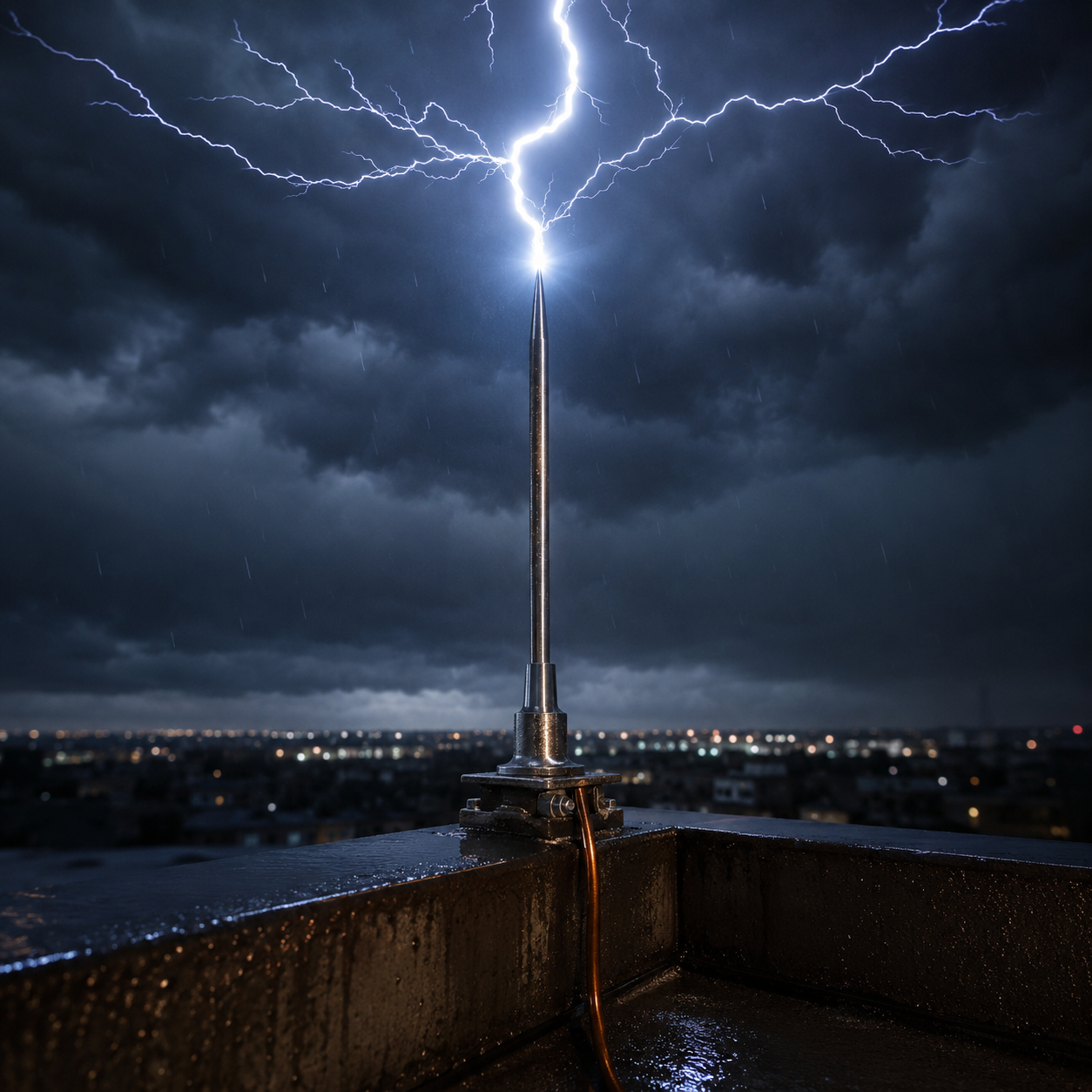
The lightning rod system is designed according to definitions in the French local standard NFC17 102. With radioactive materials banned, active systems containing coils or piezoelectric crystals, which are non-radioactive, have become available in the market as ESE systems. Since the lightning rod system is not included in international standards, it has been a topic of debate. While it lacks precise calculations like the Faraday Cage, it remains one of the most commonly used lightning protection systems in Turkey. Therefore, if the specification requires a lightning rod system, it is important to integrate air-termination rods at corner points, respect protection distances for down conductors, or use insulated conductors to strengthen the system.

Due to the simplicity of production, many lightning rod systems are produced unofficially, which causes challenges in the industry and engineering standards. Therefore, it is recommended to maintain the highest product and system quality at the facility to be protected.
Comparing IEC 62305 and NFC 17102 reveals key differences. For example, IEC 62305 emphasizes protecting upper sections covering 20% of structures over 60 meters against side flashes using the mesh method, whereas NFC17102 does not include measures for side flashes. In such conflicting situations, engineers must apply their own risk analyses to ensure system integrity.
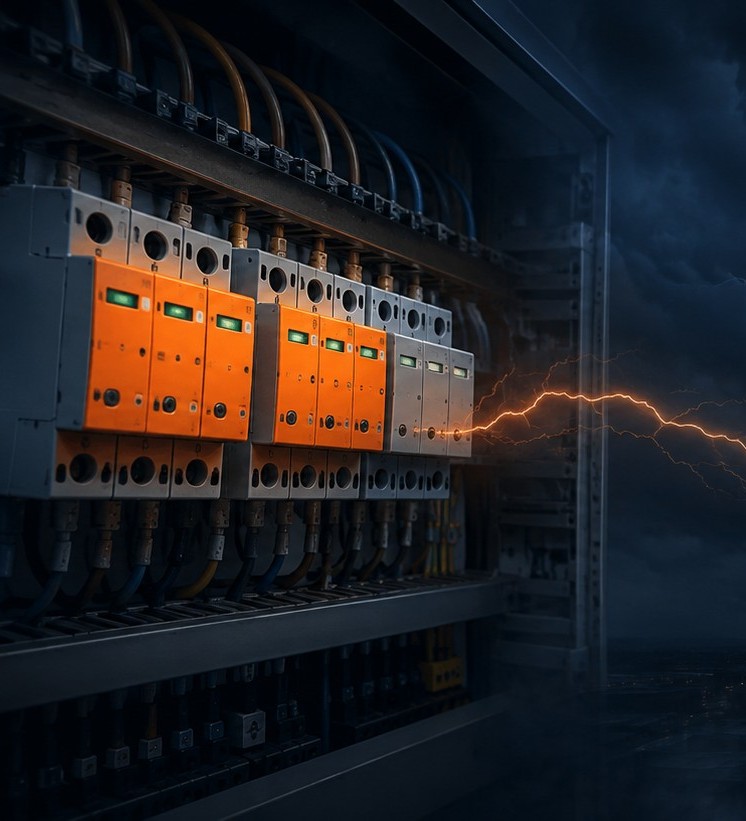
Regardless of the external lightning protection system used, LV surge arrester systems must always be installed on panels to protect against electrical effects of lightning. A single lightning strike can disable the entire facility and equipment, so protection must follow a staged approach.
In designing an external lightning protection system, risk analysis and a customized system based on the building’s physical characteristics are essential. In addition, grounding calculations must be based on the facility’s specific resistance, and the external lightning protection grounding must be connected to equipotential grounding. The connection can be implemented through surge arresters with spark gaps.
For project design, free surveys, product supply, installation, measurement, and reporting services, you can contact Lightning Protection Center expert engineers. For technical support, email technical@yilkomer.com.
DEBATES ON THE LIGHTNING ROD SYSTEM
Although lightning rod systems are constantly debated in our country, the lightning rod stands out as the most widely used system in lightning protection. This is because, although it is not included in the national standard TSE EN 62305, the fire regulations require lightning rods. Essentially, what the fire department requests is a proper lightning protection system; however, the lightning rod is used more widely due to its economic cost and ease of implementation. The technical accuracy of whether a lightning rod or Faraday Cage is better is still debated. The active part of active lightning rods works by emitting ions to attract the lightning strike. There is also the issue of radioactive lightning rods. Radioactive rods, now banned, captured lightning through the radiation of radioactive materials, hence the term “active” for current systems. There are scientifically tested models of lightning rods that function correctly. Usually, French-made rods are not commonly used in our country due to cost. Inexpensive rods produced locally are often preferred, but in our view, they are no different from a single air-termination rod. Therefore, if the system is chosen as a lightning rod, high-quality, technically sound rods must be selected. Another point of debate is the empty corner points in buildings equipped with lightning rods. Lightning can strike from sharp points and side surfaces, and the lightning rod may not provide protection against these side strikes. For buildings over 60 meters, side strikes are frequent. Therefore, as Yılkomer Lightning Protection Center, we always ensure corner points are protected and side strikes are mitigated. Despite debates on lightning rod applications, we continue to emphasize the importance of insulated down conductors and LV surge arrester use.

Whether a Lightning Rod system or Faraday System is used, three points are crucial:
1-Lightning Risk Analysis
2-LV Surge Arrester Design and Application
3-Down conductors should respect the protection distance, and insulated down conductors should be preferred.
Lightning rod down conductors should be installed symmetrically from 2 different points. The common practice in our country of placing two down conductors side by side does not fully comply with standards. Symmetrical down conductors help faster potential division and dissipation in the ground. The down conductor does not have to be pure copper; ALMGSİ alloy conductors can be used while maintaining protection distance, or special ALMGSİ alloy conductors can be applied.
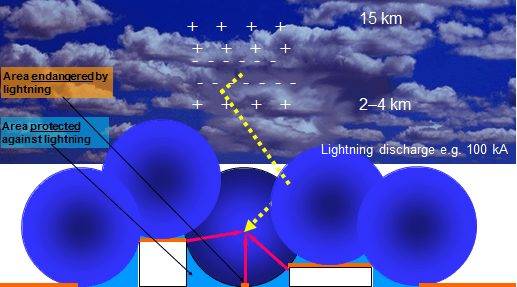
Lightning Rod systems must be equipotential with the facility’s grounding. Rules like grounding 20 meters away are myths and scientifically incorrect, as a lightning strike can affect a radius of 2 km. Using special products like spark gap arresters on equipotential systems is important for safety. All works must be considered as a whole; they cannot be evaluated independently. External Lightning Protection, Internal Lightning Protection, Grounding, and Equipotential systems must be managed integrally.
For free surveys, design, project planning, and implementation, you can reach the Lightning Protection Center engineers 7 days a week.
Yılkomer Protects Your Values!