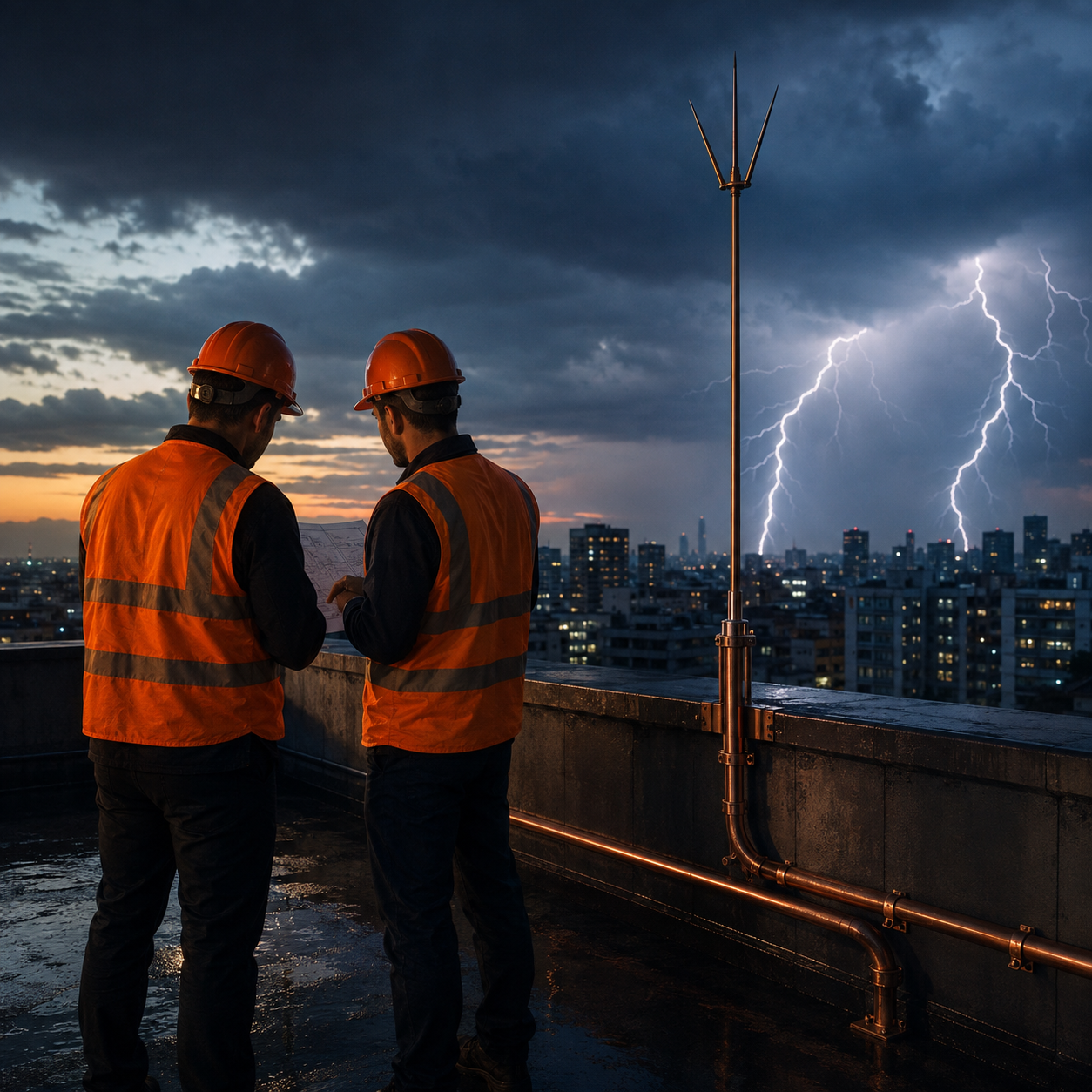

The relevant standard does not include or cover lightning rod systems. It recommends systems consisting of the Mesh Method, Rolling Sphere Method, and systems composed of air terminals and conductors, which are the basic elements of the system. The Faraday Cage method, which is formed as a result of the combined use of these systems, is installed in structures in accordance with IEC norms based on the building’s risk status and engineering designs. In our country, Lightning rod systems are used as an alternative to the Faraday Cage system. Lightning rod systems, which are not included in IEC norms, are implemented based on the French-origin NFC 17-102 standard. The selection, design, and use of Lightning Rod systems are carried out within the scope of the NFC 17-102 standard.

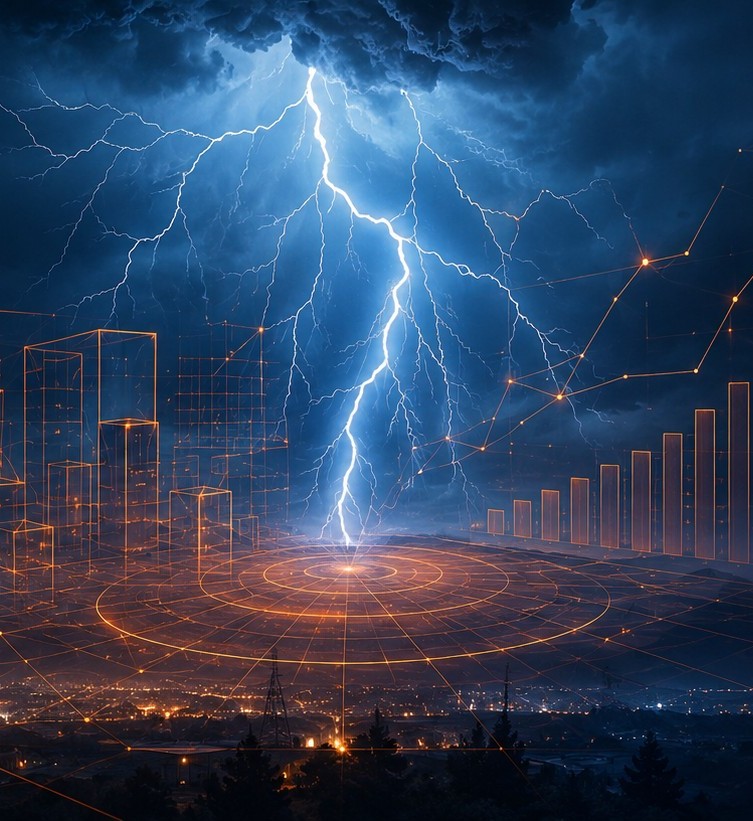
In order to protect a facility against lightning, a risk analysis must first be carried out. According to the analysis indicated by IEC norms, the facility should be protected based on the design table corresponding to the determined protection class, using air terminals and rolling sphere radii. Factors such as whether the facility contains flammable or explosive materials, the importance of the facility, and the number of people present constitute effective coefficients in the risk factor. According to the Rolling Sphere Method, spheres designed in specialized software are placed over the facility to create the most accurate solution against lightning strikes.
| Protection Level | Franklin Rod | Height (m) | Mesh Spacing (m) | Down Conductor Spacing (m) | |||
| 20 | 30 | 45 | 60 | ||||
| I | α angles | 25 | – | – | – | 5×5 | 10 |
| II | 35 | 25 | – | – | 10×10 | 15 | |
| III | 45 | 35 | 25 | – | 15×15 | 20 | |
| IV | 55 | 45 | 35 | 25 | 20×20 | 25 | |
In lightning rod systems, the situation is different; a single system is assumed to provide protection within a radius of 79 or 97 meters depending on the risk and distance from the structure. The system is completed without placing additional air terminals at corner points or risky areas of the building. This leads to certain debates on national and international platforms. Here, the engineer’s foresight and additional precautions are of importance. The common feature of both systems is that a risk analysis must definitely be carried out.
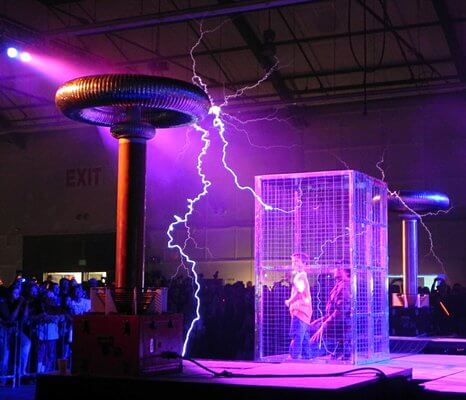
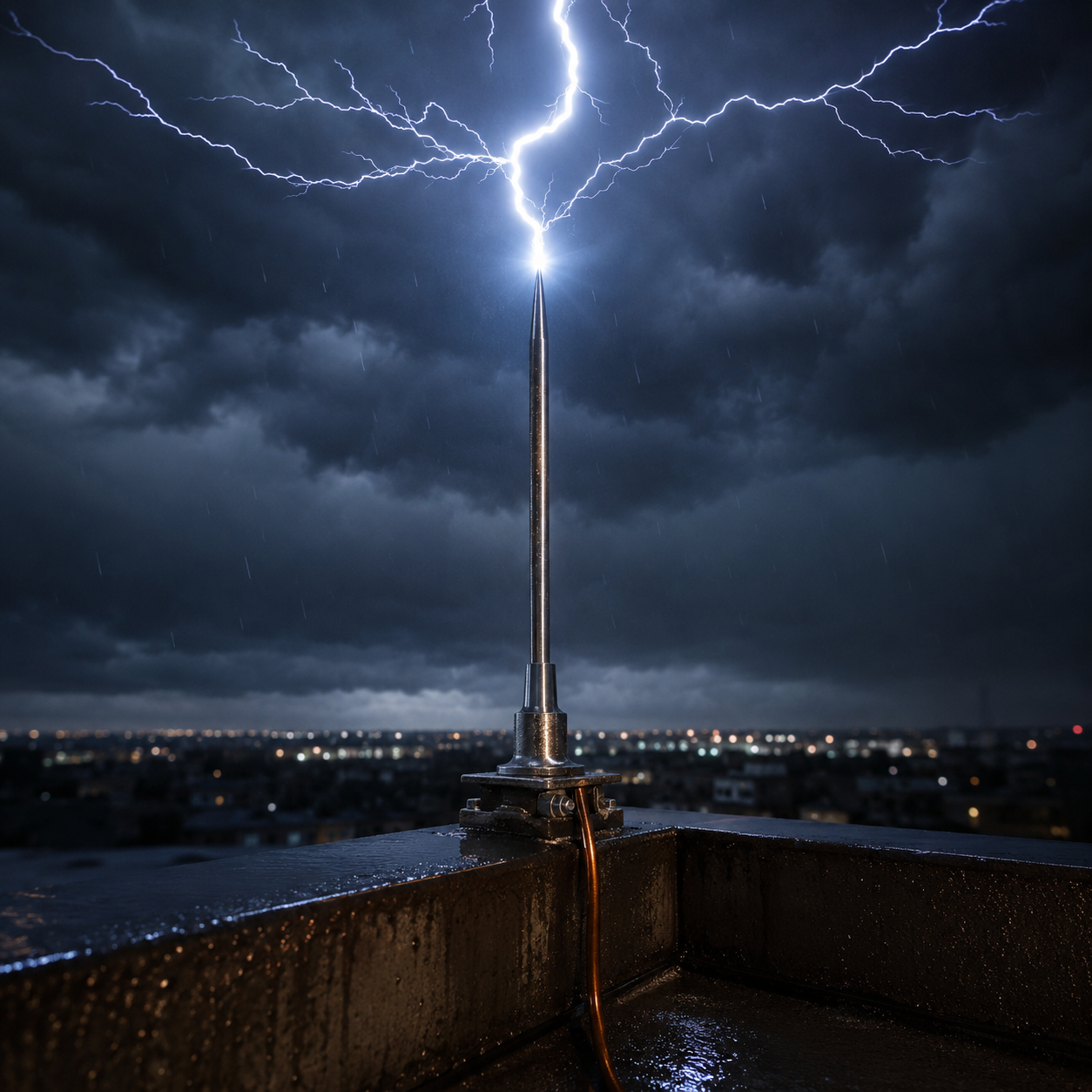
When comparing both systems in terms of cost, the installation of the Faraday Cage system appears to be more costly due to the higher amount of materials used; however, the use of copper conductors and expensive accessories is not mandatory within the scope of the IEC 62305 standard. What is important is the use of products that comply with material standards such as IEC 50164 and have test reports. Lightning rod systems may have the ability to attract lightning because they contain ion generators, whereas the Faraday system does not emit any ions and only becomes active if lightning actually strikes the facility. For this reason, in critical locations such as solar power plants, it is a more appropriate solution to discharge lightning strikes using an air terminal system when lightning occurs; the same applies to flammable and explosive facilities.
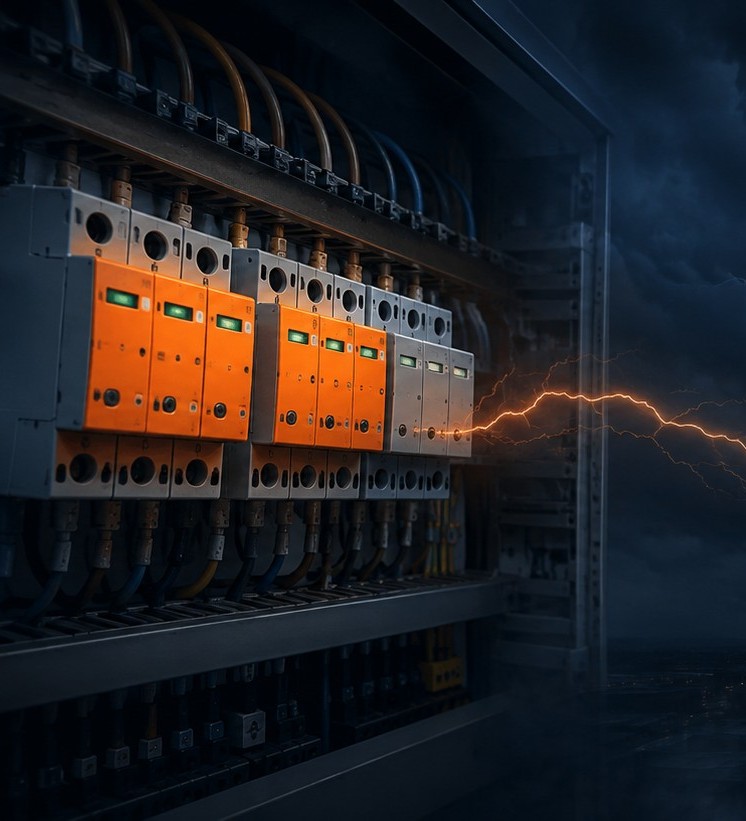
In conclusion, both the Faraday cage and active lightning rod systems are widely used systems to transfer lightning safely to the ground without harming people or buildings; however, the use of SURGE ARRESTER–LV SPD is extremely important for both systems. Lightning strikes transmitted to the ground through external lightning protection systems pose a risk to electronic devices; therefore, surge protection devices must be used in our systems.
All external and internal lightning protection systems must be analyzed, designed, and implemented by expert engineers and installation companies. As the Lightning Protection Center, you can contact us for free site inspection, design, and product selection.