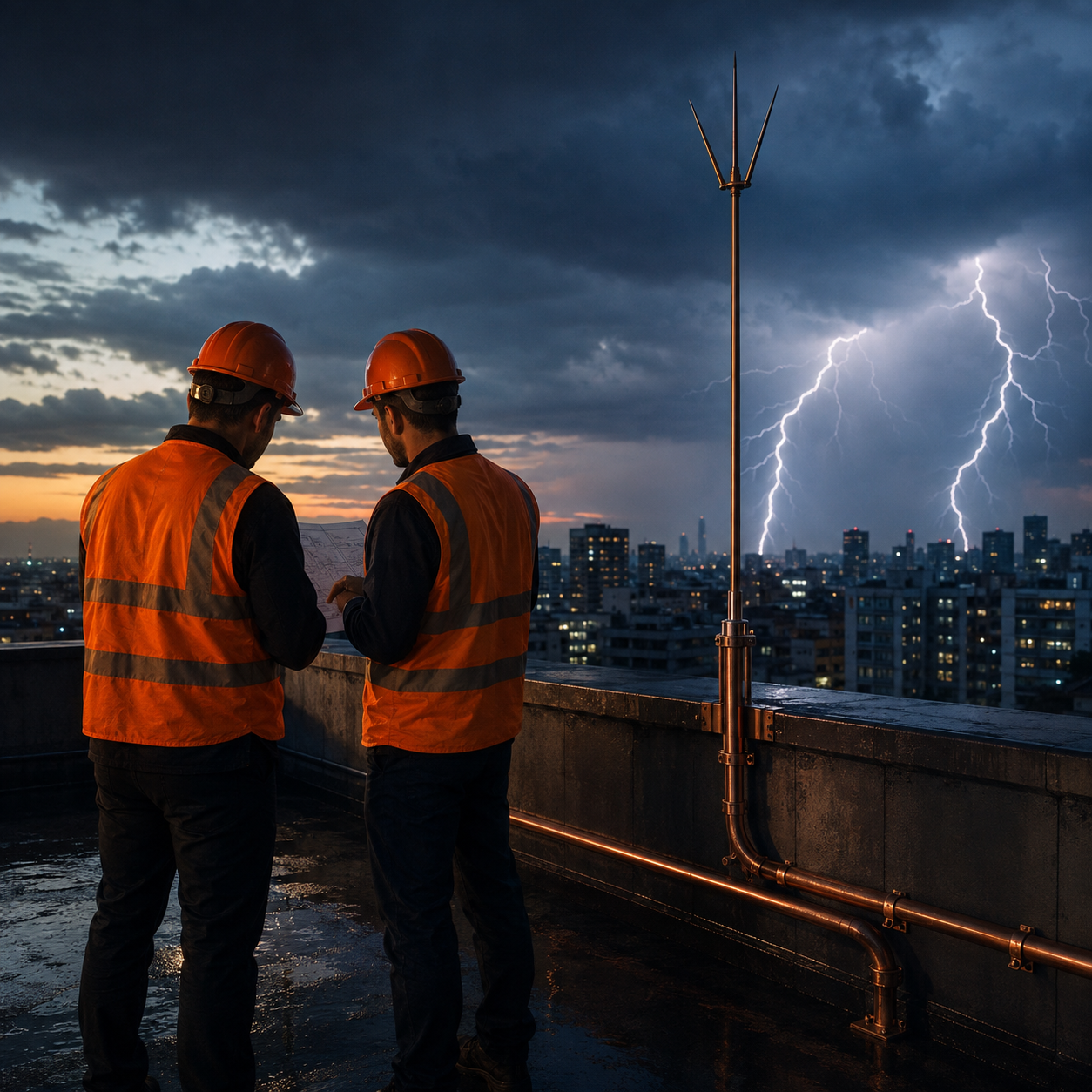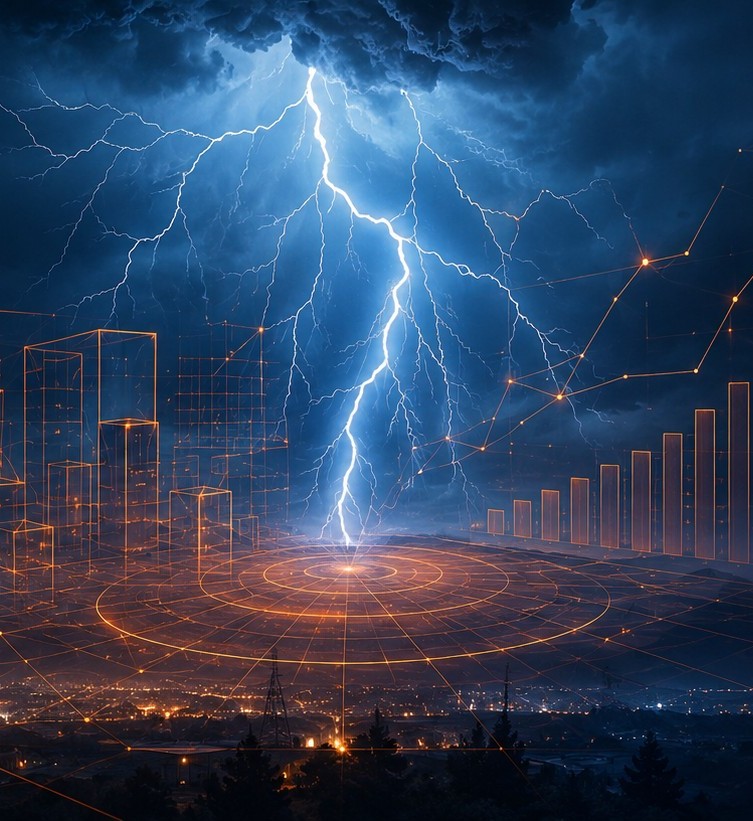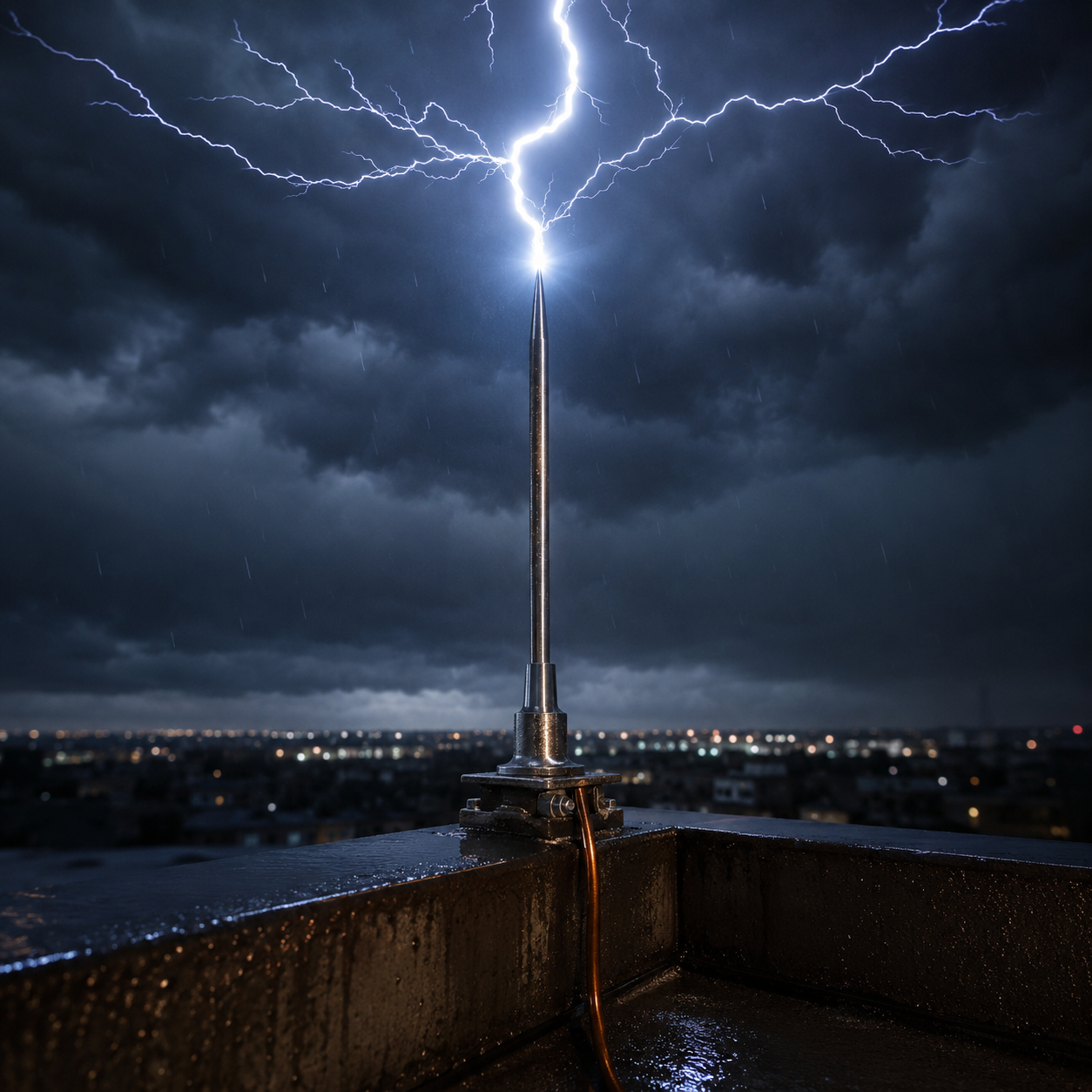

Grounding is one of the indispensable fundamental laws vital for a facility, for both device and human health. It is a fact that fault currents block the system in facilities with grounding problems due to the inability to find a discharge point; preventing them from remaining operational for a long time. With the mandatory use of Residual Current Devices (RCD), a Grounding system must definitely be present in every facility. However, as we know, there are many types of grounding within a facility. Such as Foundation Grounding, Protection Grounding, Operational Grounding, Functional Grounding, Body Grounding, Lightning Protection Grounding. Here, rather than ground values, the first step to be taken to be protected from impulses coming from the ground is to bring all these groundings to equipotential and ensure resistance equality. The concept of equipotential is extremely important for a facility. Resistance difference allows current flow at different grounding points in facilities, and sudden overvoltage impulses are directed to unwanted points in our facility through these resistance differences. The first thing to be done here to be protected from impulses coming from the ground is ensuring equipotential within the facility. Unfortunately, some superstitions continue in the field of Electrical Engineering in our country. For example, “lightning protection grounding should be done 20 meters away”. This is a concept completely far from scientific reality. Let’s say we did it 20 meters away, and the impulse coming to the external lightning protection system was discharged at this point, and your lightning protection grounding value has a value of 5 ohms. You have made building foundation grounding or main transformer operational grounding a little further away, and you have a resistance value in the order of 1 ohm there. The lightning impulse spreads over a radius of 2km and performs this spread according to the resistance difference.

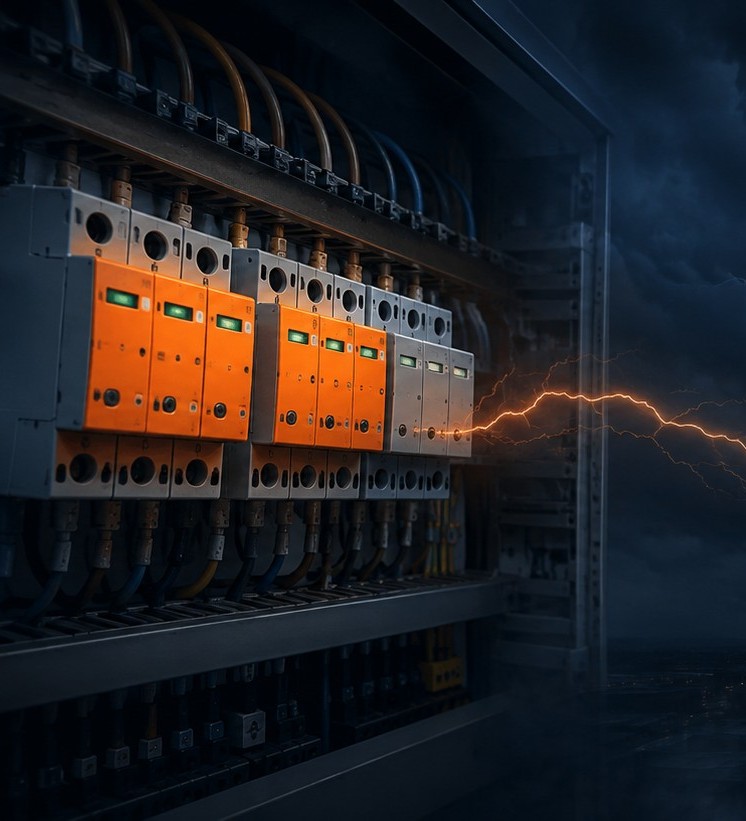
If we make the lightning protection grounding 5 ohms and the operational grounding 1 ohm and leave it, the incoming impulse will be directed to the 1-ohm point over the ground in accordance with the most basic law of physics. As a result, you cannot even imagine the negative picture it will leave behind when a very strong impulse reaches the panel through a single line. Therefore, we must connect the lightning protection grounding to the main equipotential busbar after external grounding. This applies to other groundings as well. Our aim is to ensure resistance equality throughout the facility. The 1st step to prevent impulses coming from the ground is the concept of equipotential. However, the rule of 4 we always mention applies here as well. You cannot separate the 4 items from each other; Equipotential system, External Lightning Protection, LV Surge Arrester, and Grounding must be considered as a quartet in a facility. An LV Surge Arrester must definitely be present in a system brought to equipotential. If the facility is not brought to equipotential, the importance of the LV Surge Arrester increases even more in order to dampen the impulse directed to the panel over the ground. The LV Surge Arrester system is the 2nd important precaution to be taken to prevent impulses coming from the ground to the facilities. We must definitely use LV Surge Arresters in front of the main panel, sub-panel, and machine-device. If we do not use it, the Lightning impulse coming over the ground primarily creates a Fire risk before device damage in all panels. In the 2nd step, it burns through all cards, devices, and semiconductor circuit elements. The result appears as despair. As a facility manager, official, and most importantly, an ENGINEER, falling into a helpless situation is a truly undesirable situation. However, our experiences show that LIGHTNING impulses leave facilities helpless. As Yılkomer, we say that instead of being helpless, have your LV Surge Arrester survey done for free and secure your facility. LV Surge Arrester design proceeds on a very fine line. The Iskra Zascite-Raycap group, for which we carry out the country responsibility as Yılkomer, has exactly 2400 different products.

In other words, not every surge arrester is the same, and installing a surge arrester does not mean that we have taken the facility under protection. The correct thing is to have selected the appropriate surge arrester as a result of the survey. Our LV Surge Arrester products tested according to IEC 61643-11 standard within the scope of IEC 62305 standard have different technologies such as Safetec, MOV, GDT. We explained the LV surge arrester selection criteria in detail in our previous blog posts; what needs to be done within the scope of protection against impulses coming from the ground, which is the subject of this article, is to catch the impulse at the first entrance and reduce it to a level that will destroy it. If we list the surge arrester types very briefly, Type 1 product protects against Lightning impulse, Type 2 product against grid impulses, and Type 3 product provides sensitive protection. Within these classes, we can select products according to the required continuous voltage (Uc) Value, Imax value within the scope of Regional risk, and ground type. However, the most correct way to dampen impulses coming from the ground is to definitely use Type 1+2+3 Combined products in Main Panel and Transformer panels. With these products having a very low Up level, we can perform 3-stage protection at the main entrance. I mentioned surge arrester technologies a little above. LV Surge Arrester products consisting mainly of Metal oxide varistors and gas discharge tubes also have distinctions within themselves. There are products where phases are MOV and the ground-neutral line is Gas Discharge Tube. Considering that the strong impulse will come from the ground, the ground-neutral line is designed with gas damping technology. However, MOV products can activate in 25ns, while GDT technology activates in 100ns. Lightning impulses are 100ns, other impulses are 25ns. Therefore, instead of using a module with only a GDT tube, it is more correct to use hybrid, i.e., 2-3 circuit products. Exactly at this point, Iskra Zascite’s Safetec technology comes into play. And with the hybrid protection system, it creates a solid barrier whether lightning or switching impulse comes from the ground. Thanks to Safetec technology, Type 1+2+3 protection products are formed. Apart from the main energy panel, we receive intense impulses from wired Telecom lines as well. We must definitely perform Type 3 socket protections at these points.

As a result, impulses coming from the ground;
- By applying the Equipotential System flawlessly;
- We can prevent them by selecting Type 1+2+3 LV Surge Arrester products as Safetec, i.e., hybrid technology products, and performing cascaded protection within the scope of IEC 62305.
However, Measurement, survey, and design are of great importance in both subjects. As Yılkomer , we conduct measurement studies according to the Loop Impedance method with our Sonel brand devices, and we have free LV Surge Arrester surveys by our expert engineers. Our last sentence is that as an engineer, we should take our precautions before the impulse heads towards the facility in order not to fall into a state of Helplessness.