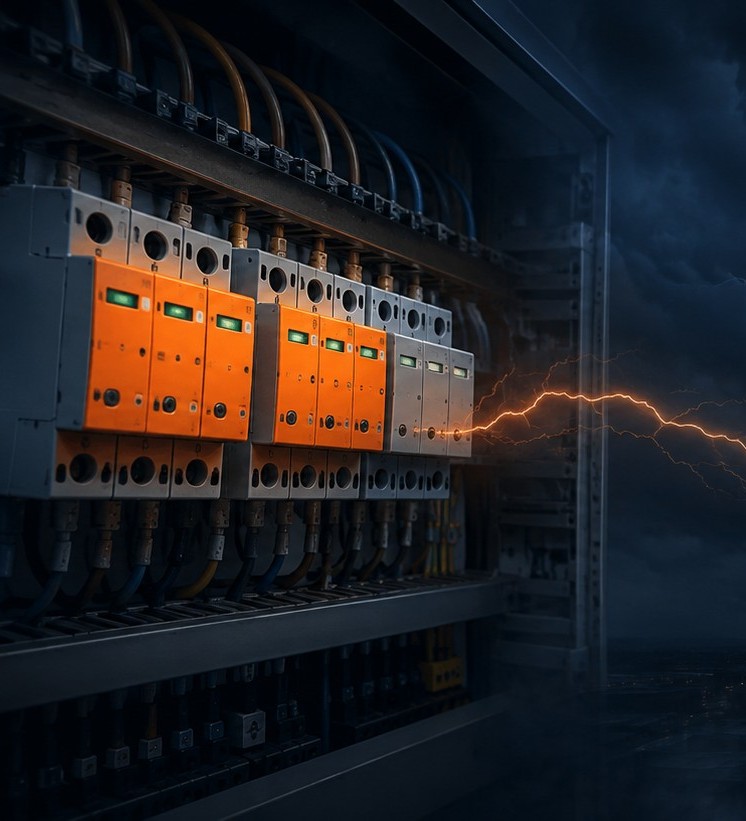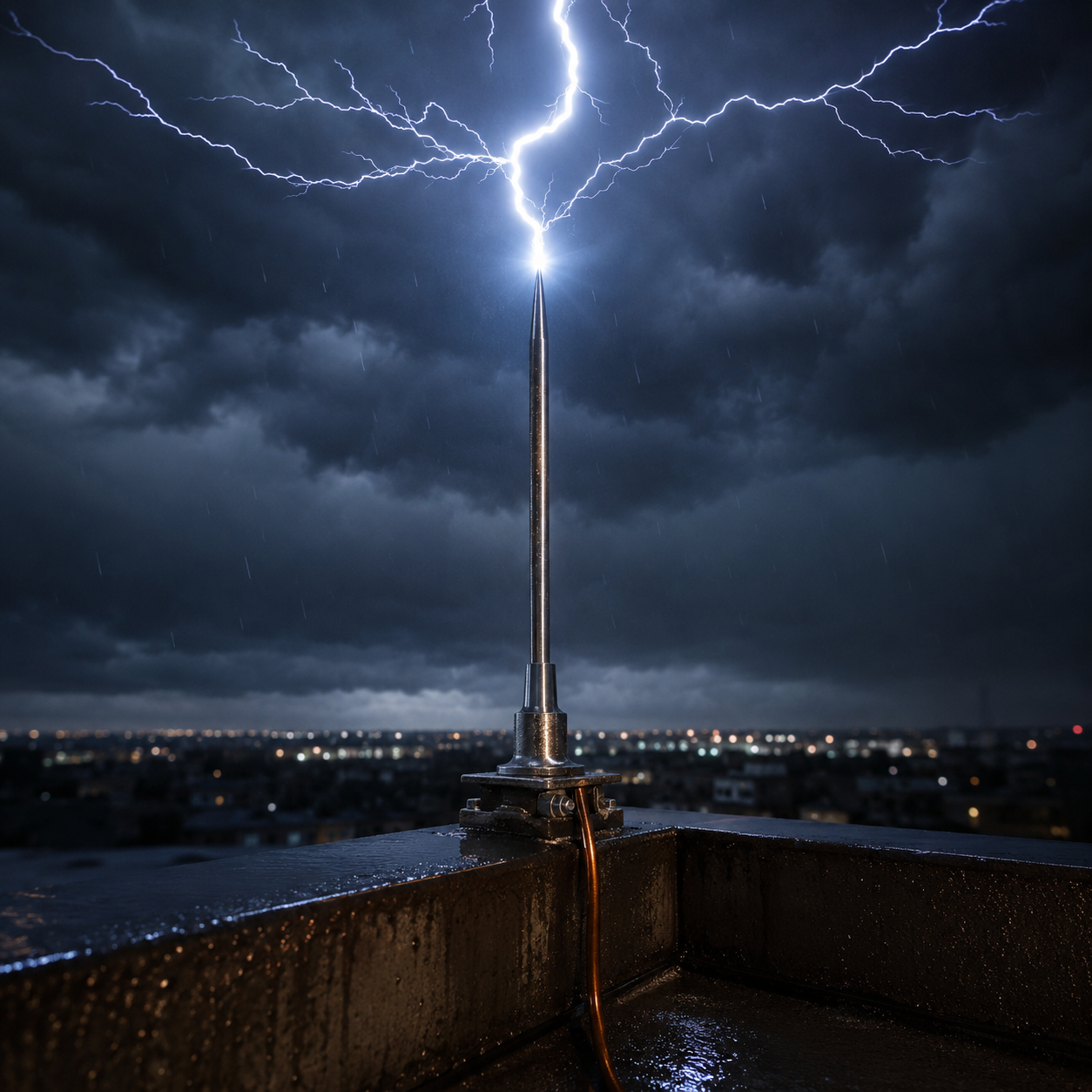
Surge protectors are insulating under normal operation, but when they experience a surge, they conduct and transfer the energy to the ground. This way, the system is protected against surges without any interruption in operation. Surge protectors have three main functions:
1- They provide protection against lightning strikes. (10/350 microsecond waveform)
2- They provide protection against internal overvoltages (8/20 microsecond waveform)
3- Protection of sensitive equipment
You may be interested: Common Misconceptions About Surge Protectors

You may be interested: Choosing a Surge Protector
What Are Surge Protectors Used For?
Surge protectors are manufactured as Class B (Class 1 or Type 1) for lightning protection, Class C (Class 2 or Type 2) for internal overvoltage protection, and Class D (Class 3 or Type 3) for protecting sensitive systems. Generally, surge protectors are used in:
- Transformer inputs
- Main panels
- Sub panels
- LED lighting systems
- CCTV, cameras, fire alarm systems
- Renewable energy systems
- Automation and communication lines