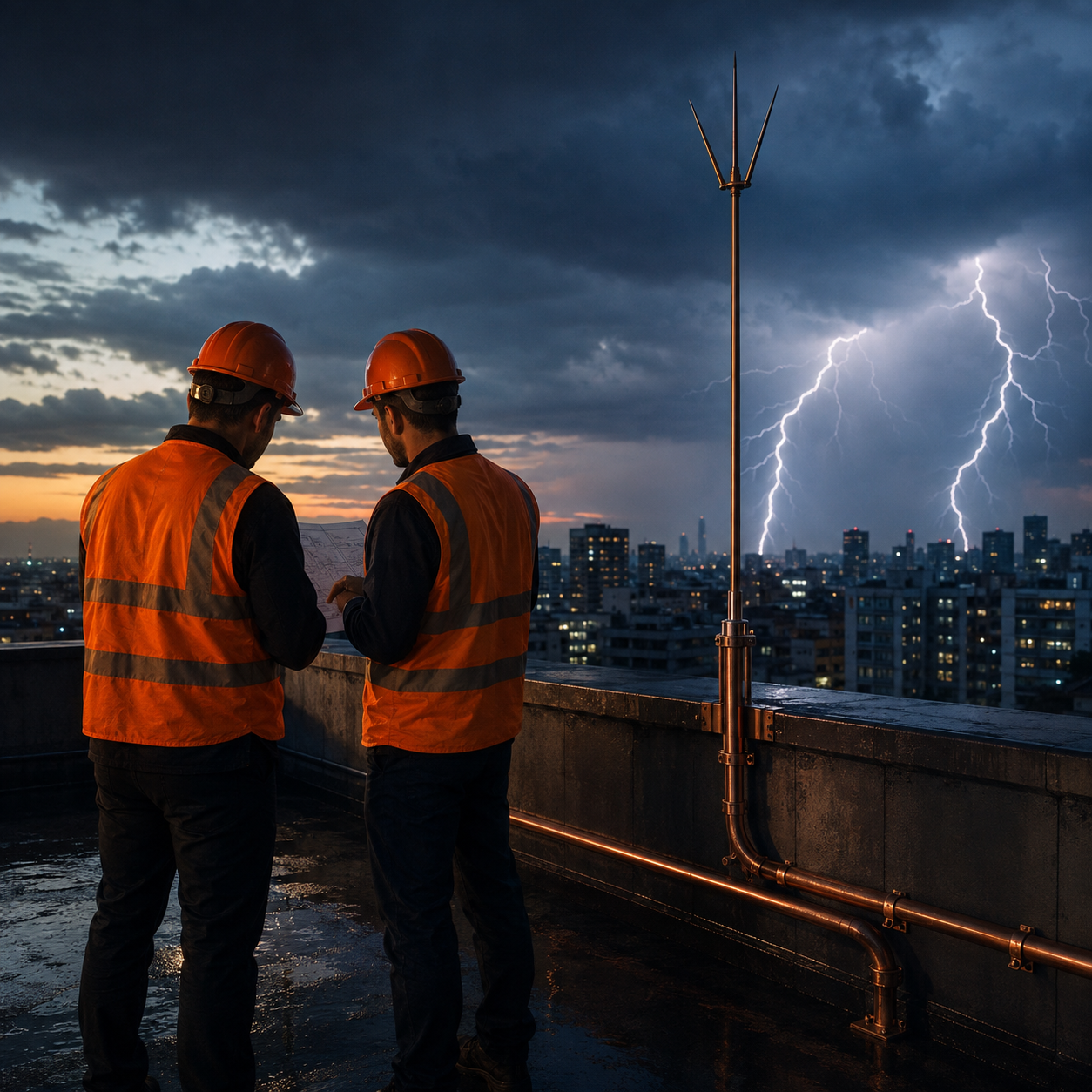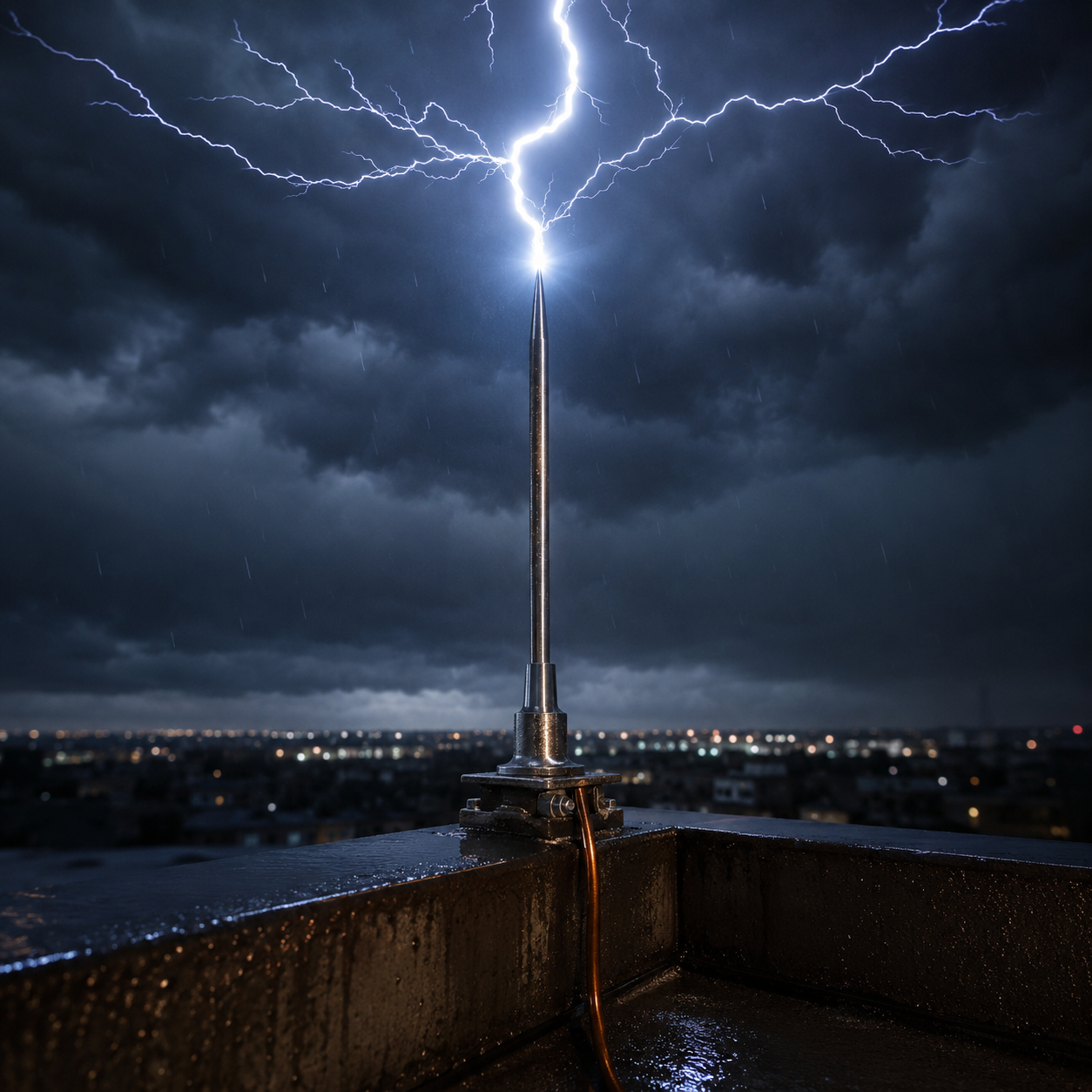

According to the rolling sphere method, capture rods with lengths of 8,000 mm–12,000 mm can provide area protection, and we can also protect our systems using the angle method by utilizing the rear bases of the panels. However, directly placing capture rods on the panels is not a correct application; as mentioned before, the ‘S’ protection spacing must be ensured. The capture rods placed behind solar panels do not cause shading as many people worry.

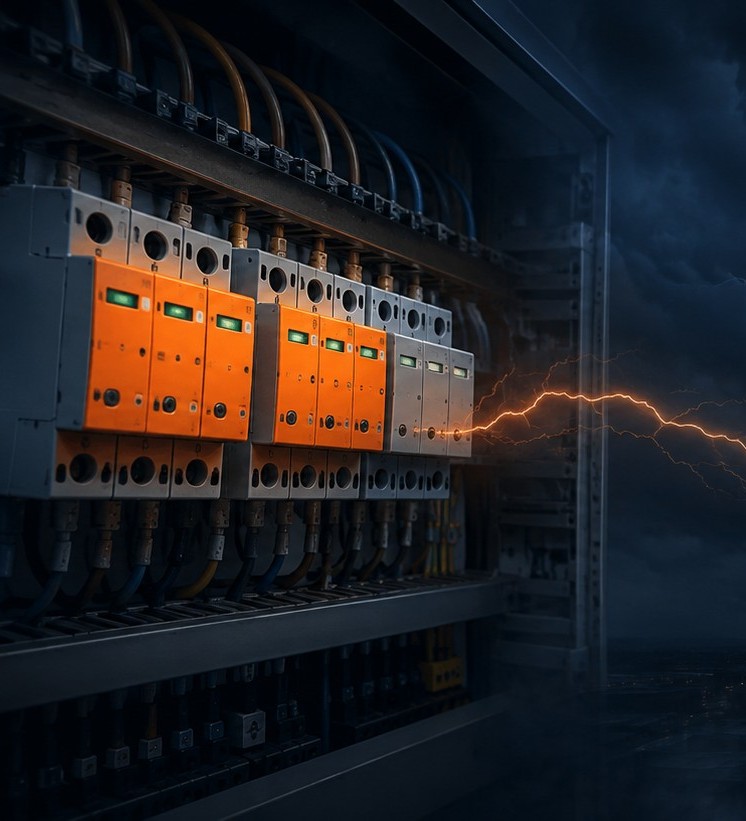
Design and implementation are therefore crucial. It is important to have shading calculations and design carried out by expert companies. It may not be necessary to use separate grounding for each capture rod if there is a solar plant base grounding suitable for the mesh method; we can use this global network. However, it is important to use B+C class surge protectors on our DC and AC panels and Class D on our data lines. If capture rods placed behind panels are stabilized with support from the panels, the equipment on top of the panels must be insulated. You can see example systems in the photos. For design, implementation, and product recommendations, you can contact Lightning Protection Center.