- CCTV and camera systems
- Fire and alarm systems
- Automation systems
- Electronic devices in homes
- Hydrophore systems and pumps
- Telephone lines
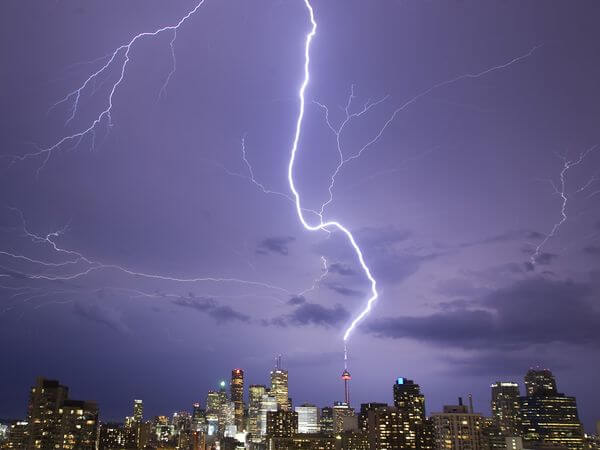
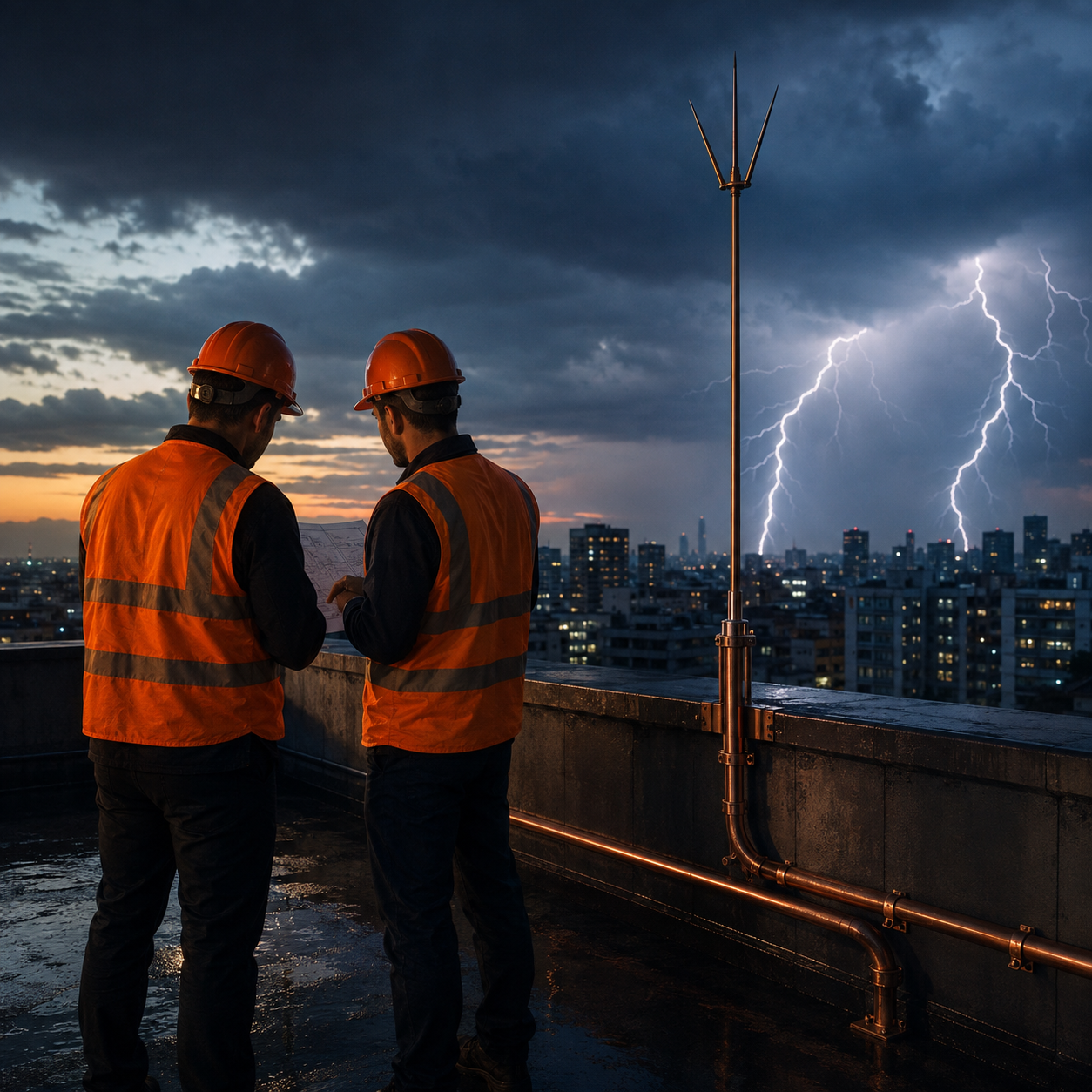
Lightning poses a serious risk of physical harm, especially in areas such as residential complexes where people live collectively. Therefore, first of all, buildings and people must be protected against lightning with external lightning protection systems. In the protection of buildings against lightning, the following systems can be used in accordance with standards.
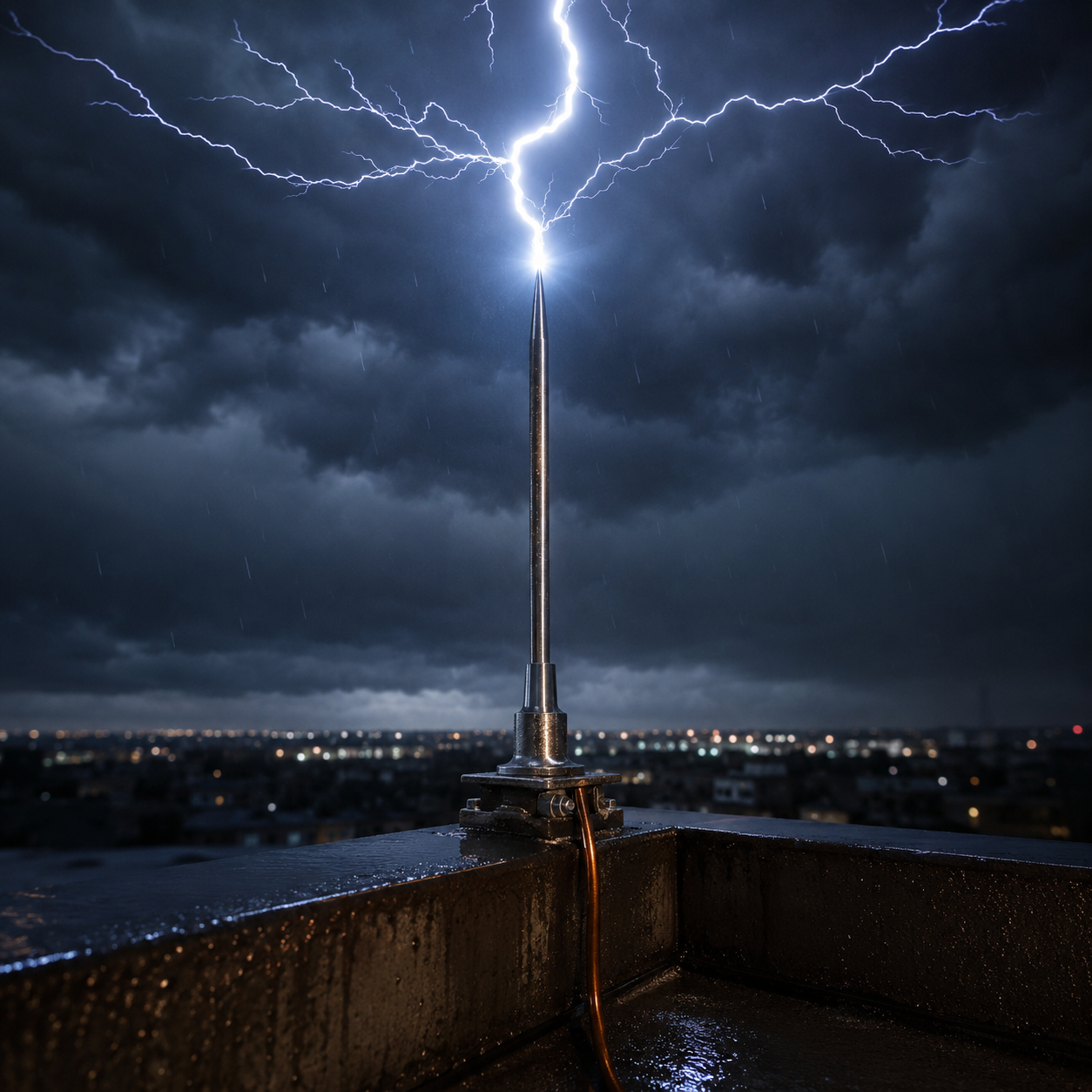
- Protection method using a Franklin Rod (air terminal)
- Faraday Cage Method and Catenary Wire Method
- External lightning protection systems with insulated conductors
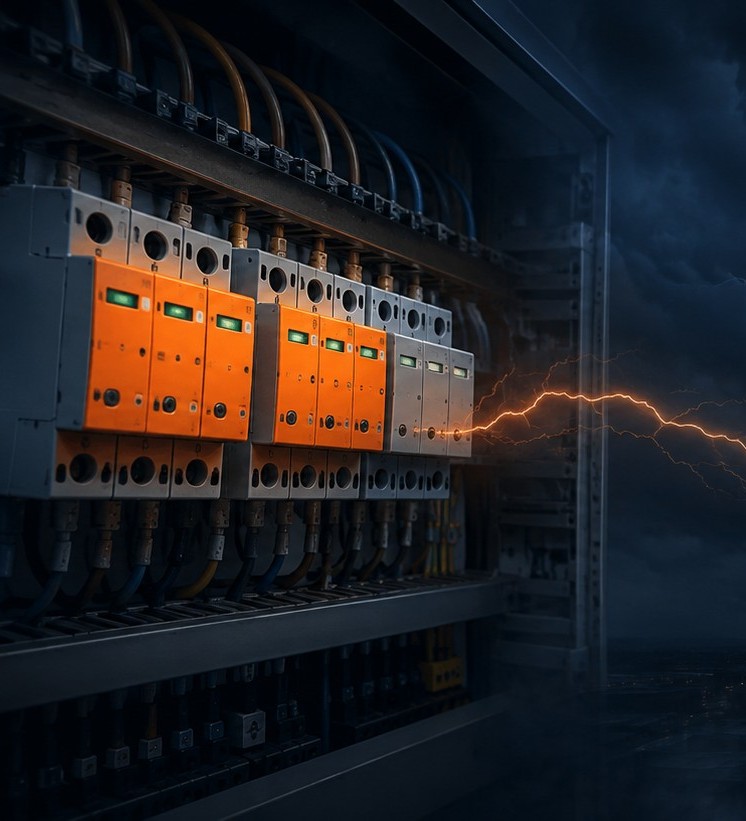
External lightning protection systems protect our facilities and people against the physical effects of lightning. Internal lightning protection (surge arrester) systems protect our electronic systems against overvoltage impulses. For this reason, we recommend using Class B Type 1 surge arresters in the main panel and Class C Type 2 surge arresters in sub-panels. Sensitive points such as camera systems should also be protected with Class D surge arresters.
The Importance of Grounding and Equipotential Bonding
After the installation of internal and external lightning protection systems, and if there are no issues with the grounding of our buildings, the final step to be taken is to ensure equipotential bonding between buildings within the residential complex. In equipotential bonding system applications, the grounding of external lightning protection systems must also be included in the equipotential bonding system.