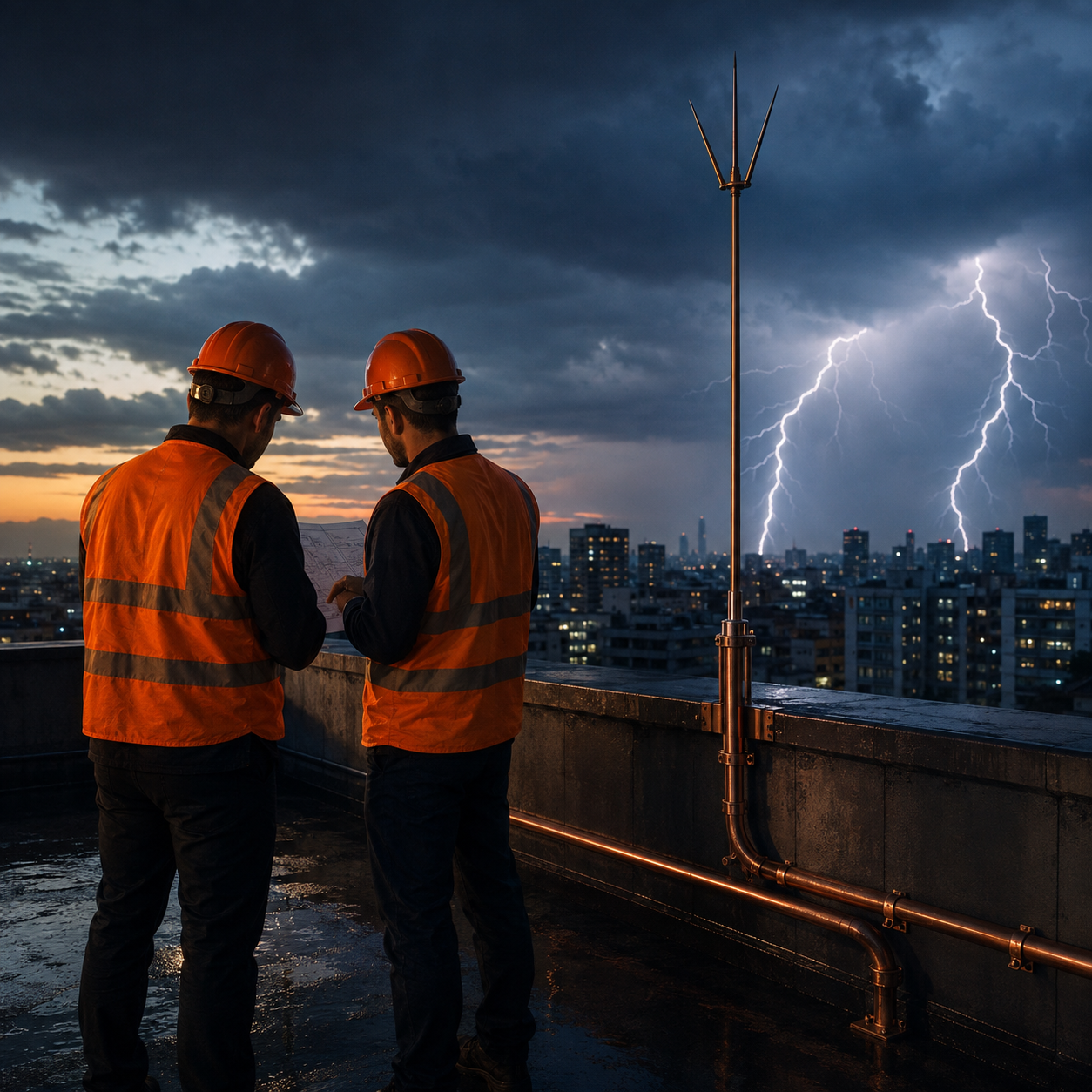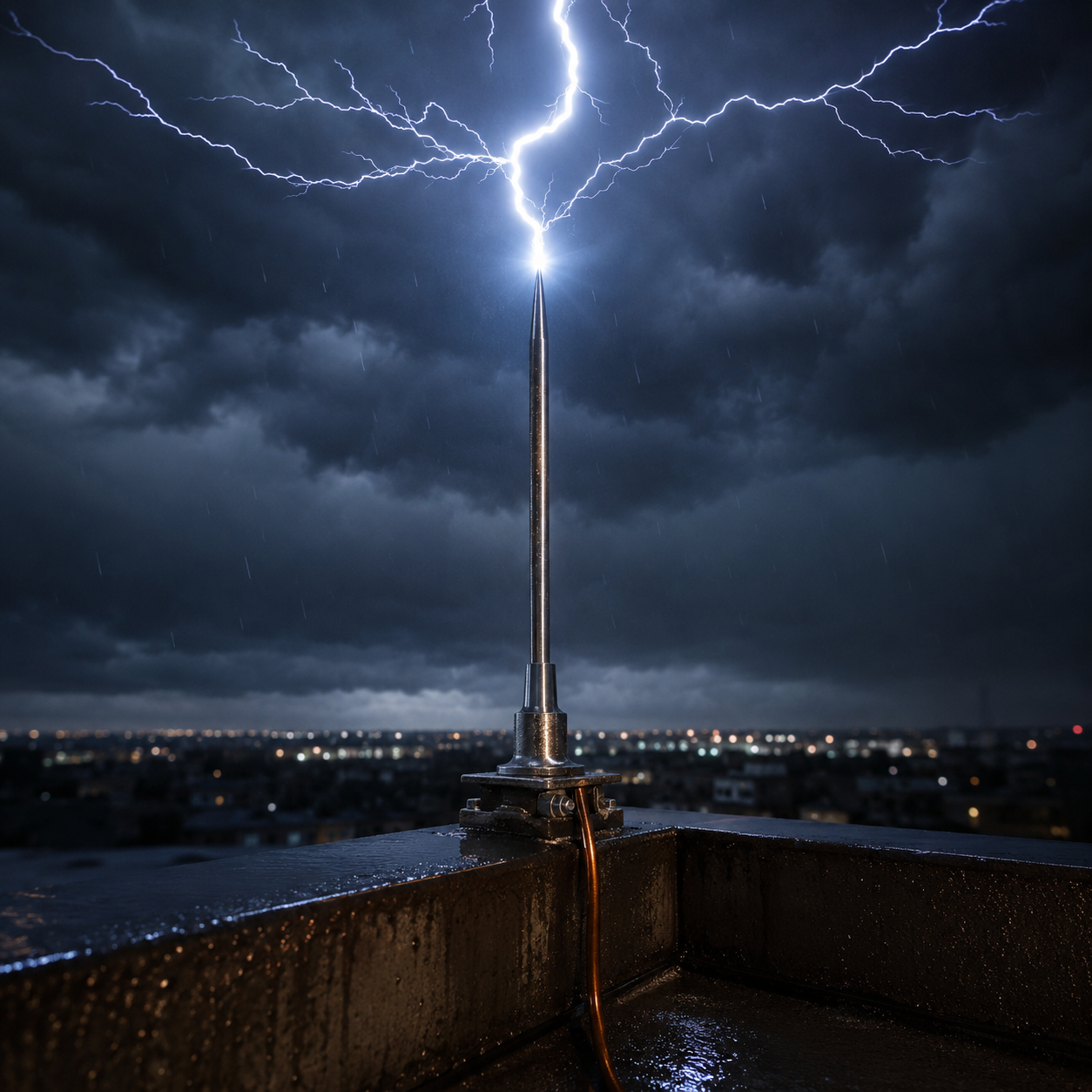
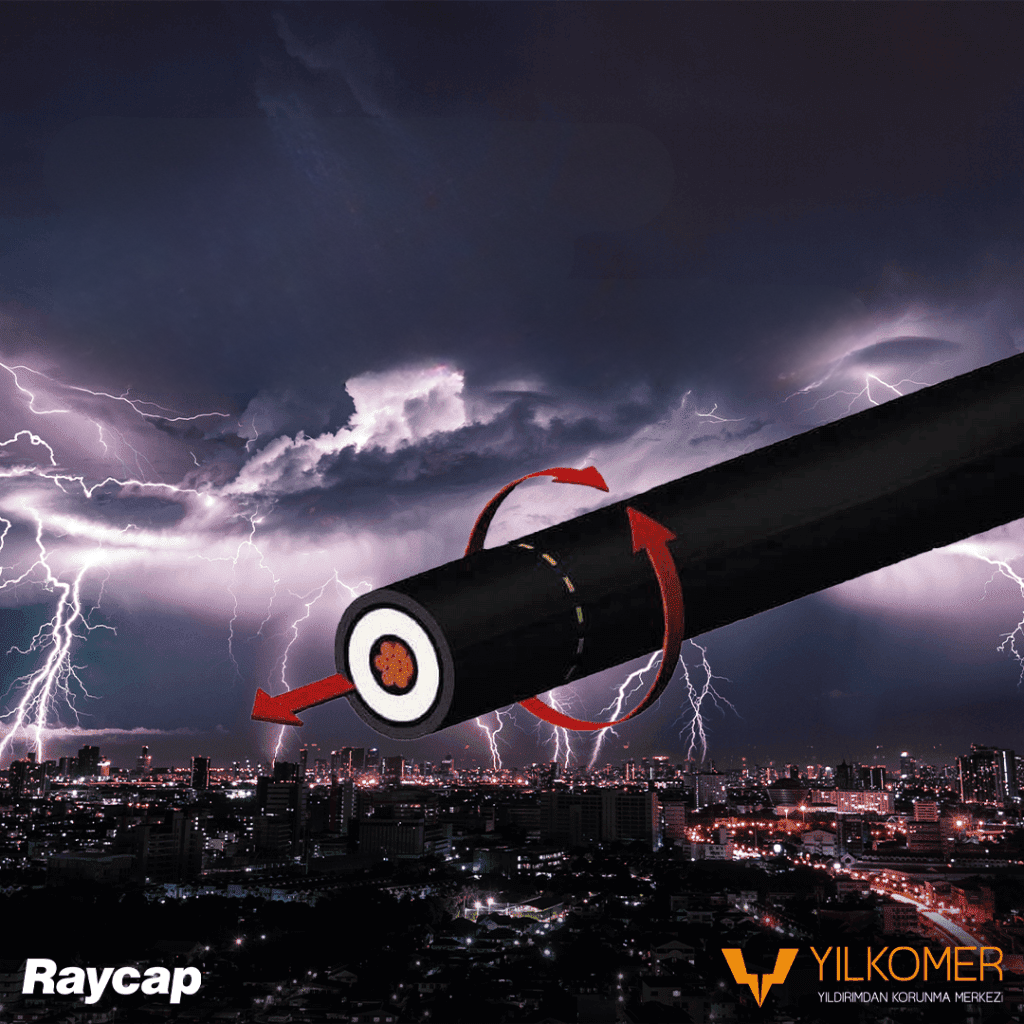
Lightning protection down-conductor systems are generally divided into two categories: insulated down-conductor systems and non-insulated systems. In non-insulated systems, the metal components of the structure are generally used as natural down conductors. Air terminals, rebars emerging from the building foundation, or non-insulated systems consisting of the building’s metal body and grounding represent the most primitive form of lightning protection. This method may be suitable for unmanned systems without electronic equipment and without flammable or explosive risks. In contrast, insulated lightning protection systems consist of more specialized and qualified components such as insulated air terminals, special insulated down-conductor systems designed to carry lightning from the roof to the ground, connection components, and grounding systems.

When electrical engineers choose between insulated or non-insulated systems in their designs, they must consider several important criteria. Performing a correct risk analysis is of great importance at this stage. With today’s technology, it is a fact that many weak-current and automation systems exist in industrial facilities as well as residential buildings. The use of non-insulated systems can damage all these systems in the event of a lightning strike. When choosing between non-insulated and insulated systems, the following questions must definitely be examined:
*Do I have electrical systems that may be damaged as a result of coupling effects during a lightning strike?
*If the building has a conductive surface, is there a risk of electric shock due to touch voltage during a lightning strike?
*Are there any fire- or explosion-risk equipment in the facility to be installed?
*Is there a flammable or explosive system or building insulation near the lightning down conductor?
*Is the cross-section of the metal reinforcements in the facility sufficient to carry lightning current?
*Do the grounding rebars or metal reinforcements extending to the roof rise continuously without interruption?

Insulated lightning down conductors have layers and insulation capable of eliminating the electrical effects of a lightning strike. They have the same cross-section and conductivity as bare conductors but carry the strike to ground while providing insulation. This prevents the electrical systems in your building from being affected by lightning and provides protection against fire and explosions.
As Yılkomer, we hold national responsibility for the Gromtor brand in Insulated Lightning Protection systems. With our 150kA insulated lightning down conductors, insulated air terminals, and connection equipment—backed by a 20-year warranty—we can provide flawless insulated lightning protection for your facility. You can download details and product information via the buttons below.
GROMTOR YILKOMER EXTERNAL LIGHTNING PROTECTION SYSTEM CATALOG