Common Misconceptions in Overvoltage and Lightning Protection Systems
As the Lightning Protection Center, we have tried to collect the information known as the most basic truth but is actually wrong regarding LV Surge Arrester Systems, External Lightning Protection Systems, Grounding, and Equipotential Systems, which fall into our main fields of activity.
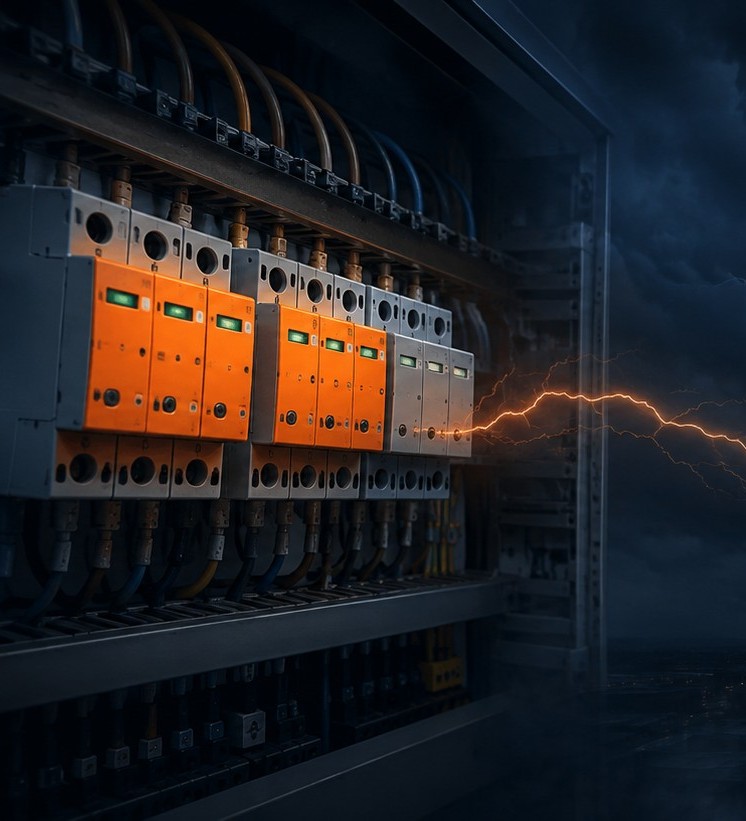
- If you have a lightning rod or any external lightning protection system, your electrical systems are not under protection. You need to use an LV Surge Arrester system to be protected.
- Using an LV Surge Arrester only in the Main Panel does not protect your system. Energy, data, and coaxial lines must also be protected.
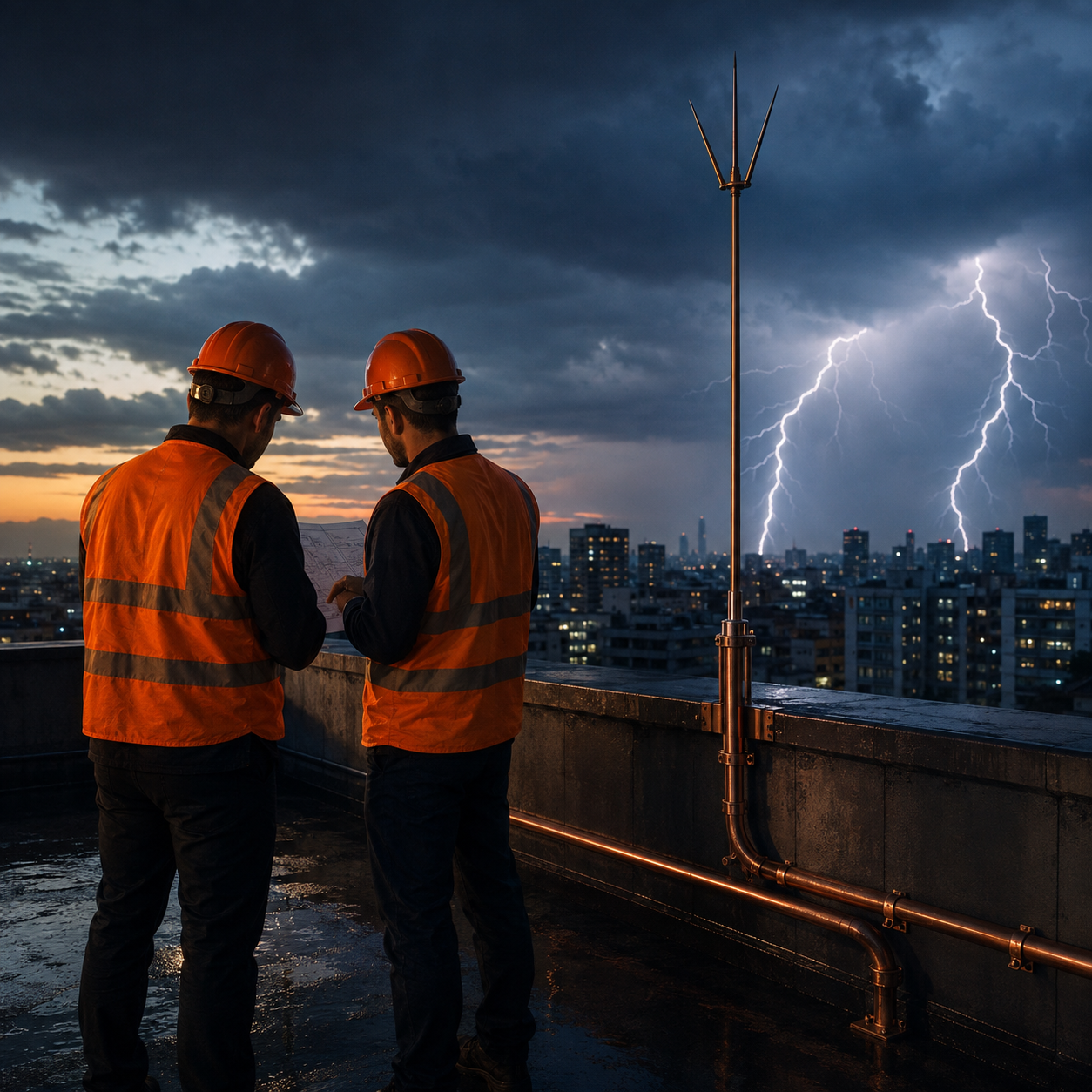
- The external lightning protection down conductor does not have to be solid copper. Within the scope of the IEC 62305 standard, different conductors can also be used as lightning protection conductors.
- Grounding the lightning rod 20 meters or a certain distance away does not eliminate its effect on the system. It must be brought to equipotential, including the external lightning protection grounding.
- In the selection of LV Surge Arresters, the kiloampere level should be selected by conducting a risk analysis. We do not have to use a 100kA product in every project just because it is written in every specification.
- It is objectionable to connect the lightning down conductor directly to the building surface as bare. Against the risk of sparking to electrical down lines, the separation distance ‘s’ should be calculated, or insulated down conductors should be preferred.
- Not all LV Surge Arresters are varistor-based. In emerging technologies, varistors and gas discharge tubes are located in the same cartridge, creating durable products.
- We do not provide protection against lightning impulses by using only TYPE 3 LV Surge Arresters. We need to perform cascaded protection in the light of IEC norms.
- We can provide 3-stage protection with Type 1 +2 +3 products at short distances. However, in high buildings and long systems, this triple effect will disappear when it exceeds 20 meters, and we have to use new products.
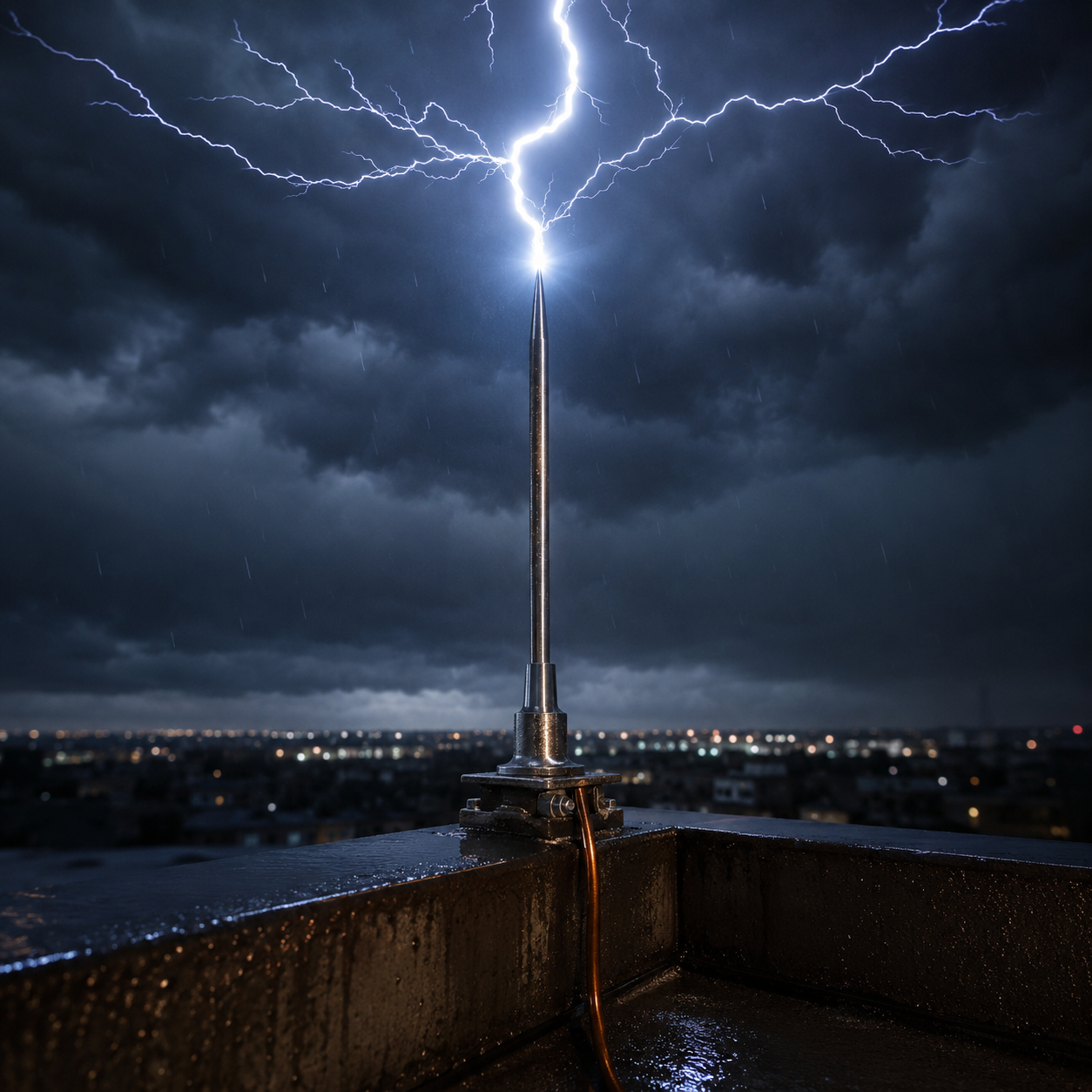
- There is no standard for the lightning rod (ESE) system in our country yet. The IEC 62305 standard is referred to as TSE EN 62305 in our country, and system installation according to the rolling sphere method with passive air terminals is foreseen.
- The use of lightning rods is risky in areas such as solar power plants, flammable explosive facilities, and gas stations; design with passive air terminals that do not attract lightning by emitting ions is the most correct solution.
- Whether there is an external lightning protection system in a facility or not, an LV SURGE ARRESTER system must be used.
- LV Surge Arresters do not only provide protection against lightning; they provide protection against grid impulses, harmonics, sudden voltage drops, and switching impulses.
- We cannot be protected against grid impulses by using only Class B Type 1 LV Surge Arresters. We cannot be protected against lightning by using only Class C Type 2 LV Surge Arresters.