If we list these causes;
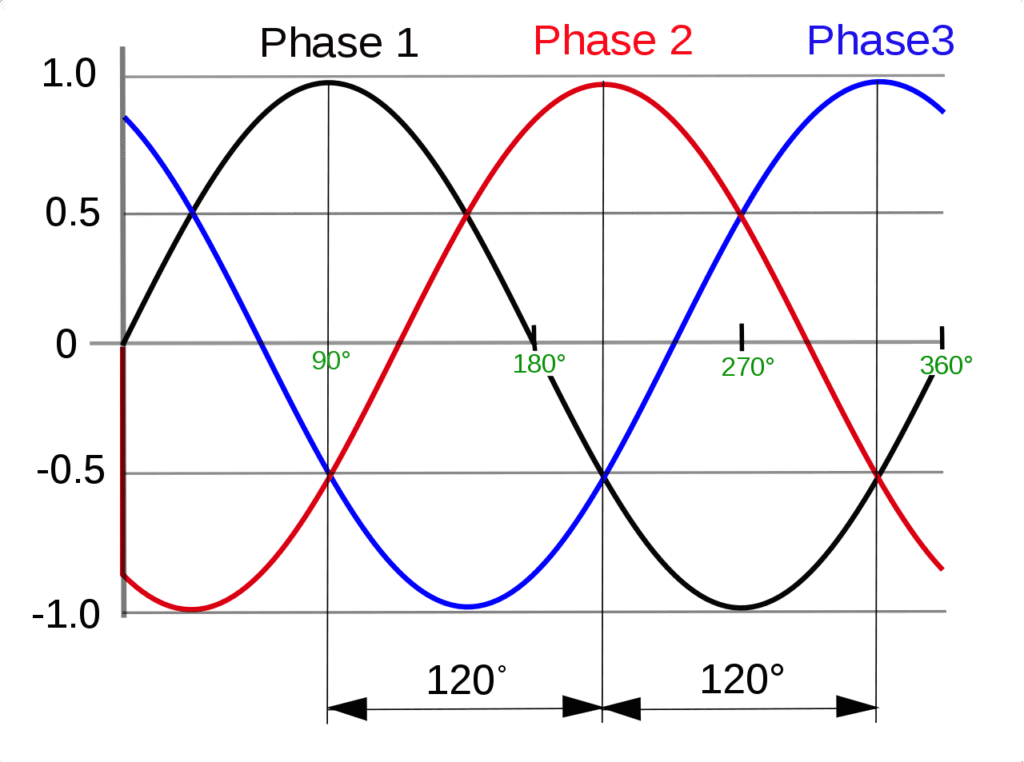
1 – Unbalanced Loading : This occurs due to significant differences between the power drawn from phases L1, L2, and L3 in our energy grid.
2 – Routing power cables alongside the PE (Grounding conductor) : Carrying high currents over long distances next to the protective conductor can cause induction on the protective conductor.
3 – Equipotential Imbalance : If the difference between resistance values across the system exceeds 1 Ohm, this indicates an equipotential imbalance, in which case neutral-to-ground voltage can be measured.
4 – Harmonics : A high concentration of grid- or load-originated harmonics may cause voltage formation due to harmonic currents flowing on the neutral.
5 – Static forces : Static voltage may occur due to effects such as air circulation, mechanical vibration, etc.

6 – Inductive loads : A high number of inductive loads and their concentration on a single phase may cause neutral-to-ground voltage formation.
7 – Lack of Operational Grounding : High resistance or disconnection in operational grounding causes phase shift, which in turn leads to neutral-to-ground voltage formation.
8 – Grounding electrodes : Installing grounding electrodes at close distances or placing them in alkaline environments may cause ground voltage formation.
9 – Earth Leakage Currents : Earth leakage currents may cause voltage formation on the ground.
10 – DC-based systems : If there are cathodic protection facilities, metro lines, or tram lines close to our grid, DC leakages from these facilities may cause neutral-to-ground voltages.
11 – Load-Originated Problems : Insulation degradation or the structural characteristics of the load supplied by our grid may create neutral-to-ground voltage.
To resolve neutral-to-ground voltage, it is essential to first understand the cause by measurement and analysis. These measurements can be carried out through Energy Analysis, Loop Impedance checks, Continuity tests, and measurement of ground transition resistance values.
Lightning Protection Center Our expert engineers and technical team can perform the necessary measurements at your facility and provide you with detailed reports. The most important point to remember is that when analyzing sudden overvoltage and lightning-induced impulses, the overall condition of the entire facility must also be considered.