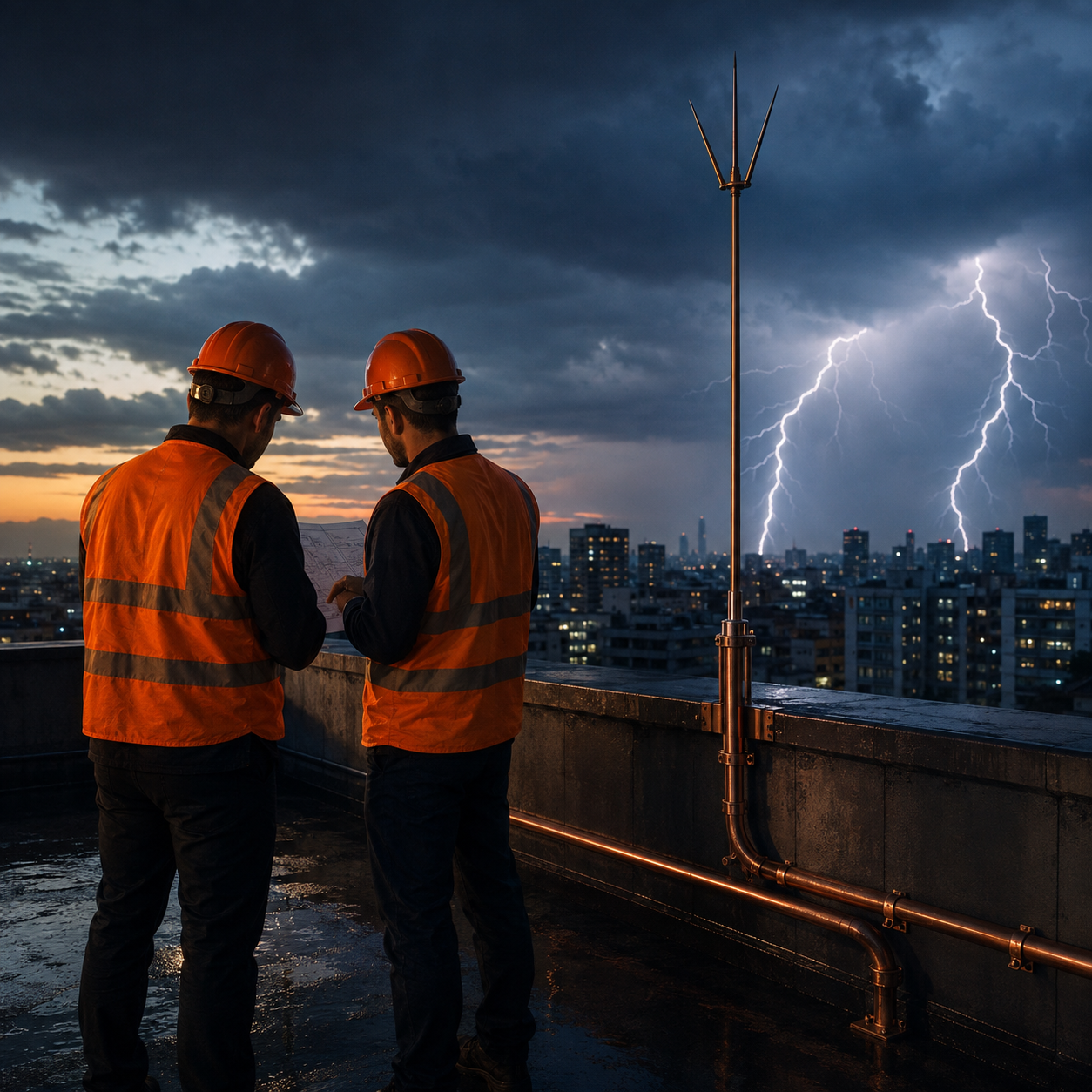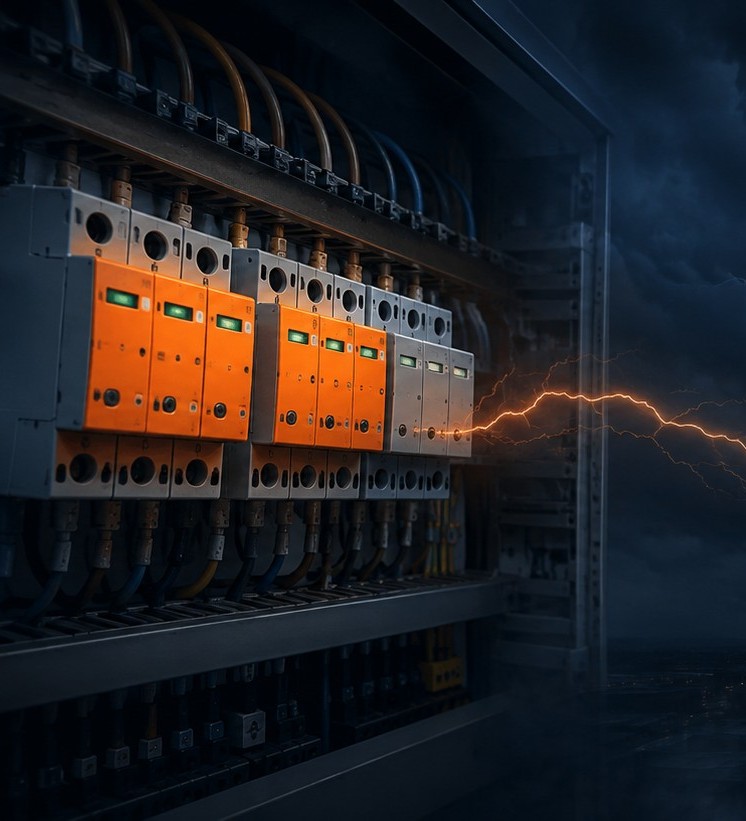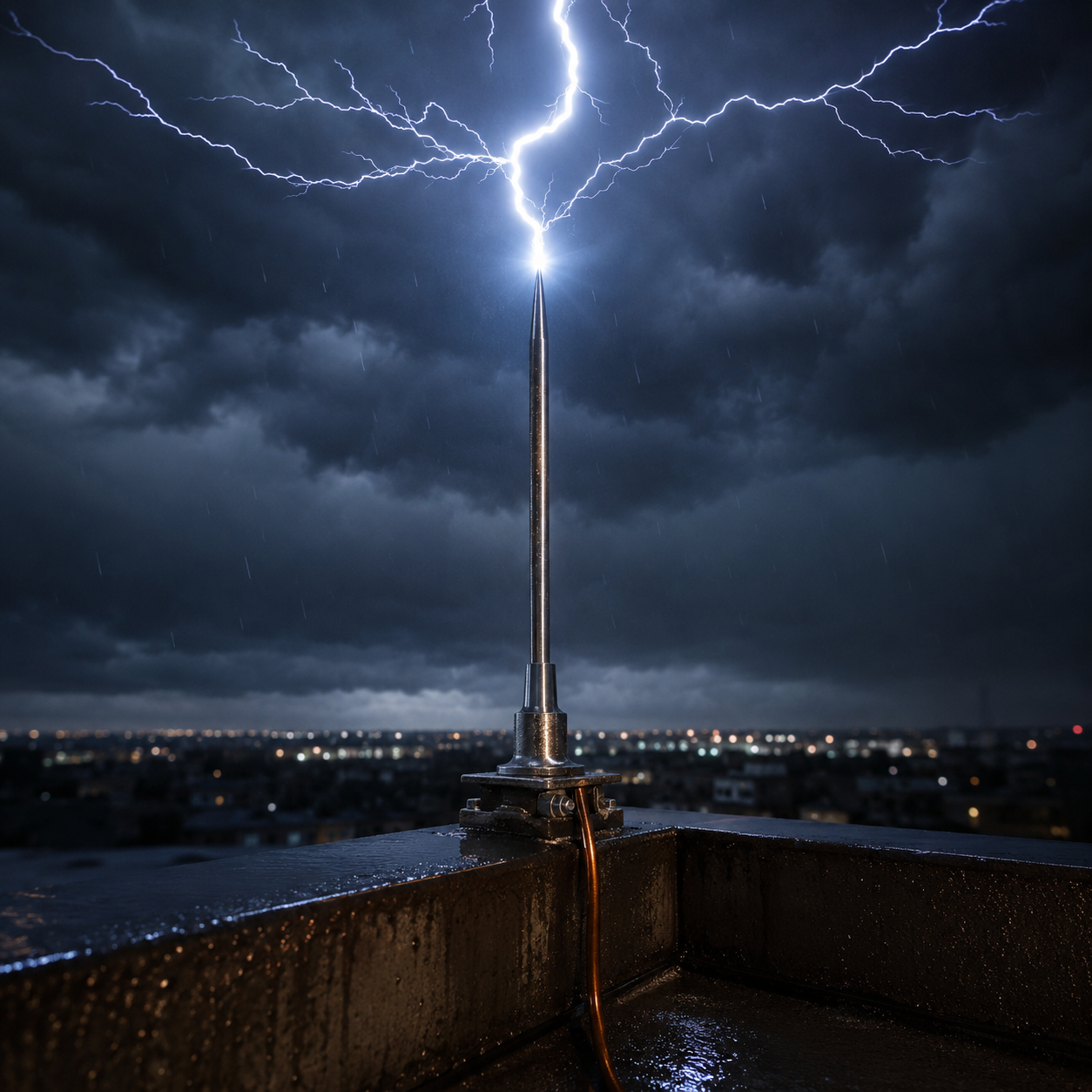
Earthing is the least visible but most decisive component of an electrical installation. The dispersion of the lightning current into the ground, the safe discharge of fault currents and the protection of human life all depend on this system. However carefully the air terminal is chosen, if the earthing is weak the system will not deliver the protection expected of it.
The correctness and the selection of the equipment used matter as much as the earthing design and its calculations. At Yılkomer we hold in stock every product needed to earth a facility; alongside this we provide survey, calculation, design and installation support from a single source.
Four Factors That Determine the Performance of an Earthing System
The same electrode gives a completely different result in sandy soil than in clay soil. The first step in a correct design is to measure the soil resistivity on site. Without this measurement, the number and depth of the electrodes chosen is no more than guesswork; in high-resistivity soils it often falls short.
Rod electrode, angle-bar electrode, strip conductor or ring earth electrode — which of these is used is determined by the soil structure, the condition of the existing building and the target resistance. On the material side, hot-dip galvanised steel, copper-bonded steel and solid copper offer different balances of service life and cost.
The weakest point of an earthing network is almost always the connections. Mechanical clamps loosen over time and are open to corrosion; exothermic (thermite) welded connections, by contrast, become one with the conductor, provide the same current-carrying capacity and stay sealed against corrosion underground. At points where dissimilar metals meet, the risk of galvanic corrosion must also be taken into account.
Once the earthing is buried it disappears from view; for this reason inspection pits and test points must be built into the design from the outset. The resistance and continuity measurements made during commissioning must be recorded and repeated at the periodic inspections.
The Main Product Groups We Hold in Stock
The following items are always available from our stock, in a range of sizes:
- 30×3.5 galvanised earthing tape — The most widely used cross-section in ring earthing and down conductor applications.
- 30×3 galvanised earthing tape — An alternative cross-section chosen according to the project specification.
- Copper earth electrode — For applications in corrosive soils that call for high conductivity and long service life.
- Angle-bar earth electrodes — A profile-type electrode that is easy to drive into hard, stony ground.
- Solid copper earthing conductor — For critical facilities, giving low impedance and a long service life.
- Equipotential busbar systems — The collection point at which the metal parts, the building services and the protective conductors inside a structure are bonded to a common potential.
- Lightning air terminal systems — The terminals and support components that form the air termination points on the roof.
- Air terminal base — Base solutions that hold the terminal in place by weight, without penetrating the roof covering.
- Cross connector — A standards-compliant mechanical connection for tape-to-tape and tape-to-round-conductor joints.
- Exothermic welding equipment — An exothermic welding set with crucible, mould, igniter and powder materials.