In this article, we will talk about the DC energy part, which is generally more difficult to protect and where errors are often made.
Problems Experienced in DC Surge Arresters
- Arc formation in the surge arrester, overheating, and fire risk
- The surge arrester not providing the desired lifespan
- Variable nature of the DC load
- Occurrence of burning due to overload
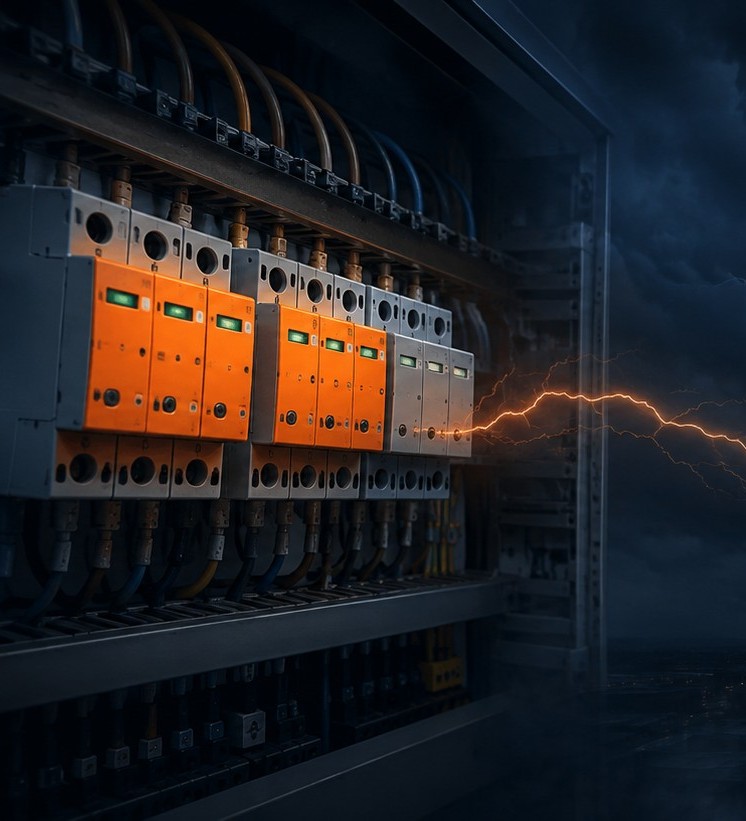
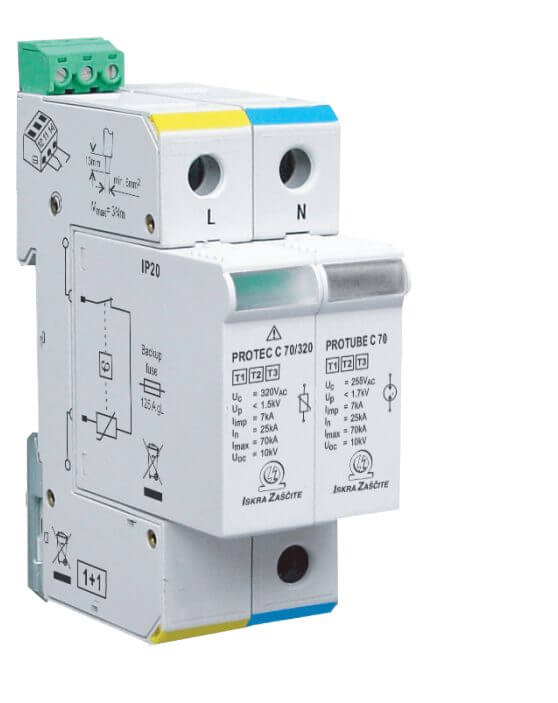 One of the problems frequently encountered with surge arresters on the market is that due to the long distance between the MOV and the disconnector, when a heat increase occurs in the surge arrester, it is detected very slowly by the MOV. In Protec technology, the electrodes are soldered onto the MOV.
However, there is a physical barrier between the MOV and the electrodes. The existing rotating disk reacts in less than 1 second, ensuring the safe disconnection of the MOV from the system in the surge arrester. Thus, the MOV is protected when an excessive impulse or energy comes to the surge arrester. In addition, this physical barrier prevents the arc event that occurs especially in DC surge arresters . As Yılkomer , we recommend Type 1+2+3 surge arresters with Safetec Technology on the DC and AC sides for a longer-lasting and safer power plant.
Why Type 1+2+3?
Unfortunately, most inverters sold with surge arresters on the market only provide Type 2, i.e., sudden overvoltage impulse protection. Meaning, lightning protection does not exist in these inverters. Moreover, due to the lack of Type 3 protection, the Up protection level of these surge arresters is high. Therefore, the protection of an electronic system such as an inverter cannot be achieved.
As can be seen in the PV plant below, both AC and DC protection of the inverter is provided by using LV surge arresters before and after the inverter. It is important to perform Type 1 and Type 3 protection simultaneously to achieve this sensitive protection.

Another point not to be forgotten is that communication and measurement systems in solar power plants must be protected. From meteorological measuring devices such as radiation, wind, etc., to RS 232 communication lines, data collection systems must be protected. We have witnessed Data Loggers burning out in many SPP facilities in our country.
You May Be Interested In: DataLogger Protection