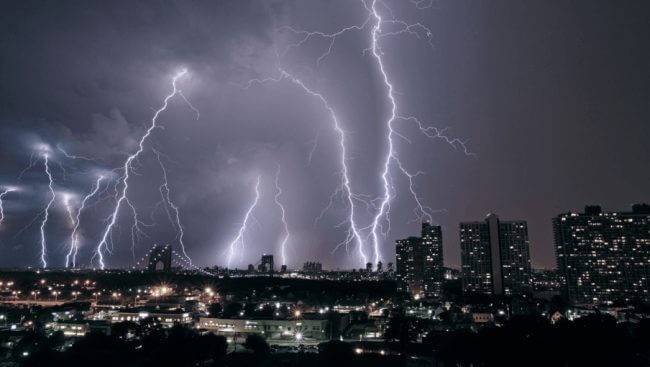
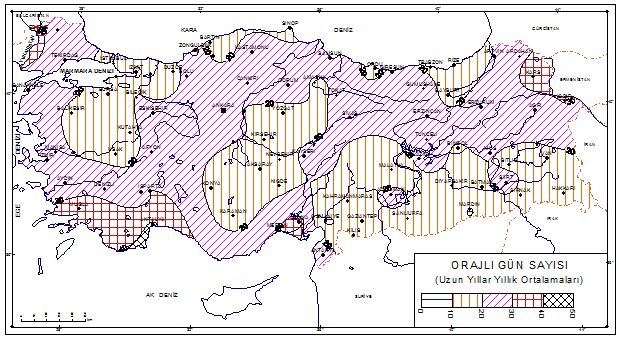
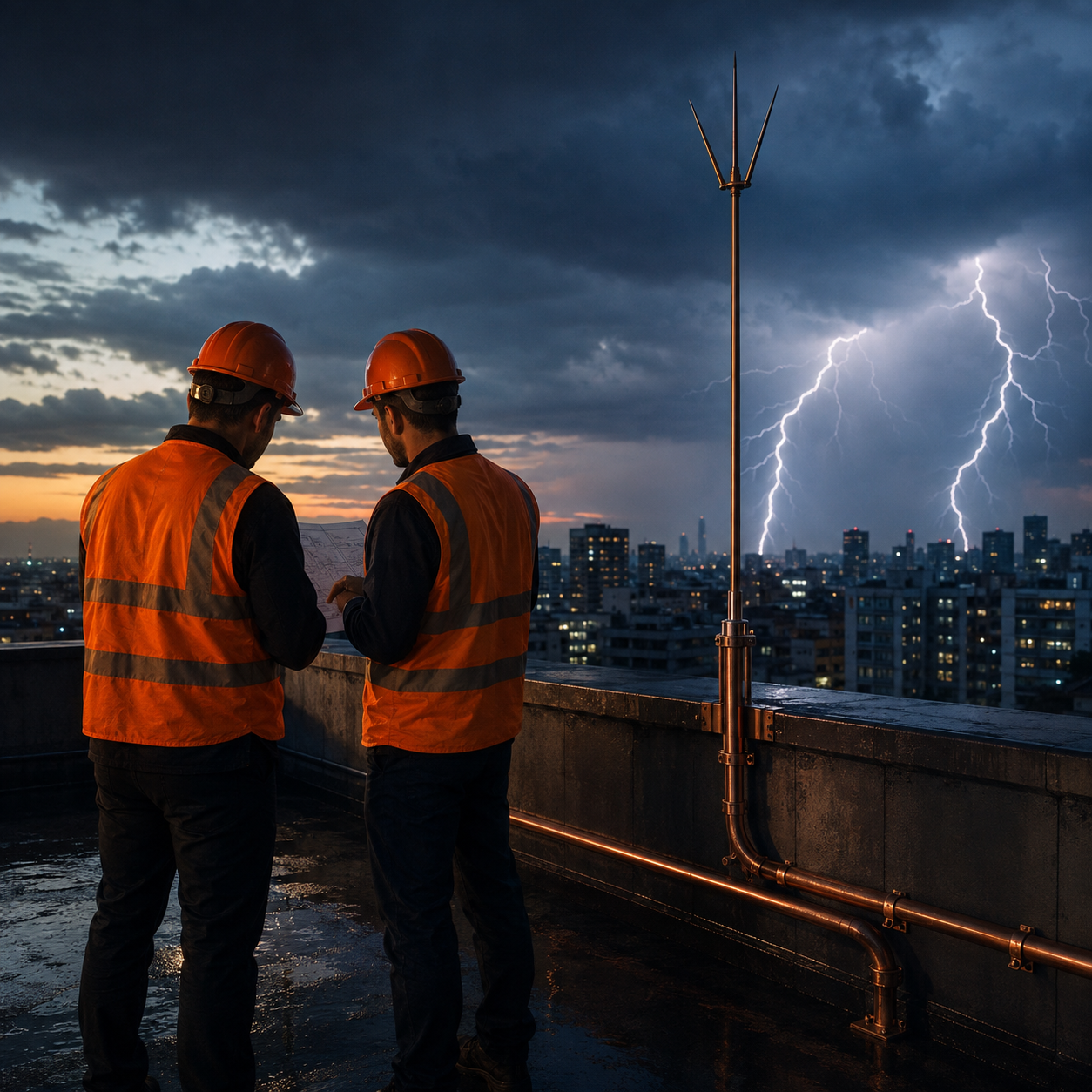
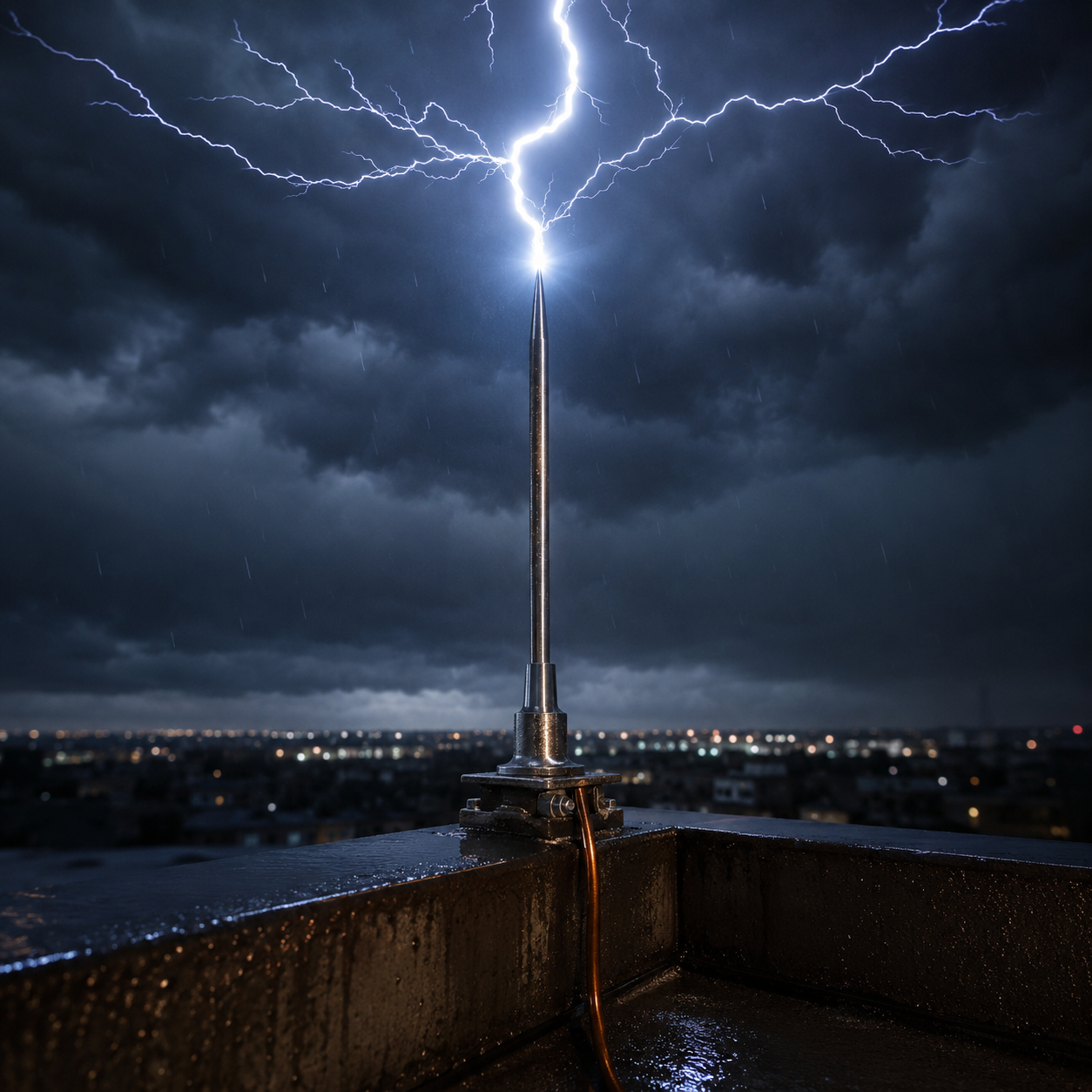
Protection against lightning and overvoltage requires one of the most important steps: performing a lightning risk assessment. Just as every building is different, each geography is unique. In Turkey, for example, Antalya, Mersin, and Muğla have a high risk of lightning strikes, and the strikes are particularly strong. Another important factor in lightning risk assessment is that all calculations and engineering must comply with IEC 62305-2 standards. Based on this risk assessment, decisions should be made on how to protect against lightning and which products to select.
Map of stormy days in Turkey
Risk Assessment of Buildings
Lightning strikes affecting the building, as a source of damage:
S1: Directly to the building
S2: Near the building
S3: To service installations
S4: Near service installations
Separation of Lightning Effects:
D1: Harm to living beings due to touch and step voltages
D2: Physical damage
D3: Malfunction of internal systems due to electromagnetic effects
You can contact our center for lightning risk assessment.
Classification of Losses
Possible losses due to lightning strikes:
L1: Loss of life
L2: Loss of public services
L3: Loss of cultural heritage
L4: Loss of economic assets
R1: Risk of loss of life
R2: Risk of loss of public services
R3: Risk of loss of cultural heritage
R4: Risk of loss of economic assets
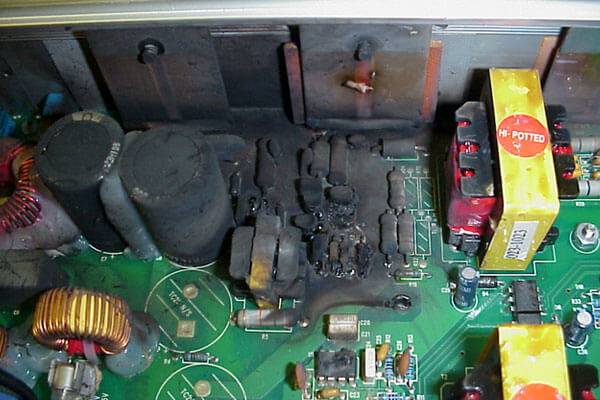
Every year, millions of lira are lost due to lightning strikes.
These values need to be calculated. Each risk component can be expressed using the general equation:
Rx = Nx . Px . Lx
Nx: Annual number of hazardous events
Px: Probability of building damage
Lx: Loss
By calculating this component, it can be determined whether protection against lightning is required based on an acceptable level.
Tell us about your project and we will get back to you shortly.
View Your Result
Your calculation is ready. Leave your contact details and your risk assessment will appear right away.
Get a Quote for Your Selection
Your answers from the tool have been added to your request automatically. Leave your contact details and we will confirm the recommendation and prepare your quote.