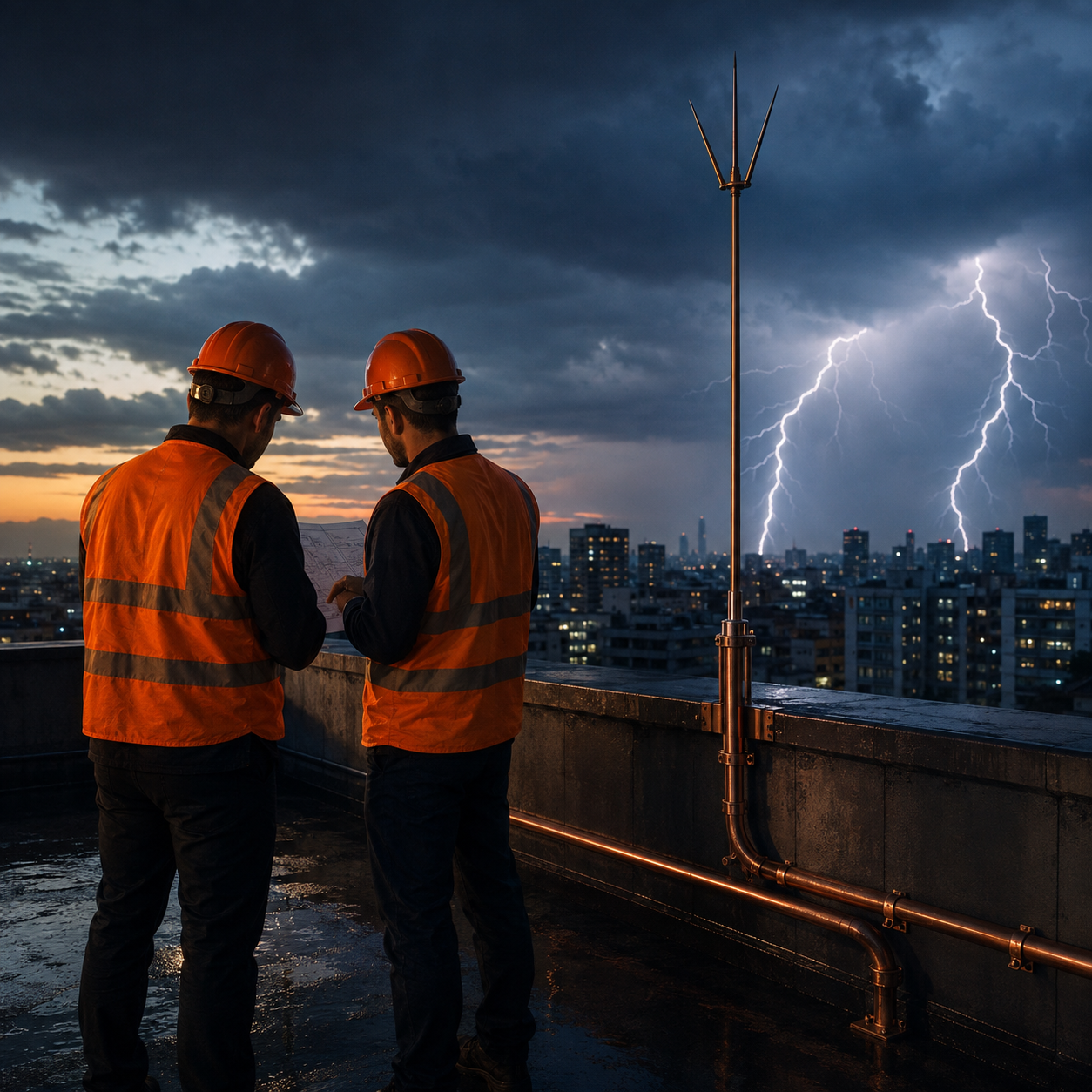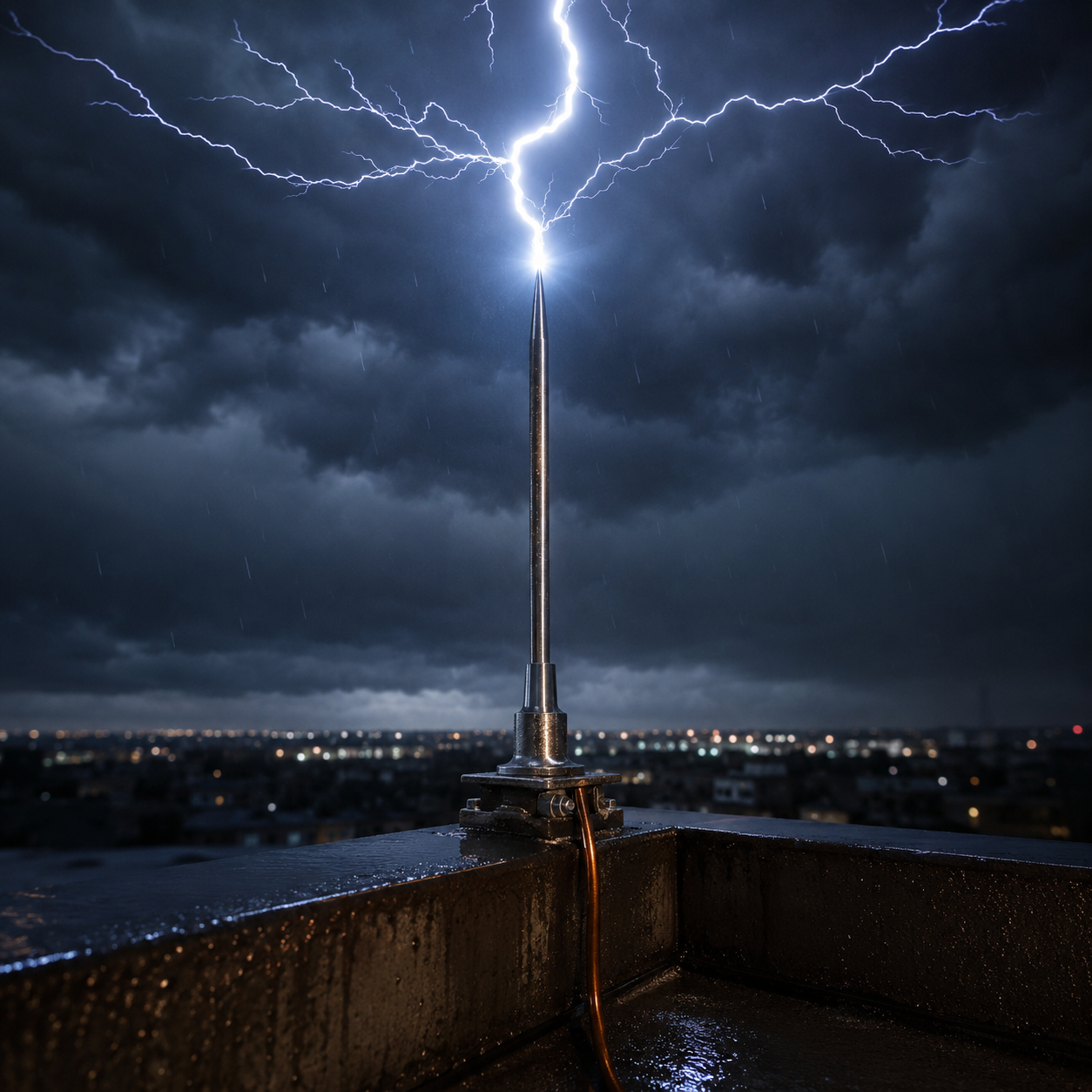
In our facility, different types of grounding such as basic grounding, protective grounding, operational grounding, and lightning protection grounding should be bonded to equipotential using special connection components. For example, after installing the lightning rod tips in opposite directions in a tripod shape, they should be bonded to equipotential using spark gap surge arresters. Therefore, local equipotential bars in the facility can be connected to the main equipotential bar. Branches from the ring line surrounding the facility should be connected to table mounts, the external lightning protection system, and fences, forming the basis for equipotential bonding.

It is important to ensure that grounding equipment in the facility is not made of different metals. Bimetallic effects are the most dangerous cause of corrosion. Using copper in the facility is not mandatory. Within standards, 70-micron coated grounding strips and 3 mm thick connection components can be used; however, in lightning protection grounding, special AlMgSi alloy conductors tested for 100 kA ensure long-term stability of grounding and protection. If possible, lightning rod tips and main connections can be selected as stainless steel components.

Applying corrosion protection at all connection points is also very important. All buried equipment should be connected to the ground starting from 80 cm. In summary, application, product selection, and reporting are critical in grounding solar systems. In many projects, grounding is done only via table mounts to save costs, which creates a technically inadequate scenario considering the investment scale.

All these implementations require careful planning and calculation beforehand, and in the design stage, Soil Resistivity Measurement is the most critical point. Not measuring the soil resistivity at the installation site will affect all calculations.