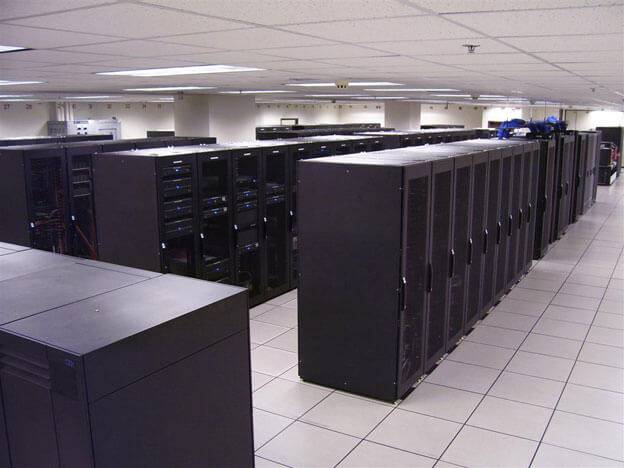

The common misconception is to think of uninterruptible power supplies as an overvoltage protection system. However, these systems only regulate voltage fluctuations in the network. They do not include any overvoltage protection system. Most devices that claim to include one only have a small low-pass filter. This filter protects only against radio frequency interference and does not guard against high-amplitude, damaging transient overvoltages.
What About Fuses and Relays?
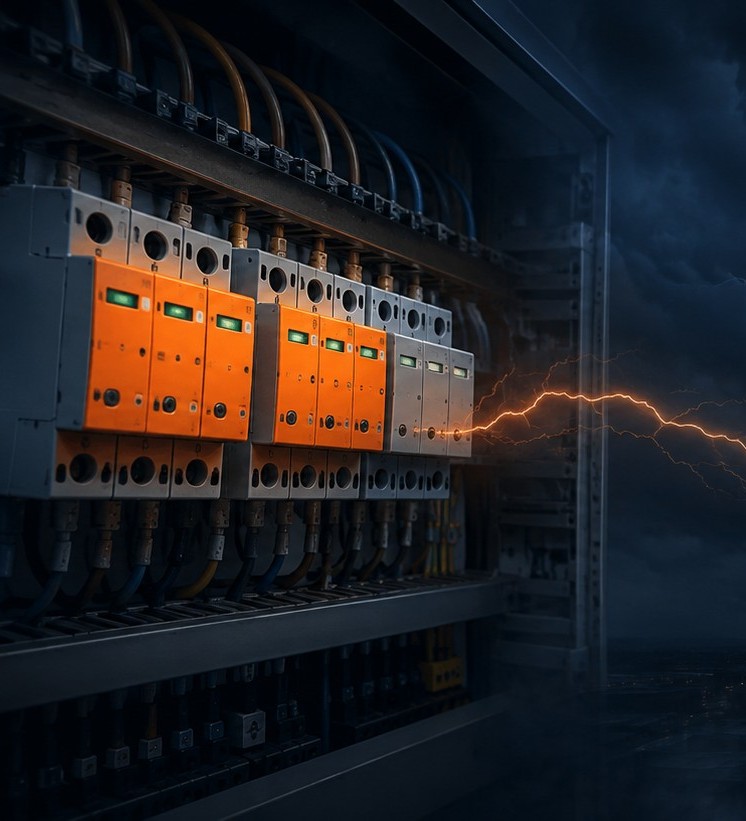
Fuses and relays in panels are ineffective against lightning-characteristic voltage surges. Fuse- and relay-based protection systems are designed for long-duration surges. Lightning surges, on the other hand, have a very short duration and dissipate slowly across the ground. Therefore, surge arrester (parafudr) systems are required.
Importance of Step Protection
According to DIN-IEC standards, lightning and overvoltage protection should be implemented in a stepwise manner. Each step reduces the surge voltage to a level harmless to the system. Class B protection is used against lightning surges, Class C against transient overvoltages in the facility, and Class D for protecting sensitive equipment. Class B surge arresters are also called Class 1 or Type 1, Class C as Type 2 or Class 2, and Class D as Class 3 or Type 3.