The greatest risk associated with lightning strikes directed at ships is fire, and all contributing factors must be eliminated. Marine vessels, which often contain wooden-based materials, are particularly exposed to fire risks when electrical energy is converted into heat. In addition, all onboard equipment and communication systems must be protected electrically.
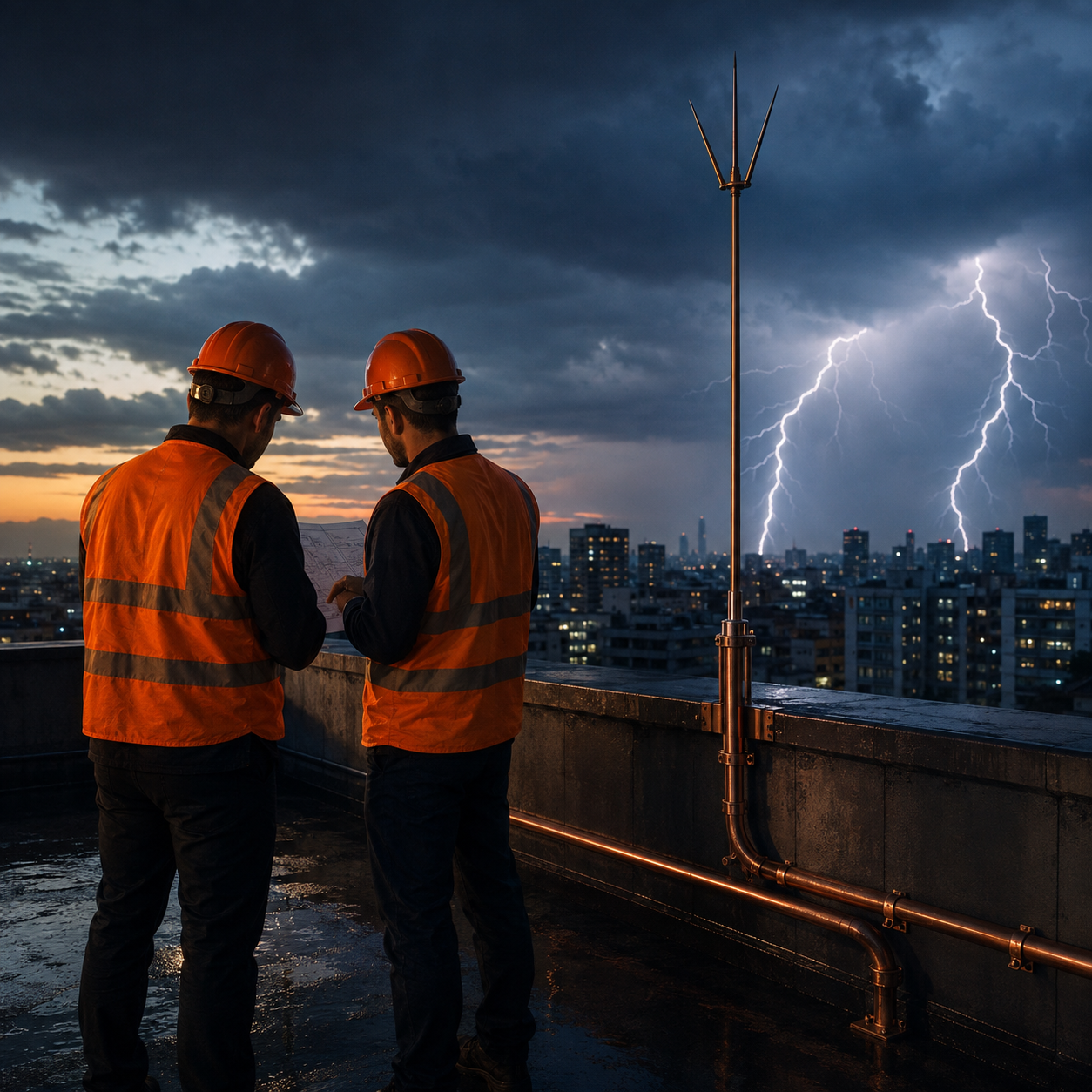
Rather than attempting to attract lightning, protection angles should be created using
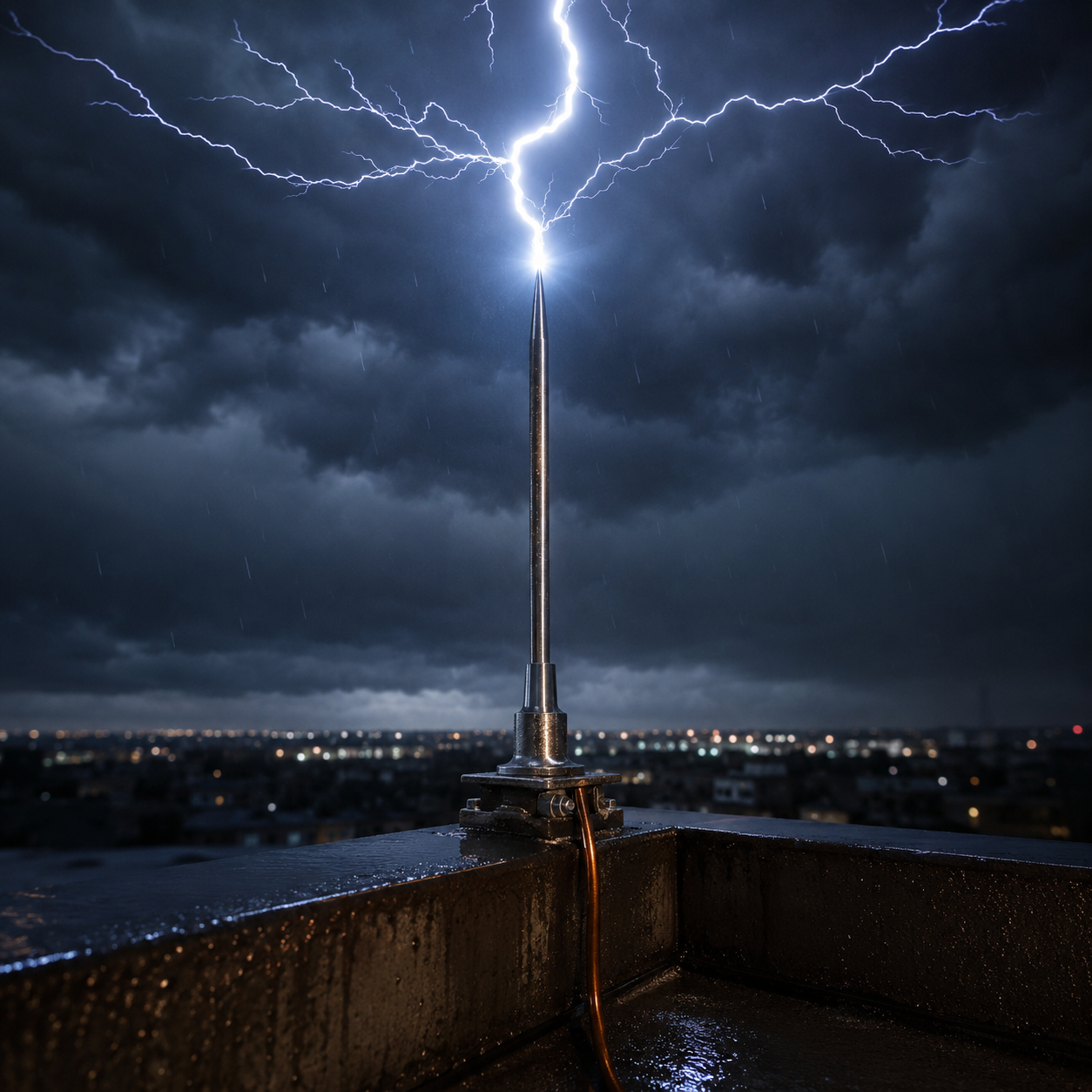
passive air terminals
so that the system activates only if lightning actually strikes the vessel. Based on air terminal design and calculations, protection coverage areas should be determined by considering the vessel’s dimensions and height above sea level. Selected air terminals must be insulated types.
Subsequently, the down conductor system comes into operation. Our strict recommendation is to use insulated lightning down conductors. Bare conductors directly transmit the thermal, electrical, and magnetic effects of lightning into the system. Therefore, insulated lightning conductors that have passed specialized testing must be used. Bare conductors also pose a risk in terms of touch voltage on metal surfaces. For human safety, we strongly recommend insulated conductors. The rolling sphere method and protection angle method must be fully applied in all calculations during system design.

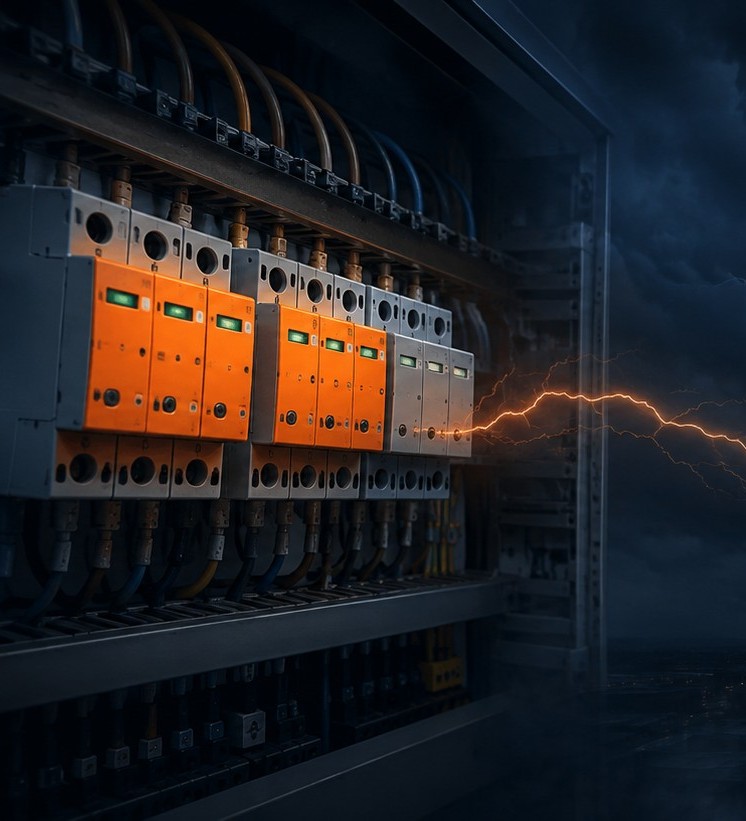
Another critical aspect is that even if lightning does not strike the vessel directly, it may still cause severe electrical damage. A lightning strike occurring within a 2 km radius can destroy onboard equipment. In accordance with IEC 61643 standards, and considering continuous operating voltages, all energy, data, and coaxial lines—regardless of DC or AC—must be protected using
LV surge protection devices
.
Radio communication inputs (BNC–N–F connectors), DC low-current systems, and engine outputs must all be protected using surge protection systems. Product selection should be carried out by expert engineers according to vessel specifications.

As the Lightning Protection Center, we provide specialized design, installation, and material supply services for lightning protection of marine vehicles such as ships, yachts, and boats. Without compromising IEC 50164 standards, we carry out all required work using our 3D design software. You may contact our expert engineering team for professional support.