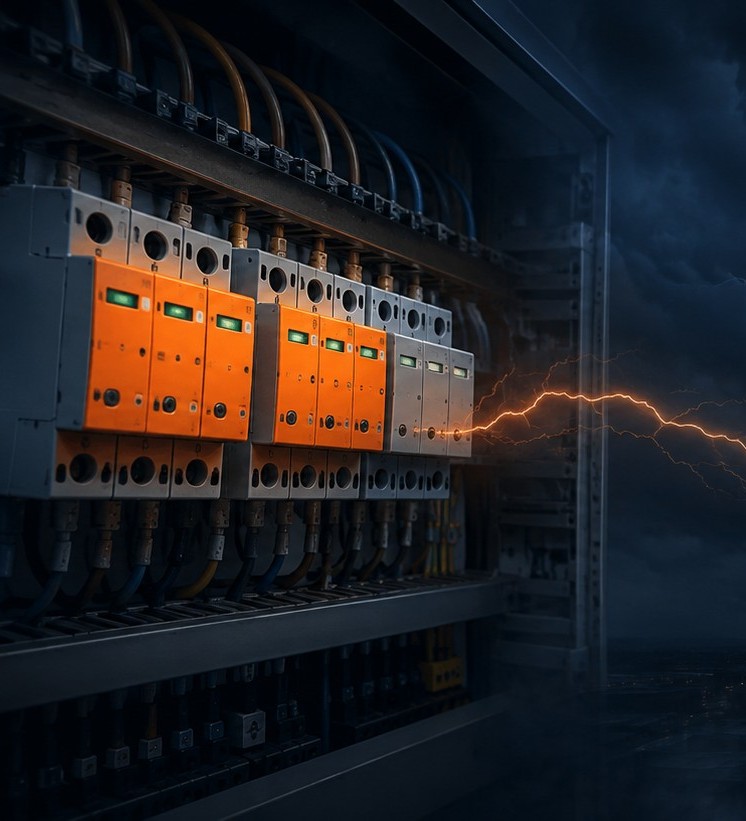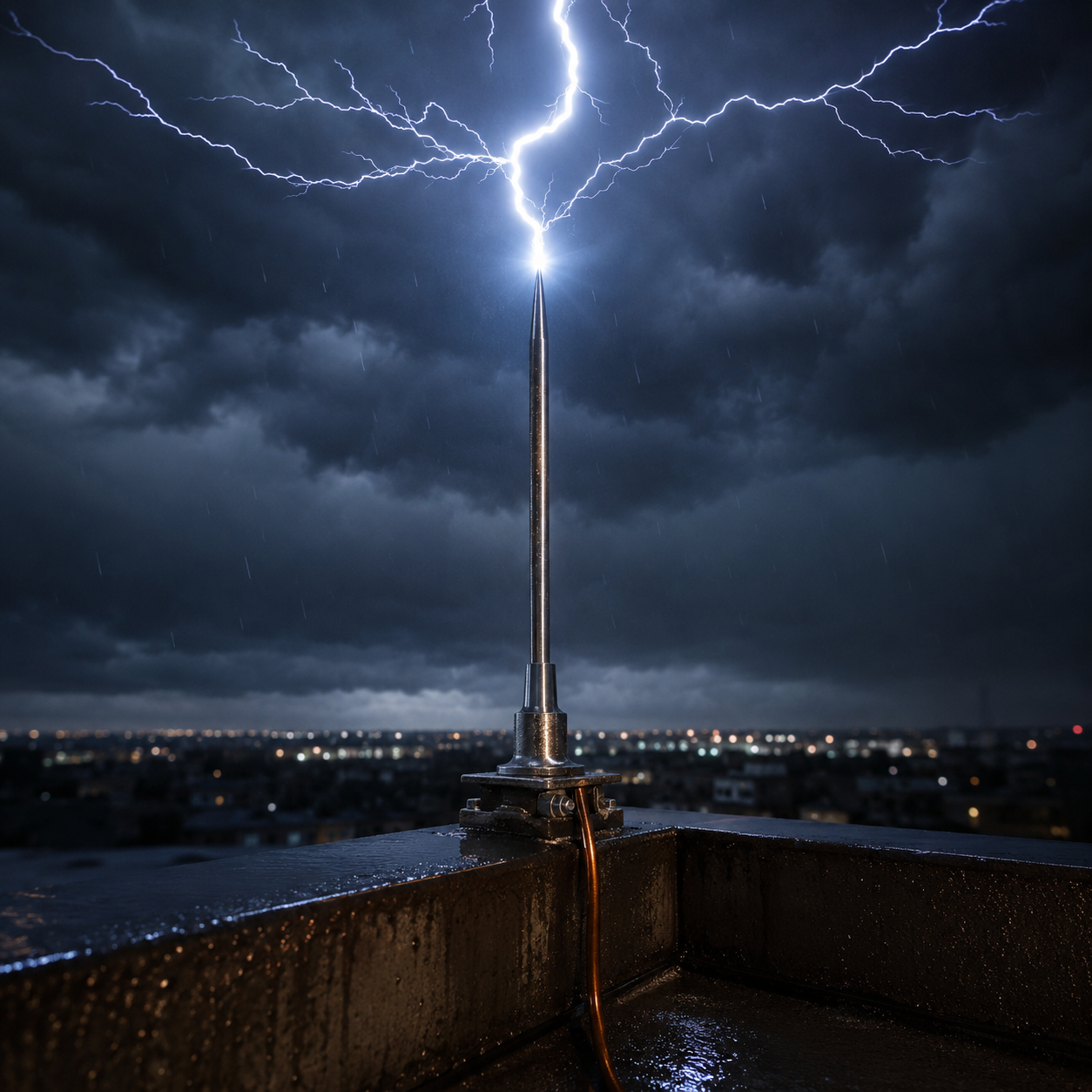
Cement plants are located throughout the country and, due to their high chimney structures and steel reinforcements, they have a very high exposure to lightning strikes in their respective locations. However, as we have frequently emphasized, even if a lightning strike does not hit the facility directly but occurs in a nearby location, it can still cause electrical damage to the plant. Apart from lightning, grid irregularities and harmonics in the regions where these plants are located can also cause sudden
overvoltage surges
that damage the systems within the facility.
Cement plants are small in number but contain many different electrical systems within their infrastructure. These include hydration heat panels, RS communication systems, weighbridges, PLC and automation systems, motor control panels, security and monitoring systems, Modbus systems, telecom lines, measurement sensors, cement slurry mixing machines, and system equipment that controls socket start-up and shutdown times. In essence, these are facilities where automation and communication systems are heavily utilized.
You May Also Be Interested In: Protection of Automation Systems Against Lightning and Overvoltage
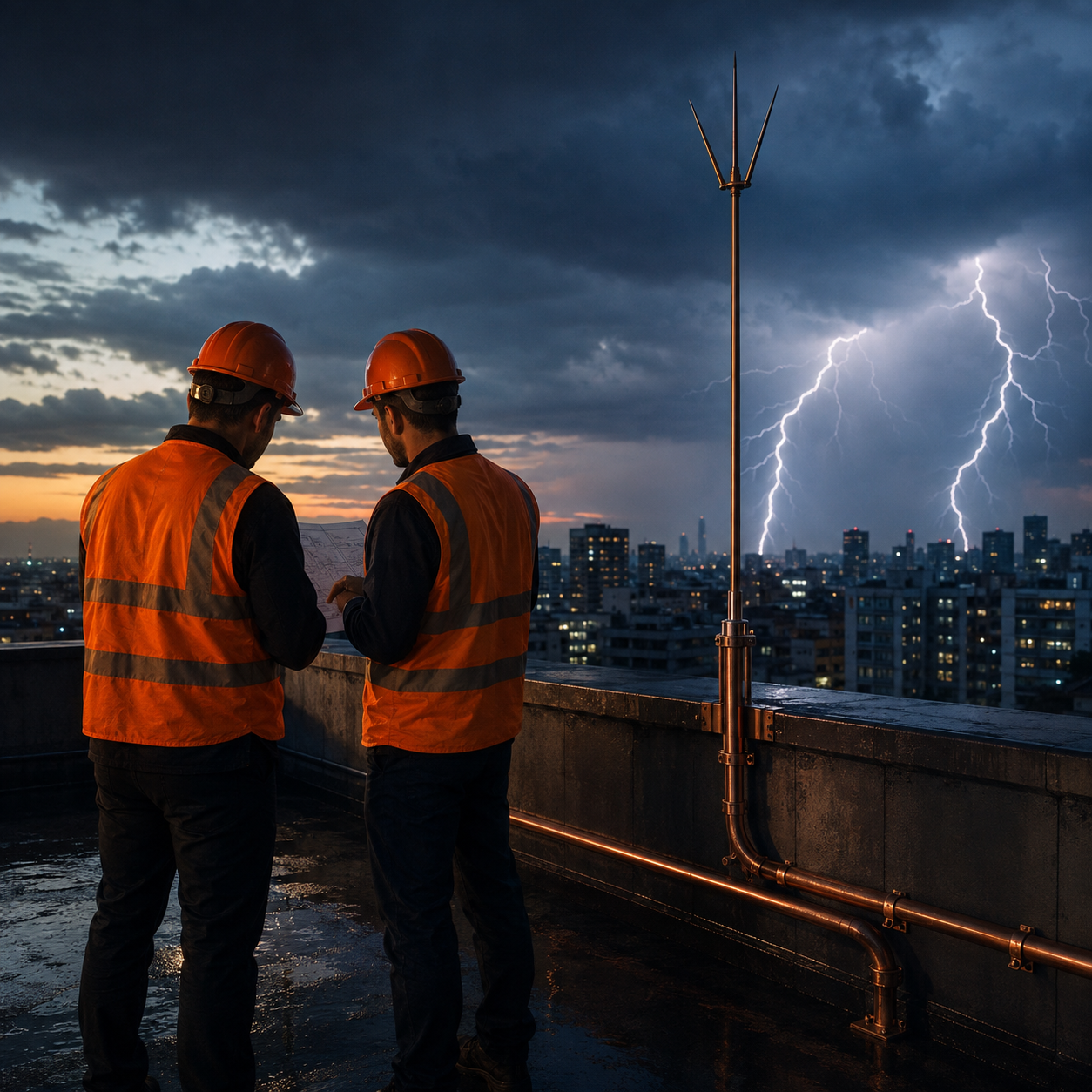
The continuous mixing requirement of mortar and the need for uninterrupted operation during cement hydration are among the primary reasons why cement plants must remain sustainable. Therefore, within the scope of IEC 62305 and IEC 61643 standards, it is mandatory to install a low-voltage surge protection system in cement plants. We observe that almost every facility has a lightning rod system; however, only a limited number of facilities are equipped with a LV surge protection device system. In facilities where a lightning rod system is installed, an LV surge protection system must also be installed, and the lightning rod system must be included in the equipotential bonding using spark gap surge arresters.

In general, before installing surge protection devices in a cement plant, an on-site survey and risk analysis must be conducted. Based on the current and voltage characteristics of the systems, grounding structure, regional risk level, and other risks present within the facility, the correct products must be selected for the correct points. In communication and sensor panels, not only energy lines but also data lines must be protected. RS-485 transmissions, RJ-45, and data lines should be protected according to the survey results. Even the slightest surge can disable 4–20 mA systems, and circuit board failures occur very frequently.

Lightning protection of cement plants is of great importance for ensuring operational continuity.
Therefore, these points can be protected according to the principle of staged (coordinated) protection. In addition, mixer and mortar preparation panels are also critical. If a load cell of a weighbridge burns out, it may cause the facility to stop or disrupt production flow. For this reason, the system must be protected with long-life products using an optimal solution while keeping costs to a minimum. Product installation is just as important as product selection. Proper installation must be carried out, including correct cable cross-sections, creation of panel or external protection points, grounding resistance measurements and controls, avoiding leaving unused lines, and most importantly, ensuring that the system’s operation is not adversely affected.