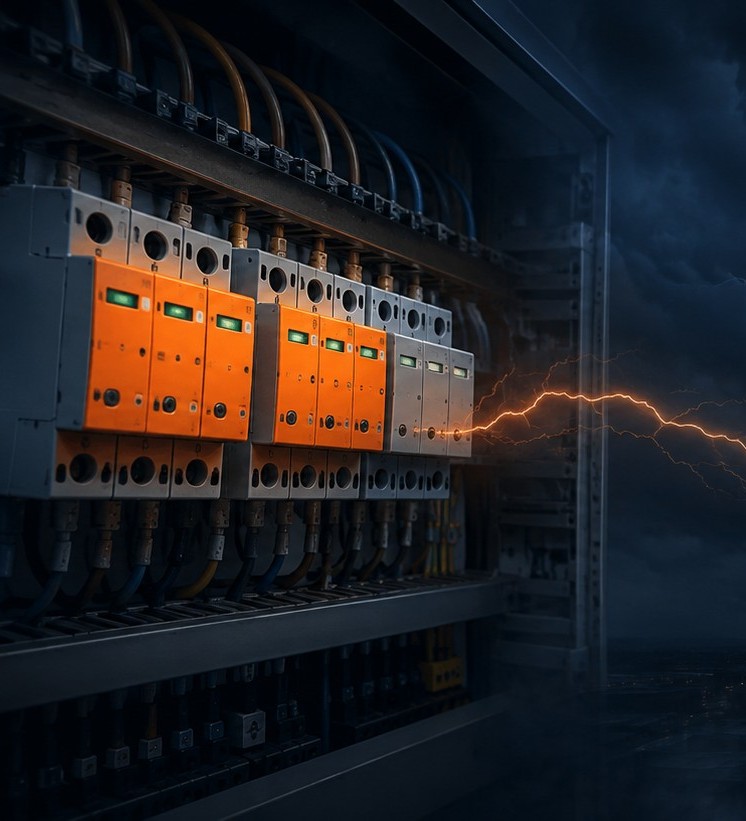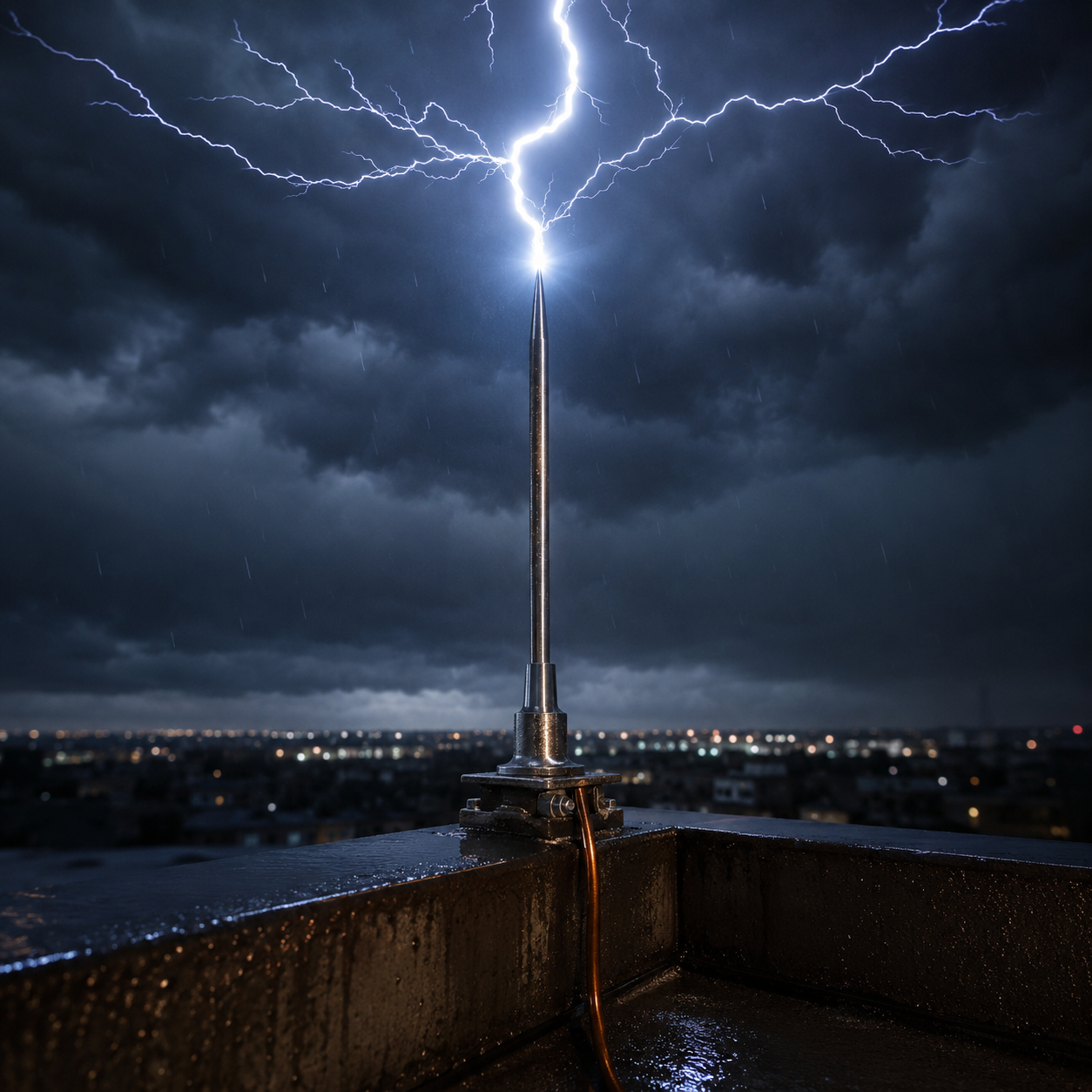
Investments worth millions of liras, installation phases lasting for months, and most importantly the automation and communication systems that form the management center of the entire process can be rendered inoperative by an impulse arriving within nanoseconds. Automation systems are disabled due to lightning strikes, grid-originated surges, harmonics, coupling impulses, and switching element surges; circuit boards burn and, most critically, sustainable production understanding is damaged. In addition to time loss, economic losses caused by system modifications put enterprises in a difficult situation. However, with basic precautions, all these problems can be prevented. As the Lightning Protection Center, we recommend protecting your energy, data, and coaxial lines with low voltage surge protection systems based on the principle of cascaded protection during system installations. At this point, the coordination of selected products, their compatibility with the system structure, and proper installation are of great importance. In this article, we will explain the basic protection principles of automation systems and recommend suitable products.
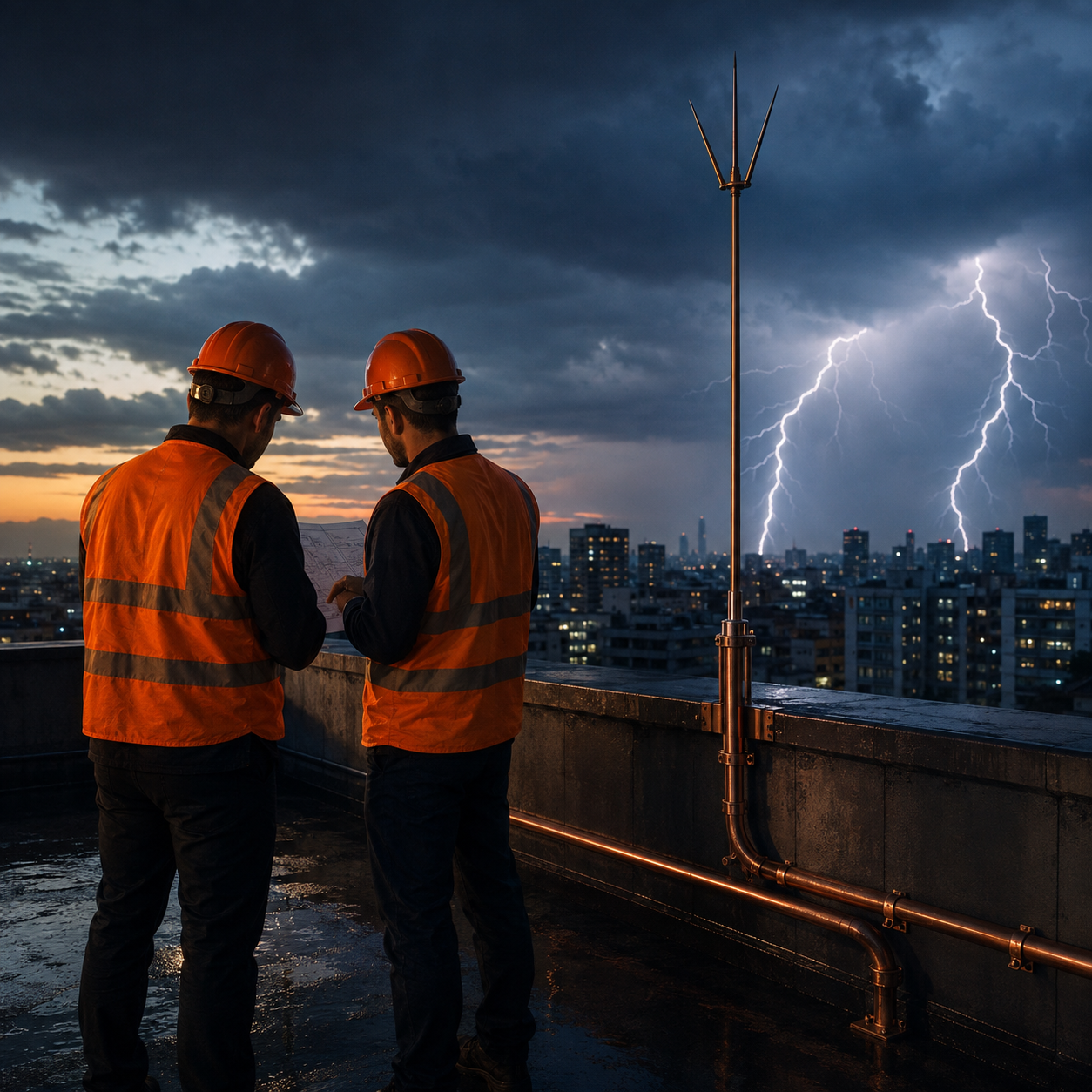
Within the scope of IEC 62305 and IEC 61643 standards, the use of internal lightning protection, in other words low voltage surge protection systems, is recommended against transient overvoltages and lightning impulses. In structures with an External Lightning Protection system (active lightning rods are predominantly used in our country), internal lightning protection products must be used. External lightning protection provides physical protection, but all sensitive systems can suffer serious damage from incoming surges. A lightning strike occurring 2 km away from the facility or surges coming from the grid can damage these systems.
Protection of PLC and SCADA Lines
In a system, the most sensitive systems operating at the lowest continuous voltage are damaged first. Automation systems are at the top of this list. Within the framework of standards, we must protect our systems in stages using Class B, B+C, C, and D low voltage surge protectors. Considering the total system cost, internal lightning protection systems that accomplish great tasks with very small budgets are indispensable. The surge protection systems we classify into four categories show different characteristics and selection criteria for energy and data lines. When selecting energy protection products, we should first choose according to the UC value, i.e., continuous operating voltage. After using a B+C class product tested at 230 V continuous voltage in the main distribution panel, a C class product tested at 230 V can be used in the PLC power panel. Then, sensitive energy protection of 24 V or 48 V should be applied at PLC inputs. According to project criteria, terminal-type Class D surge protectors can be used on all data transmission lines. Thus, comprehensive protection is provided against both external and short-distance surges. In addition to energy protection, Class D protection must be applied to all system outputs.

Protection of Communication Systems | Profibus Example
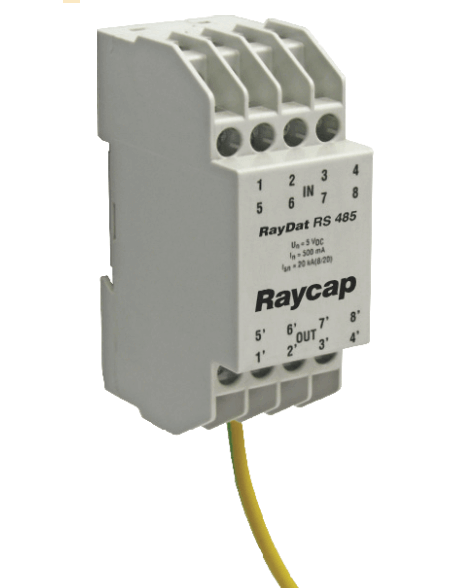
For example, consider a Profibus device. While communication module outputs are protected with RS 232, RS 485 9- or 15-pin RS protectors, CAT 6 lines must be protected with CAT protectors at frequencies suitable for the system structure, and 24 V sensitive DC energy line protection must also be implemented. The key is choosing the right product for the right point. In a server room, POE lines must be protected with POE CAT6 Class D surge arresters. Against surges coming from the power line, after protecting the sub-distribution panel of the server room with Type 1+2 protection, switching surge protection must be applied at socket supply points. Sensitive energy line protections differ for DC and AC. These products start from 5 volts and can go up to 220 V, with protection levels ranging from 1 kA to 20 kA. These products, containing suppressor diodes and argon gas-filled discharge tubes, are vital for system survivability. However, the essential condition is that coordinated B and C type protections are present in the system. Product selection and installation are critical at this stage.


Rail-mounted products installed on panels for energy lines are connected in parallel, while Class D products such as RS232, RS485, Cat6, RJ45, POE, terminal-type sensitive energy protection devices, and telecom exchange protections are installed in series. For effective protection, installing protection at both ends of the cable ensures system safety after surge protection. Low voltage surge protectors are primarily selected according to the Imax value, i.e., current-based protection level. Panel-type protections offer a wide range from 150 kA down to 1 kA. These products also provide a voltage protection level called Up, which can be reduced to as low as 0.9 volts. Surge protectors are crucial for sustainable operation as they reduce the surge to a level at which systems can operate safely.
As the Lightning Protection Center, we recommend using low voltage surge protection in automation systems. Usually, intervention occurs after systems are damaged; therefore, using surge protectors during system installation is extremely important. You can always receive support from our expert engineering team regarding product selection, installation, and supply.