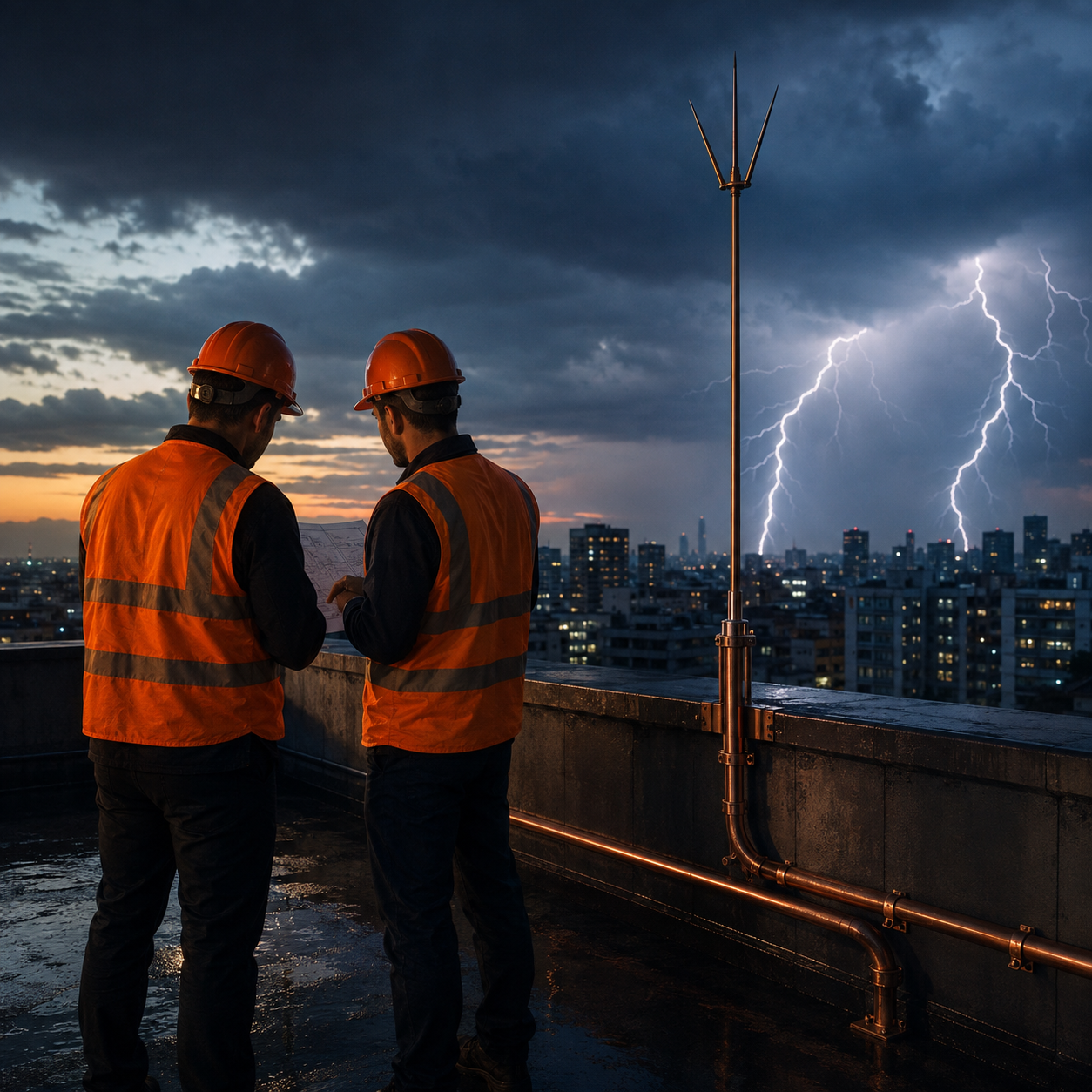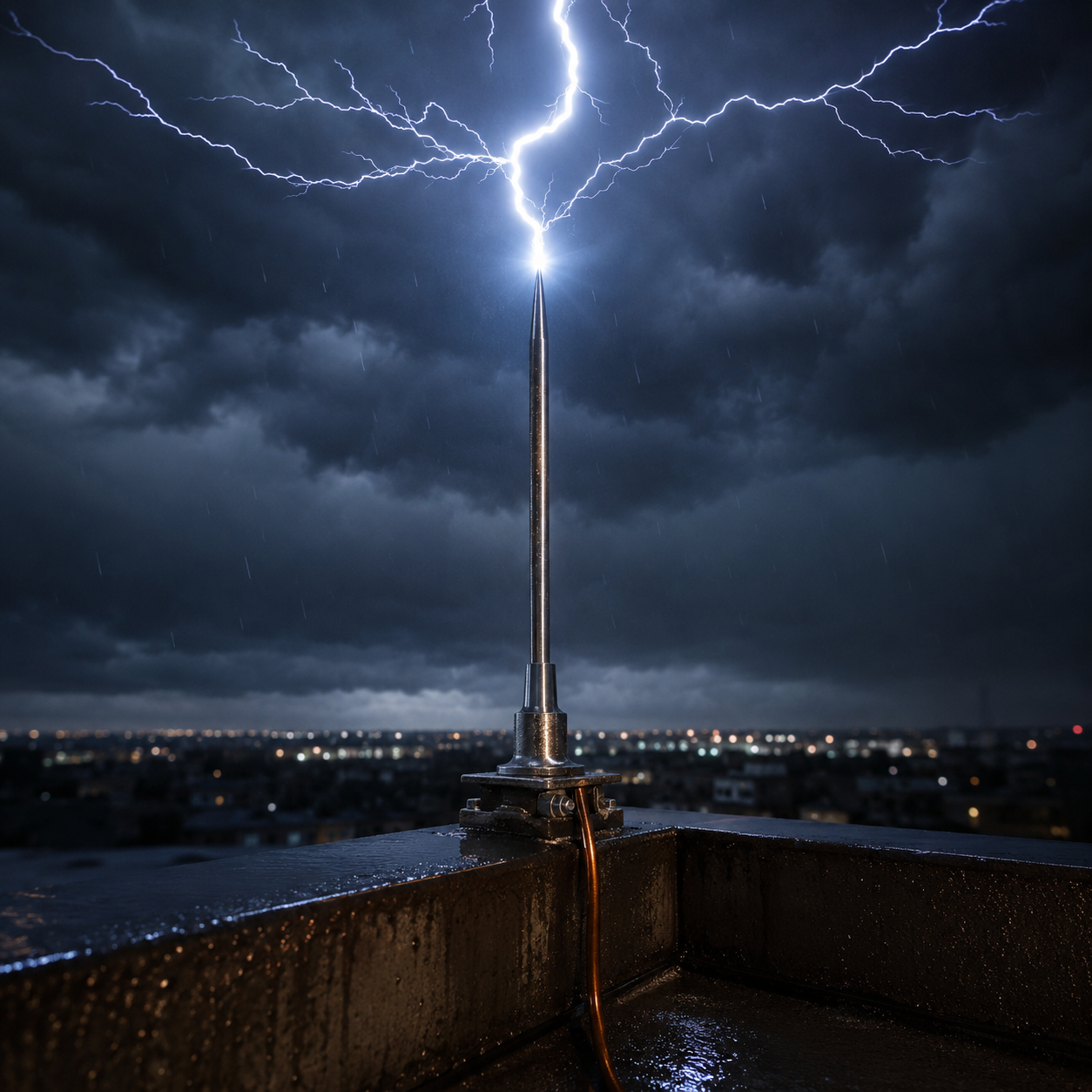
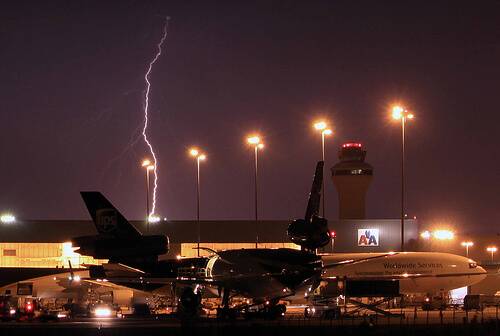
First of all, it is very clear that, as in many structures in our country, the lightning rod system is adopted as the only protection measure against lightning at airports. However, in the IEC 62305 Standard, which is accepted both internationally and nationally, the Faraday cage system is recommended for areas classified as risk level 1. According to the rolling sphere method, spheres with calculated radii should be designed through special programs by performing risk management for all areas of the airport, including open parking areas, via capture terminals. Against fire risk, fully insulated lightning down-conductor systems and spark gap arresters should be used to safely transfer the strike to the ground.
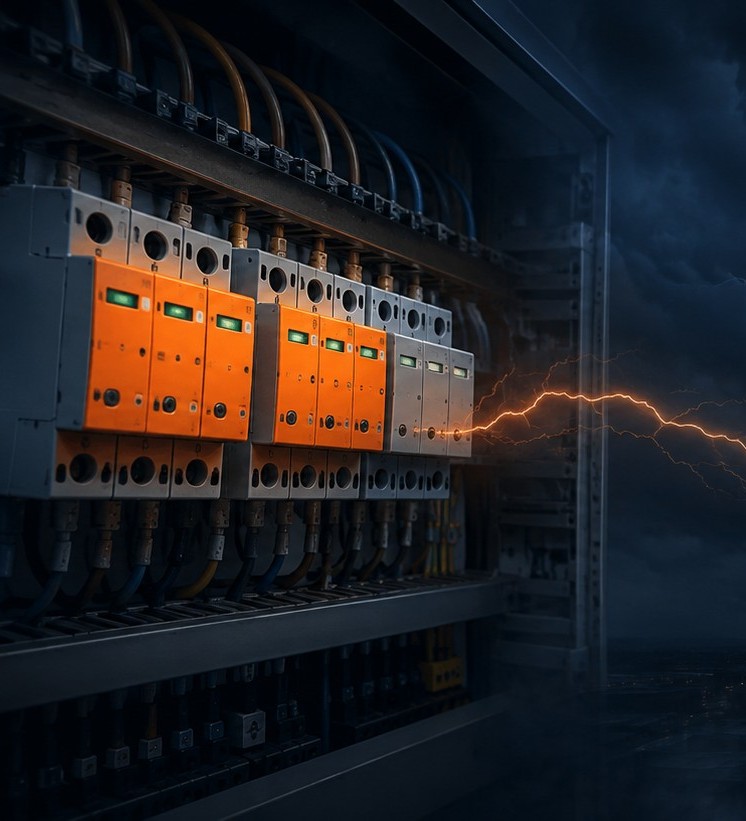
In order to prevent tower communication systems, as well as energy, data, and coaxial lines, from being disabled by lightning, a low voltage surge protection system must be installed in stages at all points of the airport. For example, considering the camera system, the panels where energy is supplied, CAT lines, coaxial inputs, and the DVR system in the monitoring room should be protected with Class B-C-D surge protectors selected according to system characteristics. At this point, products that operate in coordination and provide chemical quenching should be preferred.
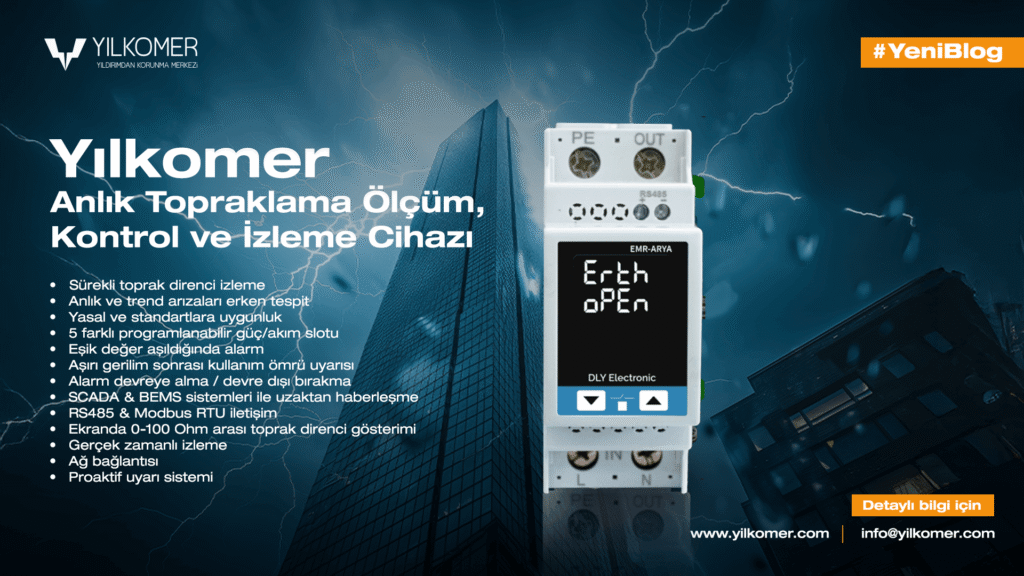
LED lighting systems located in apron and enclosed areas, automation and control systems, server rooms, and security checkpoints are the most sensitive points against lightning strikes. In parallel with insulated external lightning protection systems, low voltage surge protection systems must be designed for these points. Not only lightning strikes but also grid-induced surges, harmonics, sudden voltage drops, and switching surges can be mitigated with correctly selected low voltage protection systems, which must be installed in strategic locations such as airports. Unfortunately, the general perception is that protection is provided only by lightning rod systems, creating major risks at airports.
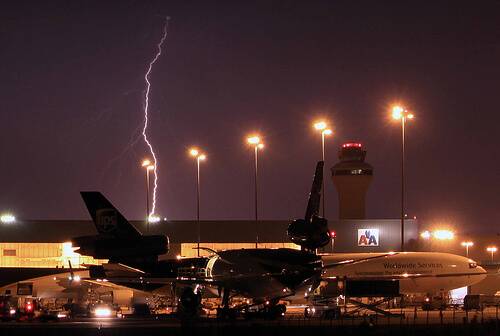
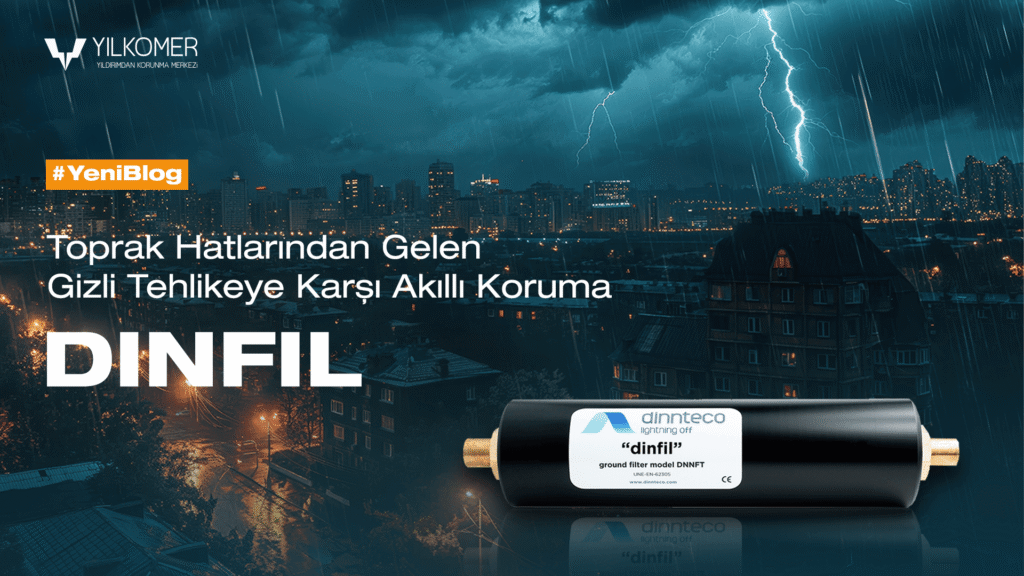
In summary, passive insulated lightning protection systems and B-C-D staged surge arrester systems should be designed and implemented at airports, supported by grounding and equipotential bonding. Each system has many calculation and selection criteria. Expert teams can be consulted at these points, but the fundamental concept is that fourfold protection must be ensured.

As the expert engineering team of the Lightning Protection Center, we provide support in survey and design studies. Our sole wish is to prevent lightning-induced chaos at airports through correct product selection and implementation, ensuring that passengers and staff can travel safely. It should not be forgotten that, as in the case of earthquakes, lightning is a natural phenomenon, and with proper scientific approaches, all negative effects can be prevented.