External Lightning Protection Systems for Mine Protection
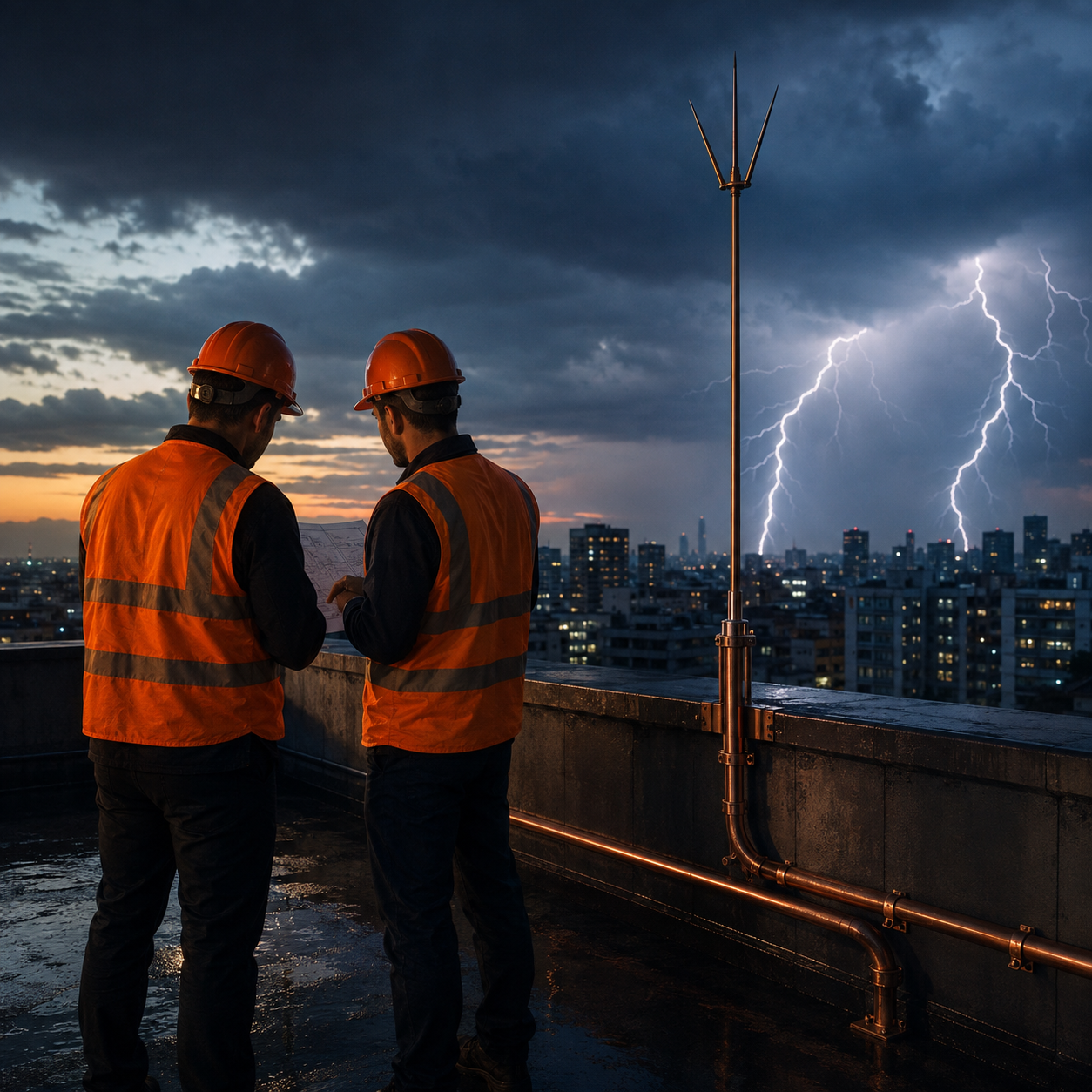
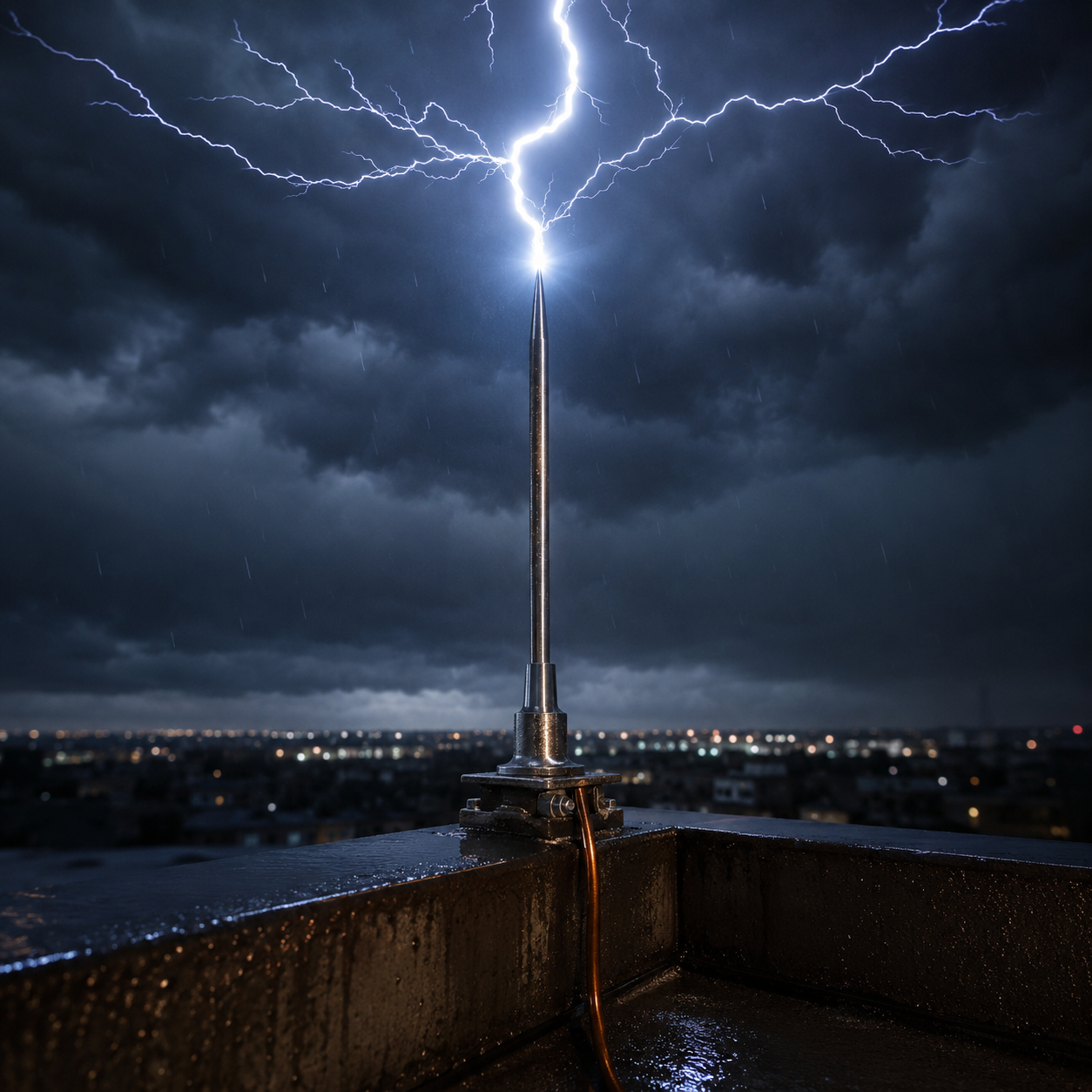
External lightning protection systems are used to protect your facility against the preliminary effects of lightning. These systems must be used to safely transfer lightning strikes to the ground in unprotected locations with critical elements, such as mines. Another important aspect to remember is that each facility is established on different terrain and structural conditions. Considering the facility conditions, the most suitable external lightning protection system listed below should be installed. The reference standard here should be TS EN 62305.
- Lightning Protection Systems Designed with Insulated Conductors
- Faraday Cage System
- IsFang Lightning Interception Systems
- Mesh Method
- Catenary Wire Method
- Protection Angle Method
- Insulated External Lightning Protection Systems
Internal Lightning Protection Systems
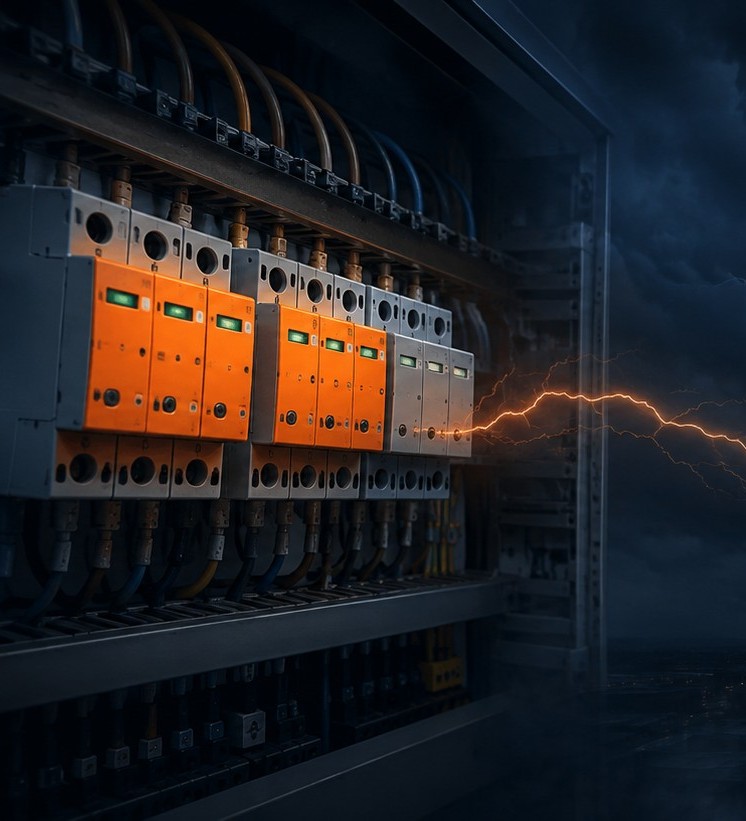
Mines are also environments where energy, data lines, and automation systems (such as PLCs) are used intensively, and each component is of critical importance for facility operation. These systems must generally be protected against lightning impulses using surge protection devices. Especially to ensure continuity of mining production, prevent fire risks, and avoid machine and automation failures, the use of Class D surge arresters is of great importance. Current, voltage, application point, and risk analysis values must be carefully evaluated for effective protection. Class D surge arresters generally use zener diode technology as well as spark gap and argon gas-filled discharge tube technologies. In addition, main and sub-distribution panels must be protected with Class B and Class C LV surge arresters, taking into account the facility characteristics and the lightning characteristics of the region.
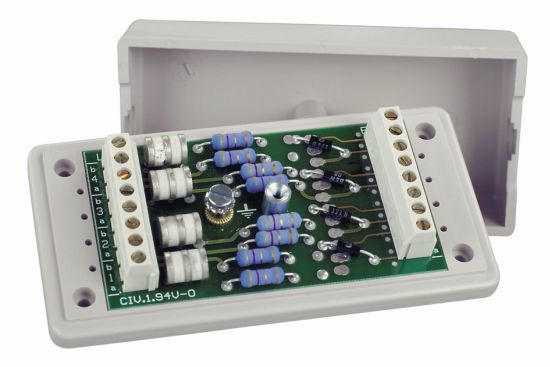
In mines, systems that directly affect worker health—such as sensors, gas detection systems, fire alarm systems, automation control systems, elevator systems, and lighting systems—are directly affected by sudden overvoltages. When lightning strikes the ground, underground systems have no chance to escape this impulse; therefore, LV surge protection systems must be used at every point. Products with high IP ratings and protection capacities must be selected. Especially 3–12–24 V systems can be directly disabled, which directly affects worker safety in adverse situations. To prevent negative conditions in mines, low-voltage surge arresters must absolutely be used. For survey and design services, you may contact Yılkomer’s expert engineering team.