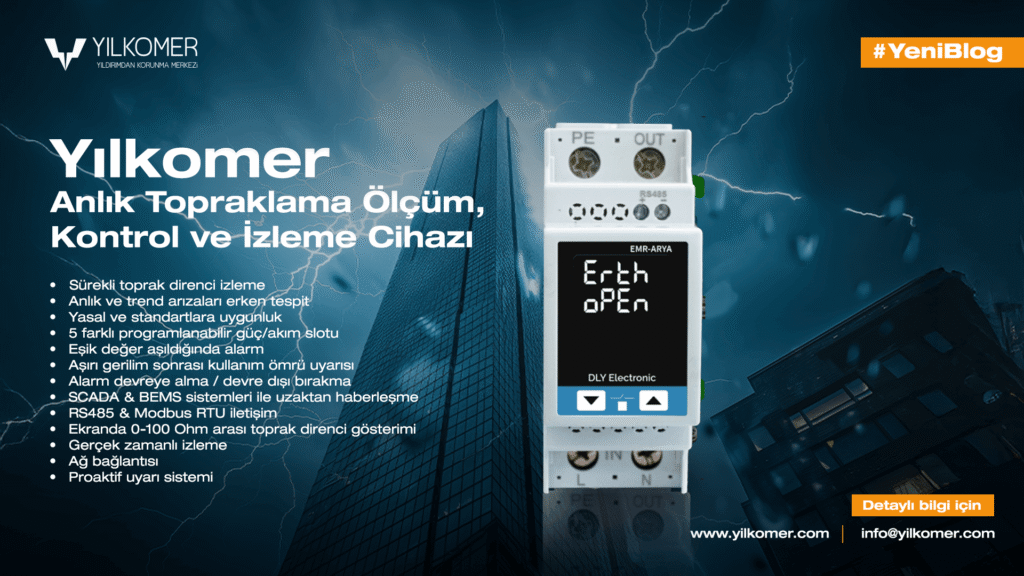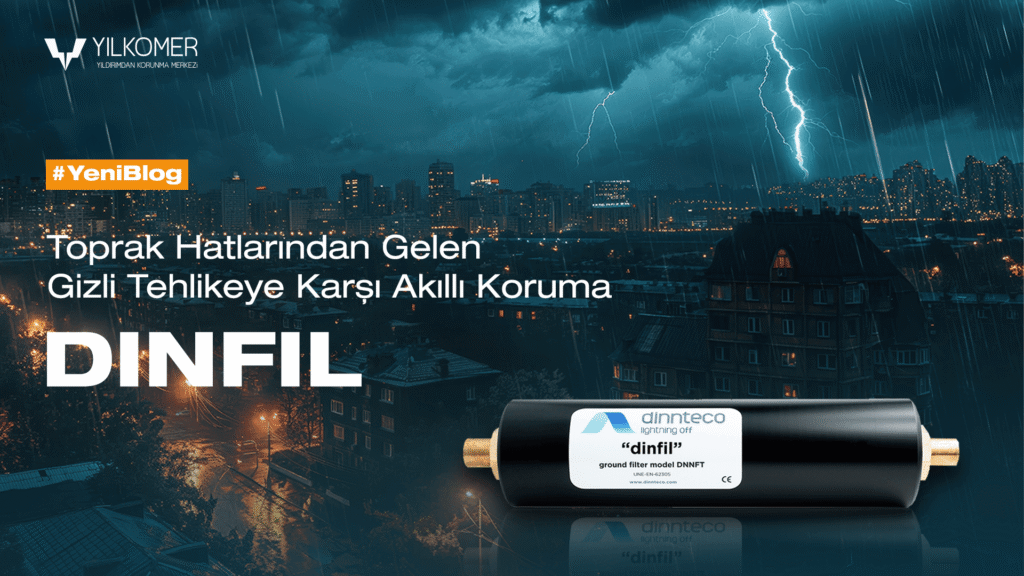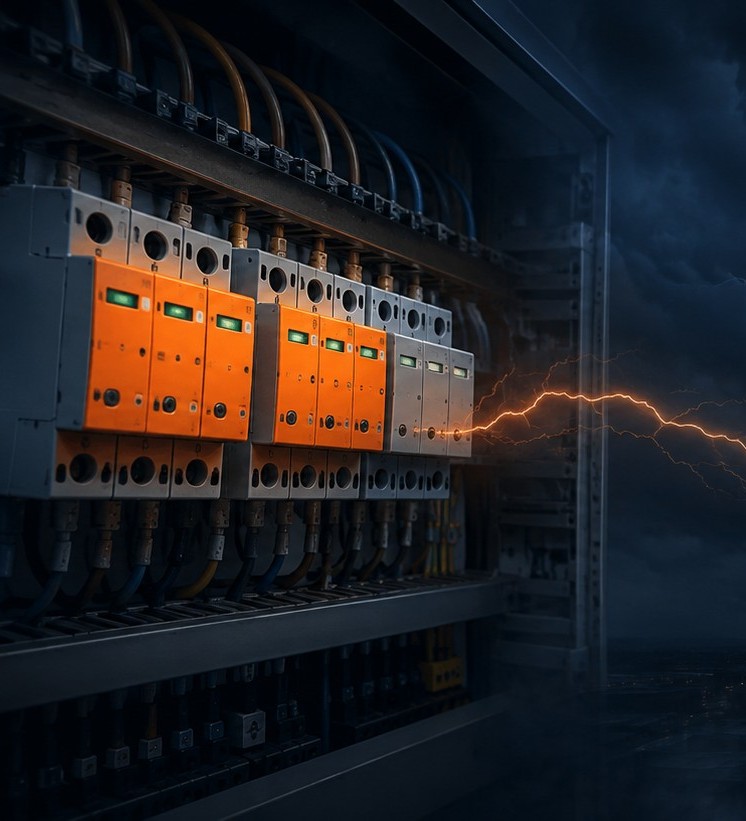
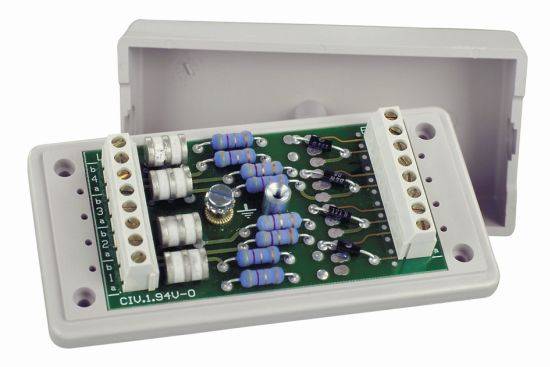
Class B and Class C LV surge arresters used in main and sub-distribution panels are unfortunately insufficient for protecting these systems that require end-point protection. Because even if the energy line is protected, a system can very easily receive a surge via the data line. The surge types mentioned are generally grid-originated surges and switching surges occurring outside of direct lightning strikes. For this reason, sensitive protection devices (Type 3 – Class D surge arresters) must be used in front of systems in integration with Class B and Class C products. Especially in industrial facilities and fuel stations, Class D protection is of critical importance. However, in solar projects, CAT6 type surge arresters are used on data lines transmitting energy production information.
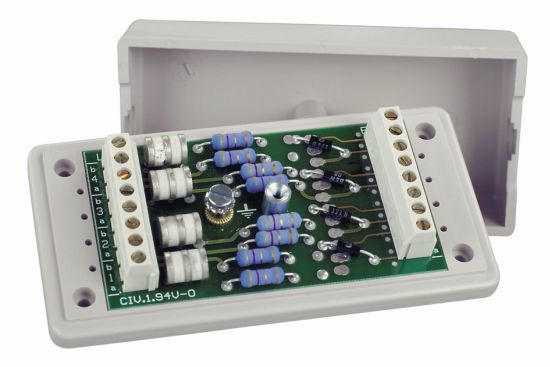
Class D surge arresters are generally categorized into types such as CAT5, CAT6, RJ45, RS232, RS485, RJ11, POE, coaxial, Krone, N-type connector, F-type connector, and socket protectors. At this point, when selecting products, risk analysis and the cabling structure and input characteristics of the system should be carefully considered. Class D LV surge arresters are connected to systems in series. Therefore, they must be used bidirectionally along the cable line at the end point. The Uc value must be determined based on the continuous operating voltage of each system and the product must be selected accordingly. For example, for a system operating at a continuous voltage of 24 V, the Uc value must be at least 10% above 24 V. After the Uc value, the most important parameter to consider is the Up value. The Up value is selected according to the maximum voltage level that the system can withstand. For instance, if a 3 kV surge is directed to the system and the withstand voltage of a computer is 0.9 kV, an LV surge arrester with a Up value of 0.9 kV or lower should be selected. Therefore, site surveys and correct product selection are extremely important. Otherwise, the selected products will provide insufficient protection.
In our country, many foreign-based companies recommend incorrect products without conducting site surveys, which puts systems at serious risk.
Another important parameter is the nominal current of the system. If a system operating at 0.3 mA uses a product rated for 20 mA, the system will either not operate or, conversely, will not be protected. Therefore, the nominal current value is extremely important. In addition, the Imax protection levels of products according to the 8/20 and 10/350 ms waveforms must be considered. This selection can be determined according to the principle of coordinated protection based on the characteristics of the products used in main and sub-distribution panels. In addition to these values, as mentioned above, the system transmission method is also highly important. For example, an RS232 protection system may be 9-pin or 25-pin, or it may be cable-based.

In such cases, socket-type protectors or cable-type protectors installed using 1.5 mm² cross-section cables should be selected. In PLC and automation systems, using 24 V terminal-type protectors during the initial installation phase ensures the most accurate protection of the system. For this reason, terminal-type surge arresters must be used during the installation phase. The use of Class D surge arresters is important to ensure sustainable production, prevent fire risks, and avoid machine and circuit board failures. Current, voltage, application point, and risk analysis values must be carefully evaluated for effective protection. Class D surge arresters generally use zener diode technology as well as spark gap and argon gas-filled discharge tube technologies. Depending on their type, grounding connection is of critical importance in Class D LV Surge Arresters.
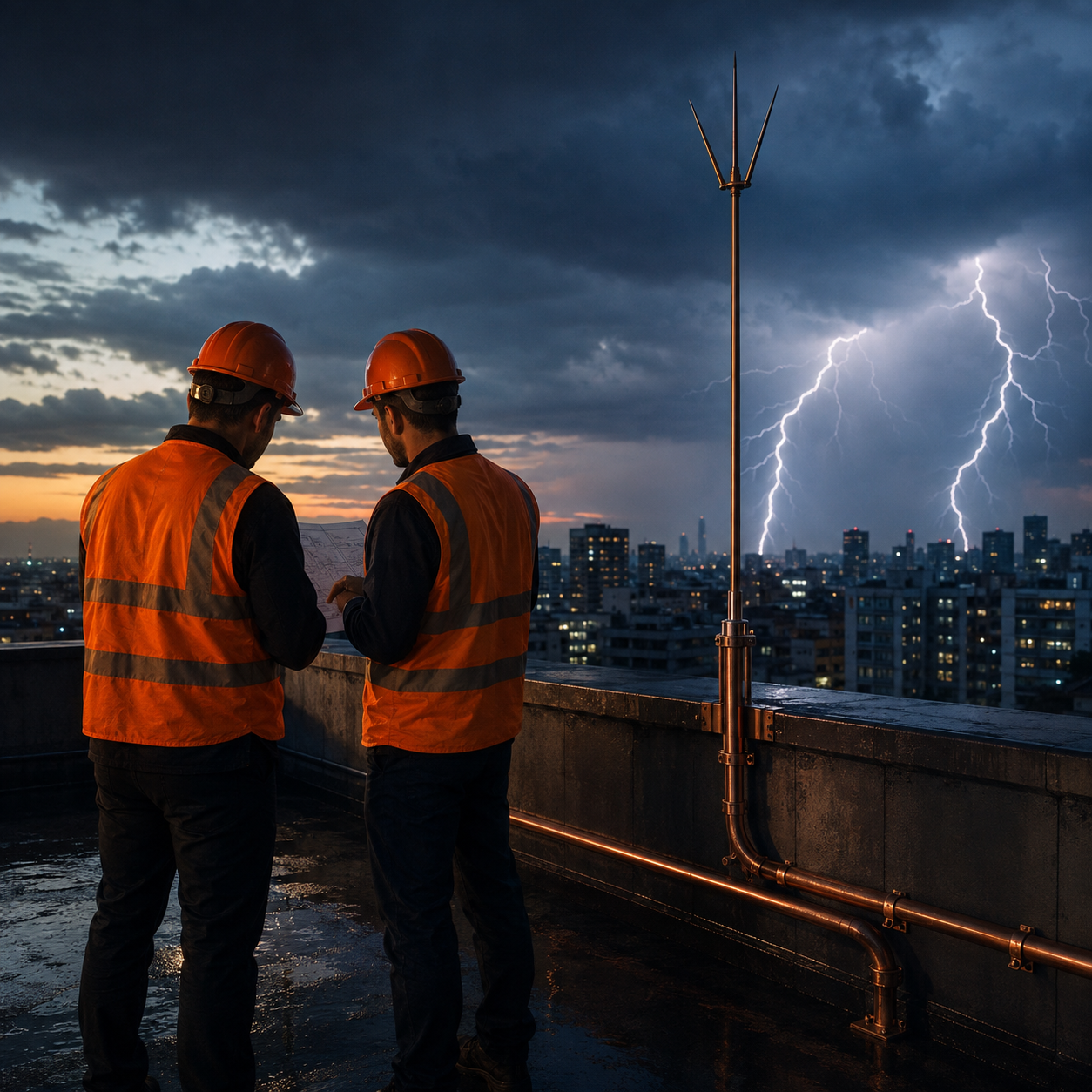
Lightning Protection Center focuses entirely on selecting the correct product according to system characteristics during the free site surveys provided to its customers. In order to select and apply the correct solution from approximately 2,500 different product alternatives and ensure definitive protection, IEC 61643-12 Standard is taken as a guideline.