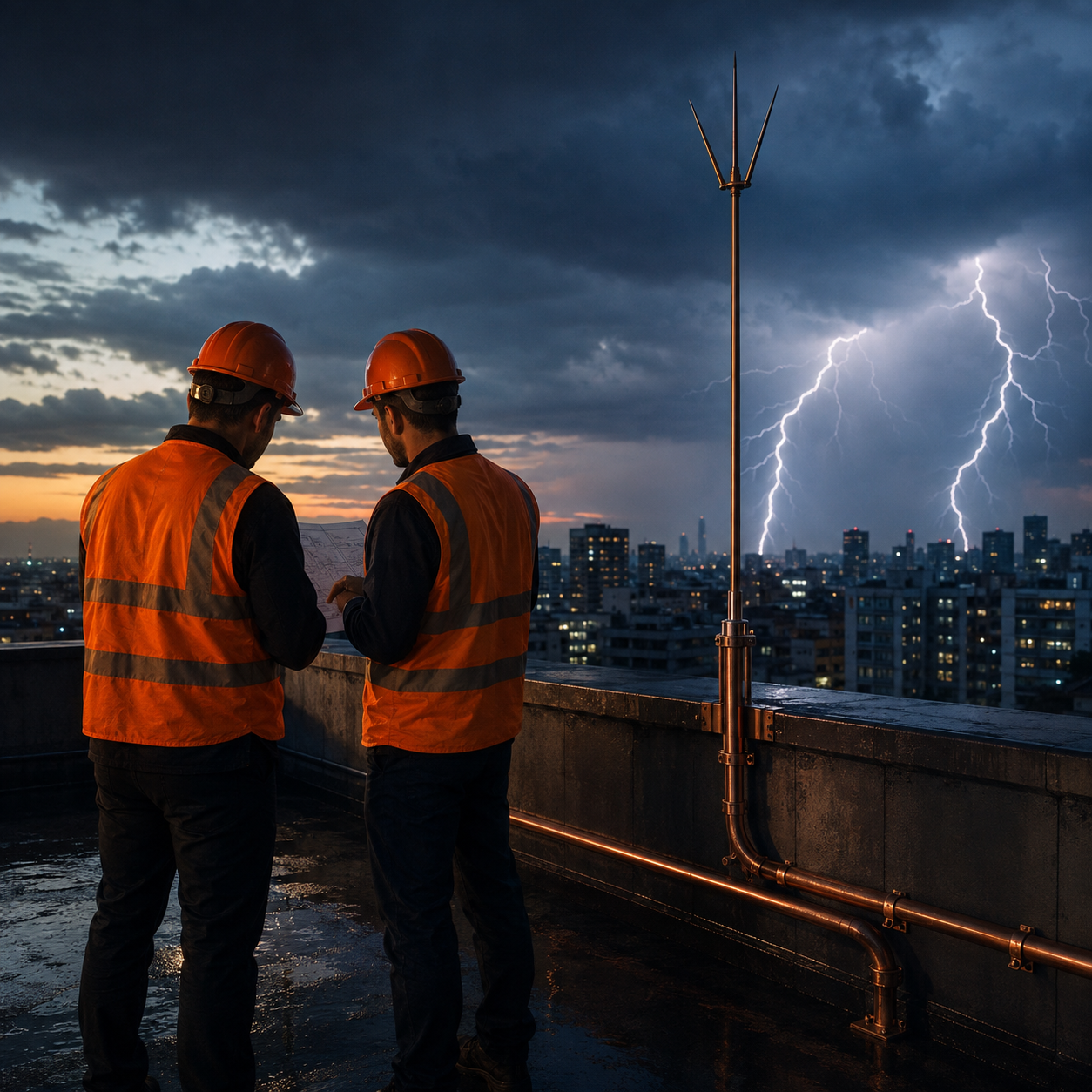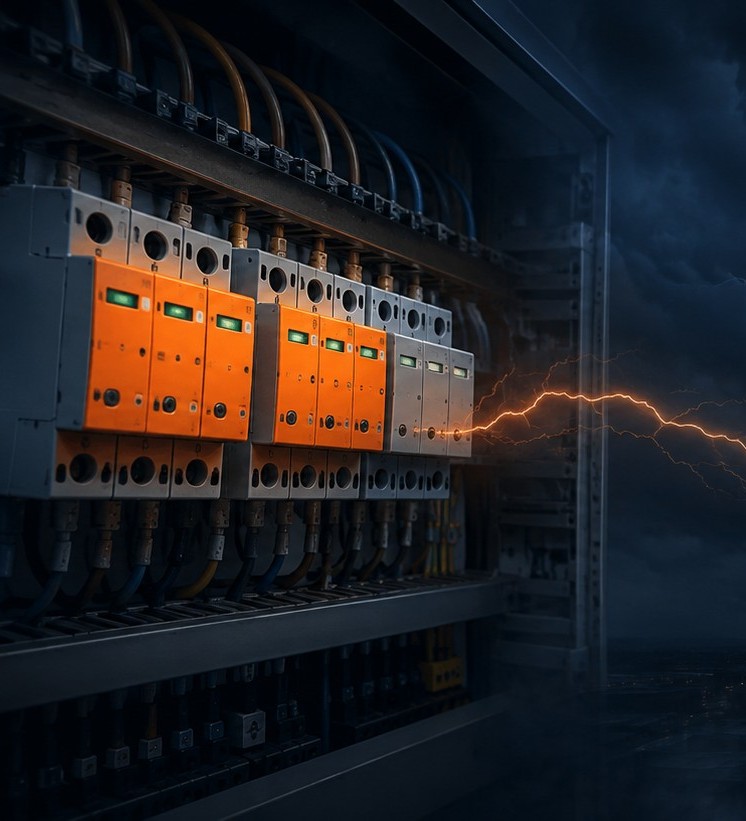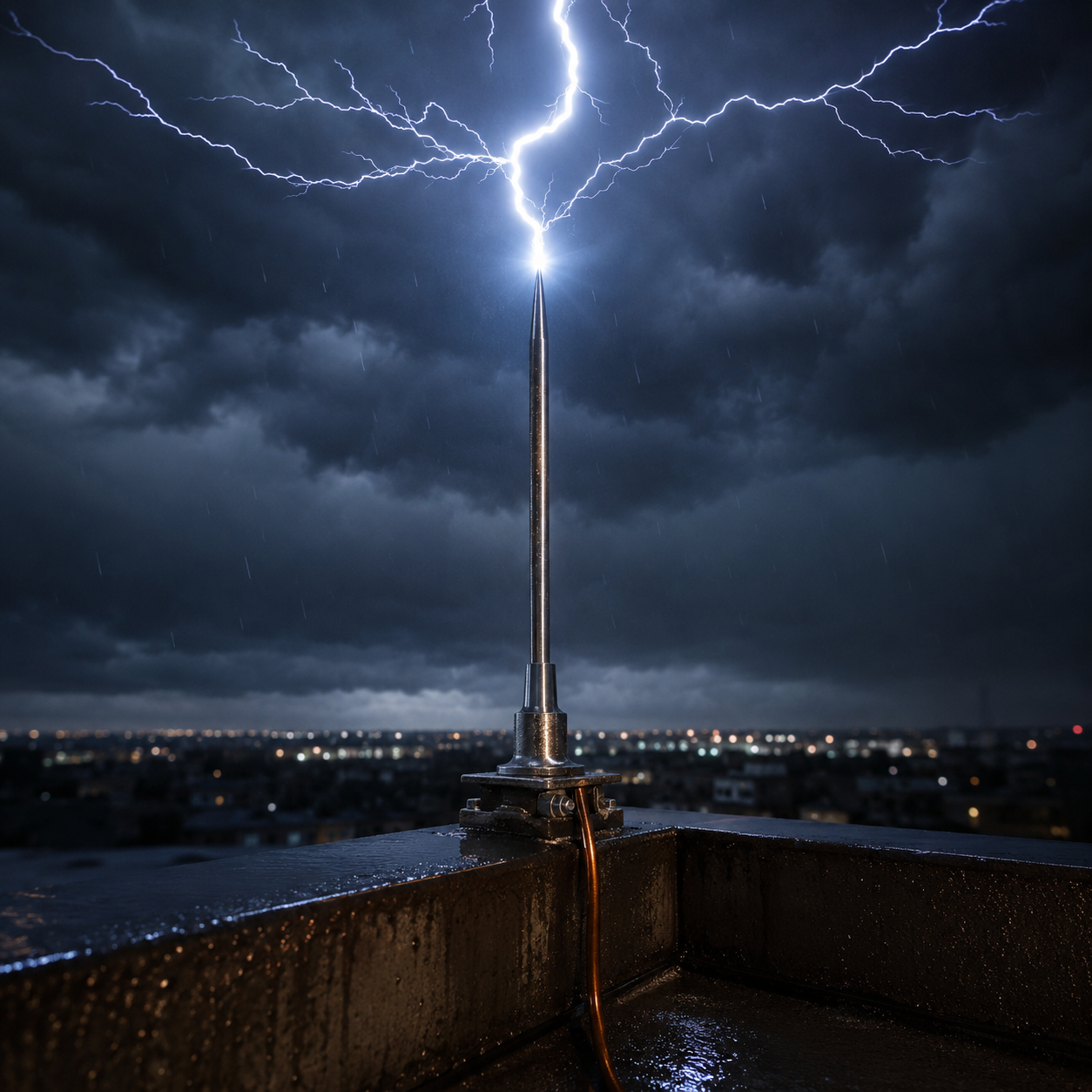
The external lightning protection system is defined in the relevant standard as a Faraday cage. Internal lightning protection panel and device-front protection units are mandatory; these systems are also known as low-voltage surge arrester systems. In addition, besides proper grounding in the facility, resistance equalization, namely the equipotential bonding system, must be designed. If there is a problem in the equipotential system, the use of surge protection modules is extremely important to prevent fires and damage to devices caused by impulses flowing suddenly from one point of the facility to another. In a question asked in the 2015 occupational safety specialist exam:
Which of the following is used for lightning protection of fuel stations?
However, the answer options included both lightning rods and surge arresters. In our opinion, this question is incorrect. Because lightning rods function as external lightning protection systems, while the use of LV surge arresters is mandatory to protect automation systems, lighting systems, and to prevent fires in panels. If such a question is incorrectly asked even in an exam, it clearly indicates a major issue in lightning protection systems, in which we are specialists for occupational safety in our country. For example, in flammable and explosive facilities, routing bare conductors without considering the separation distance rule and without equipotential bonding is a serious problem. Moreover, if such a facility lacks sudden overvoltage protection modules at the main panel, sub-panels, and in front of devices, a 100 kiloampere impulse can cause major problems in the facility within 25 nanoseconds. Lightning strikes can reach temperatures up to 28,000 degrees Celsius and have ignition characteristics. Therefore, instead of arbitrarily installing lightning rod systems everywhere, a design must be carried out in accordance with IEC 62305 Standards based on the characteristics and electrical structure of the facility, and LV surge arrester systems must be installed in panels according to the facility’s electrical properties. Detailed explanations of all these systems can be found in our previous blog articles. You may also request support and a site survey from the Lightning Protection Center team regarding this subject.