You may be interested in: Lightning Rod (Franklin Rod)

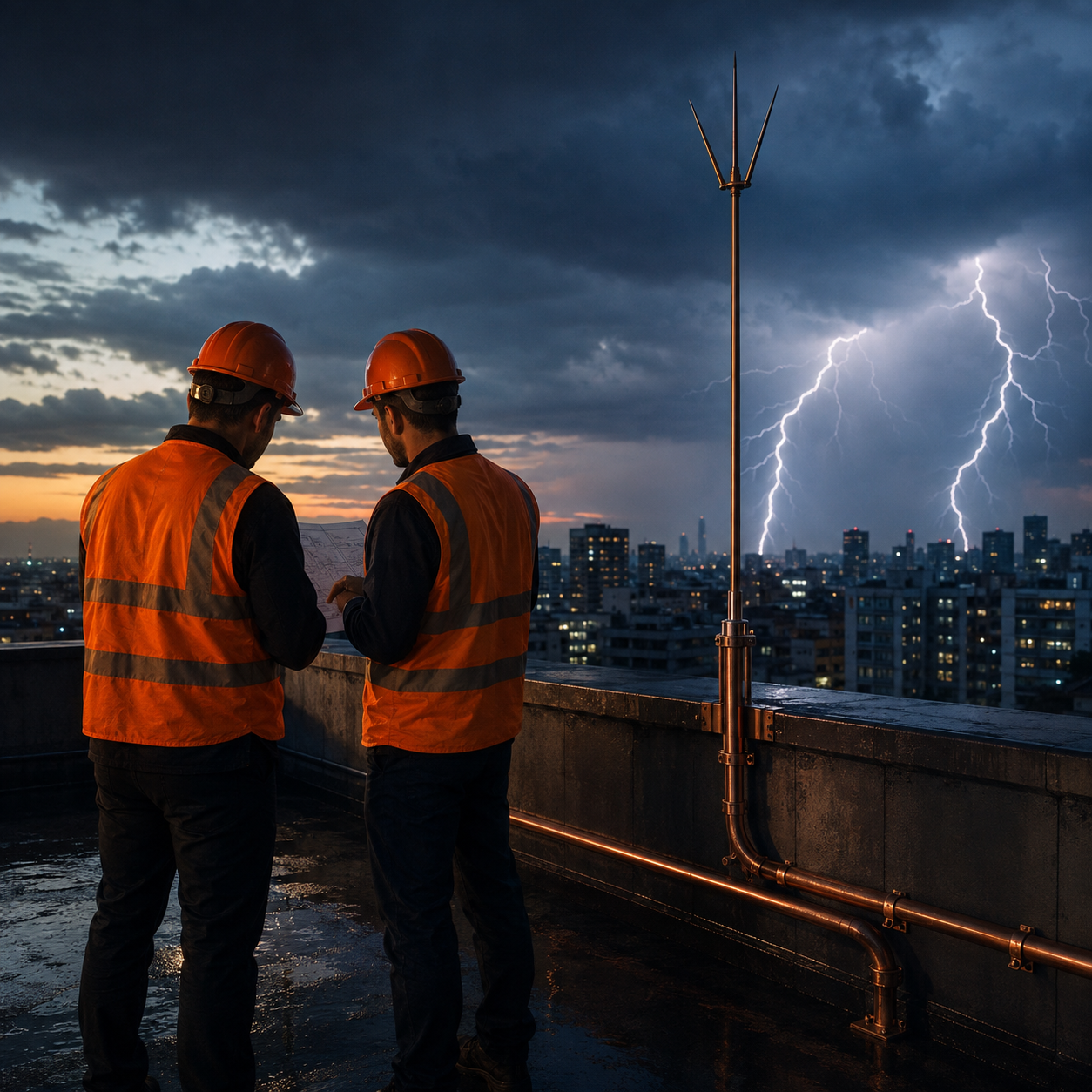
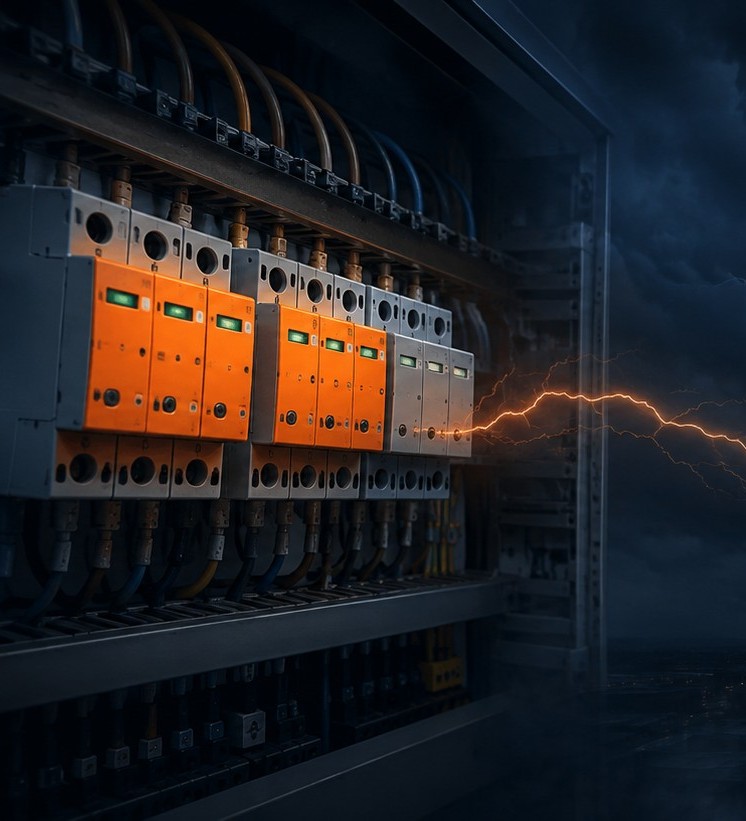
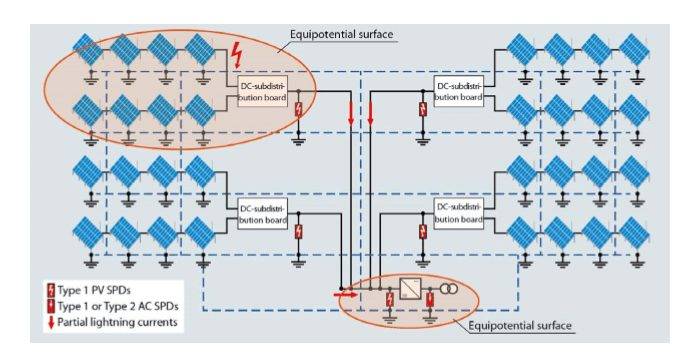
Performing lightning protection grounding at 50 meters, 100 meters, or 200 meters away has no technical significance. Standards and technical experience confirm this. External lightning protection grounding can be connected to an equipotential bus using spark gap surge protectors. This will prevent electrical systems from being exposed to a direct strike. However, due to the four-layer protection principle we always emphasize, LV SURGE PROTECTORS must always be used on both AC and DC lines. This way, by installing an external lightning protection system, we protect our facility from direct lightning strikes and also provide electrical protection via LV surge protectors. The images below summarize the topic in detail. For questions and sample applications, you can contact the Lightning Protection Center.