When lightning strikes, the current resulting from the atmospheric discharge must be dispersed toward the ground. The electrical circuit closes to allow the current to flow back to the cloud. This process includes the strike, the preliminary discharge, and the ground current. Various studies have been conducted to examine this complex phenomenon in order to improve our understanding of the interaction between lightning and transmission lines.
Ground Potential Gradient
When a charged cloud passes over the Earth, it causes a charge accumulation on the ground and on objects beneath it, including transmission lines. This charge accumulation results in a potential gradient on the ground surface. As charges within the cloud move, instantaneous potential differences arise between points on the ground. When the charged cloud approaches the ground, the charge in the cloud is discharged, causing rapid movements in the induced charges on the ground. However, the currents induced in the ground due to charge movement are relatively small.

Lightning Strike on a Transmission Line
When lightning strikes a transmission line, it injects a high current into the power system. The magnitude of the generated voltages depends on the current waveform and the impedances it passes through. The steepness of the voltage wave determines insulation flashover. A lightning strike on a transmission line can generate tens of megavolts, leading to potential damage and outages.
Different Points of Lightning Strikes
Lightning can strike various parts of a transmission line, including the phase conductor, the ground wire, or the top of a steel tower. The consequences of lightning strikes vary depending on the point of impact. When a phase conductor is struck, the voltage can rise to dangerous levels. If the strike occurs on a ground wire, the current flow is divided and moves toward both towers. Strikes on the top of a tower can cause significant voltage drops, potentially leading to insulation flashovers and system failures.

Current and Voltage as Traveling Waves
When lightning strikes a transmission line, the resulting current splits in both directions, forming waves that travel along the conductor. The tower acts as a discontinuity for these waves, causing reflection and refraction. Reflected waves return to the point of impact, while refracted waves travel into adjacent spans of the ground wire or down the tower toward the ground. The interaction between traveling waves and the tower impedance can amplify the incoming wave, affecting the flashover potential.
Electrostatically and Electromagnetically Induced Charges
As a charged cloud passes over the ground and transmission lines, it induces oppositely charged charges on line conductors and ground wires. These induced charges accumulate on phase conductors and ground wires. When lightning strikes, the cloud’s electric field collapses and releases the bound charges as traveling waves or direct discharge currents. While electrostatically induced lightning surges are relatively harmless, electromagnetically induced surges can cause flashover and damage.

Factors for Good Line Design
Good line design is essential to minimize the impact of lightning strikes on transmission lines. However, the design process involves numerous factors and trade-offs. Underground lines are immune to lightning strikes but are not economically feasible for all situations. Tall structures such as transmission towers are more vulnerable to lightning strikes. Properly positioned ground wires can intercept lightning strikes and protect phase conductors. In addition, system voltage and the coupling between ground wires and phase conductors play an important role in lightning protection.
Lightning Protection Measures for Transmission Lines
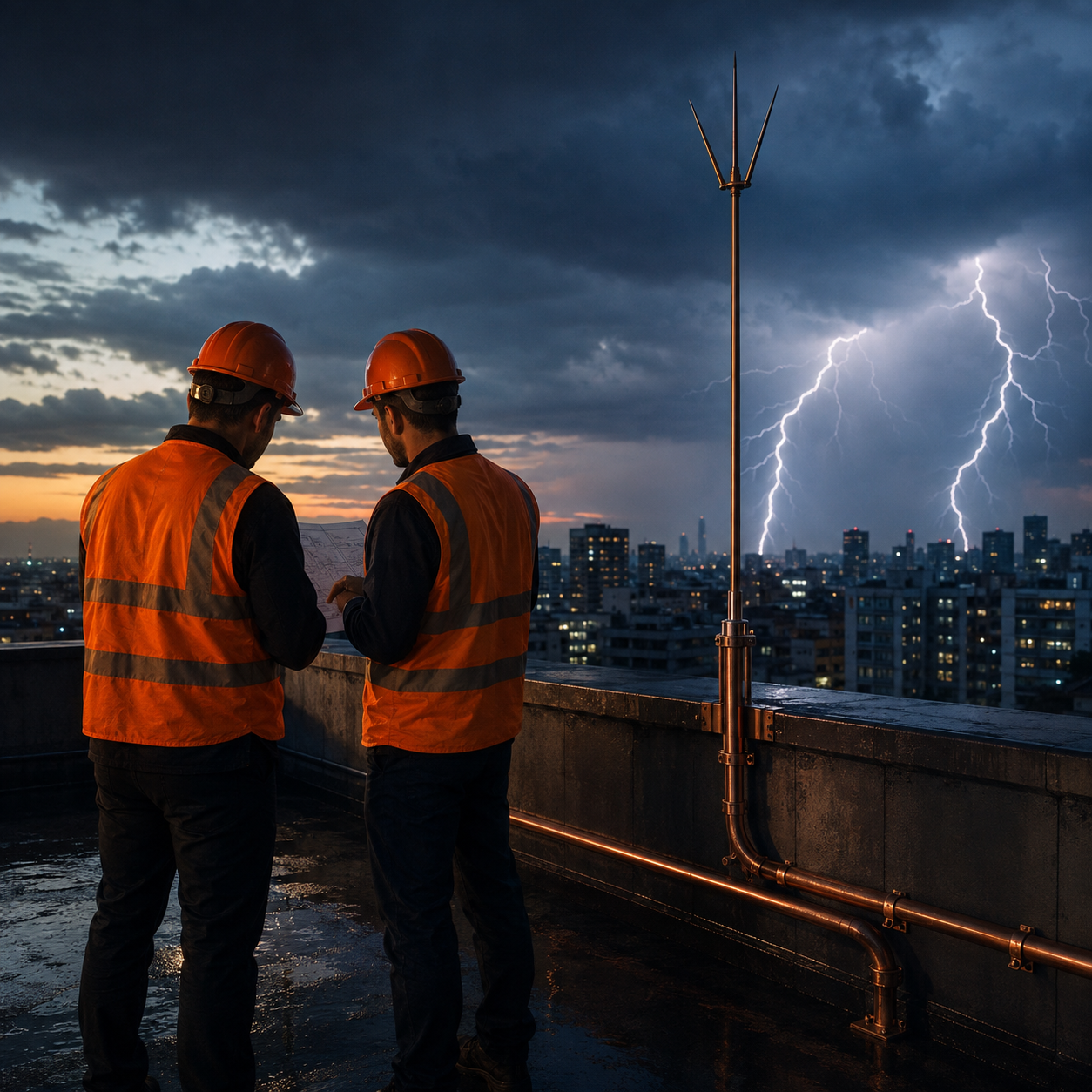
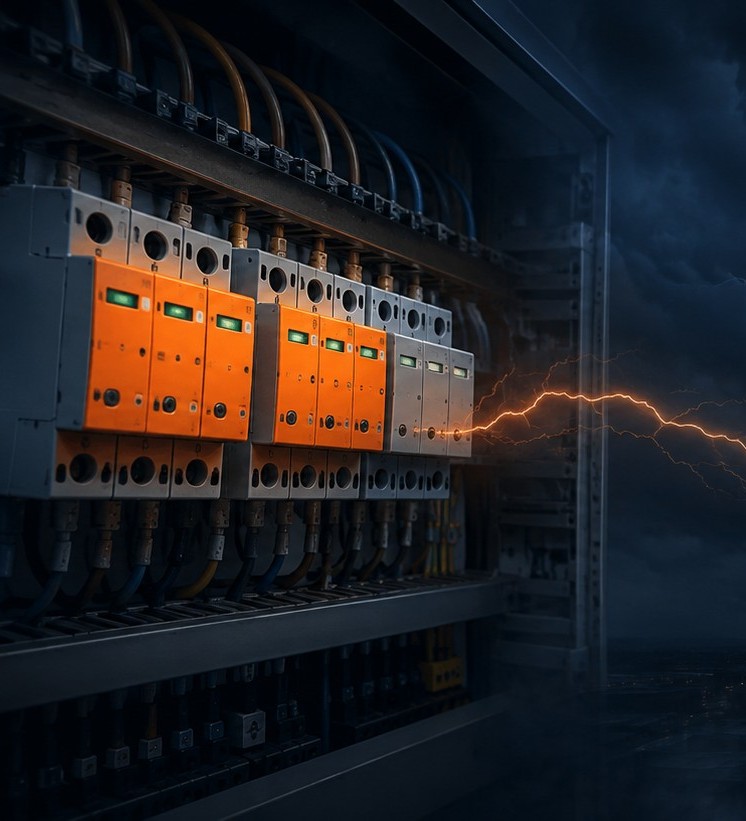
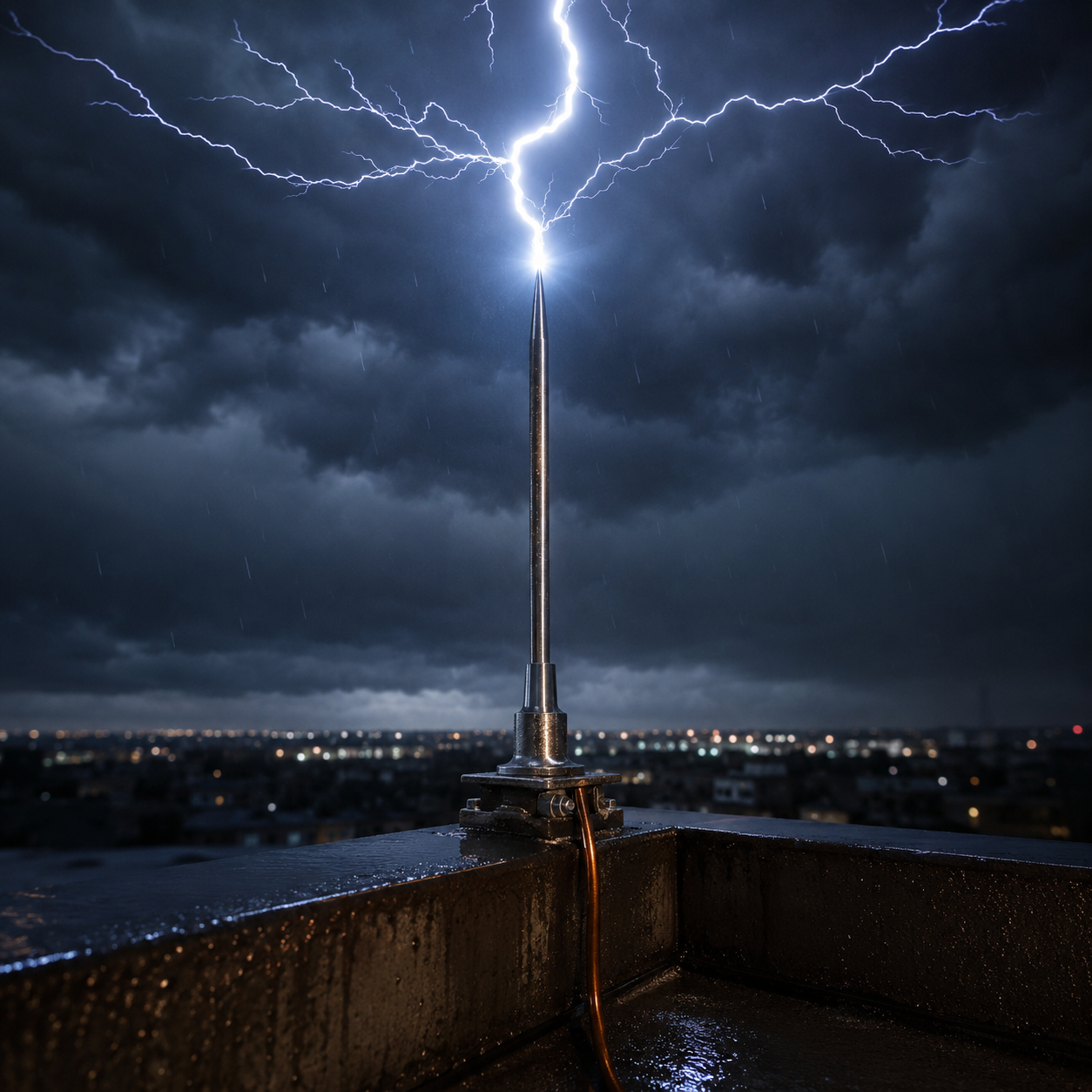
Various measures can be implemented to protect transmission lines from lightning strikes. The use of lightning rods or surge arrester systems can help divert lightning current away from critical components of the power system and safely conduct it. Ground wires are crucial for intercepting direct strikes and reducing voltage drops by dispersing current. Correct positioning of ground wires relative to phase conductors and maintaining adequate clearance are essential for effective protection. Sertec Lightning Prevention System can distribute charges on transmission towers and direct lightning strikes to surge arrester systems, preventing damage to power lines and sensitive electronic equipment.

The Role of Lightning Protection in Ensuring Reliable Power Transmission
Lightning protection is vital for maintaining reliable power transmission. By implementing effective lightning protection measures, the risk of power outages and damage caused by lightning strikes can be significantly reduced. Lightning protection systems, including lightning rods, surge arrester systems, and advanced prevention technologies, help protect transmission lines, minimize downtime, and ensure uninterrupted power delivery to consumers.
Lightning strikes pose a significant threat to power transmission lines. Understanding the interaction between lightning and transmission lines is essential for designing effective lightning protection systems. By implementing proper line design, using lightning protection measures such as lightning rods and surge arrester wires, and deploying advanced lightning prevention technologies, transmission lines can be protected against the destructive forces of lightning strikes. Ensuring reliable power transmission requires proactive measures to mitigate the effects of lightning and protect critical infrastructure.