Understanding Lightning Protection Systems
Before moving on to the features of the insulated down conductor, it is important to have a basic understanding of lightning protection systems. There are generally two main systems in use: isolated and non-isolated systems. Non-isolated systems consist of a network of air terminals, down conductors, and grounding electrodes used to protect metallic elements on a structure. In contrast, isolated systems use a similar network but are designed to carry the lightning protection system to the grounding system along a defined path with fewer components.

The Role of Down Conductors in Lightning Protection
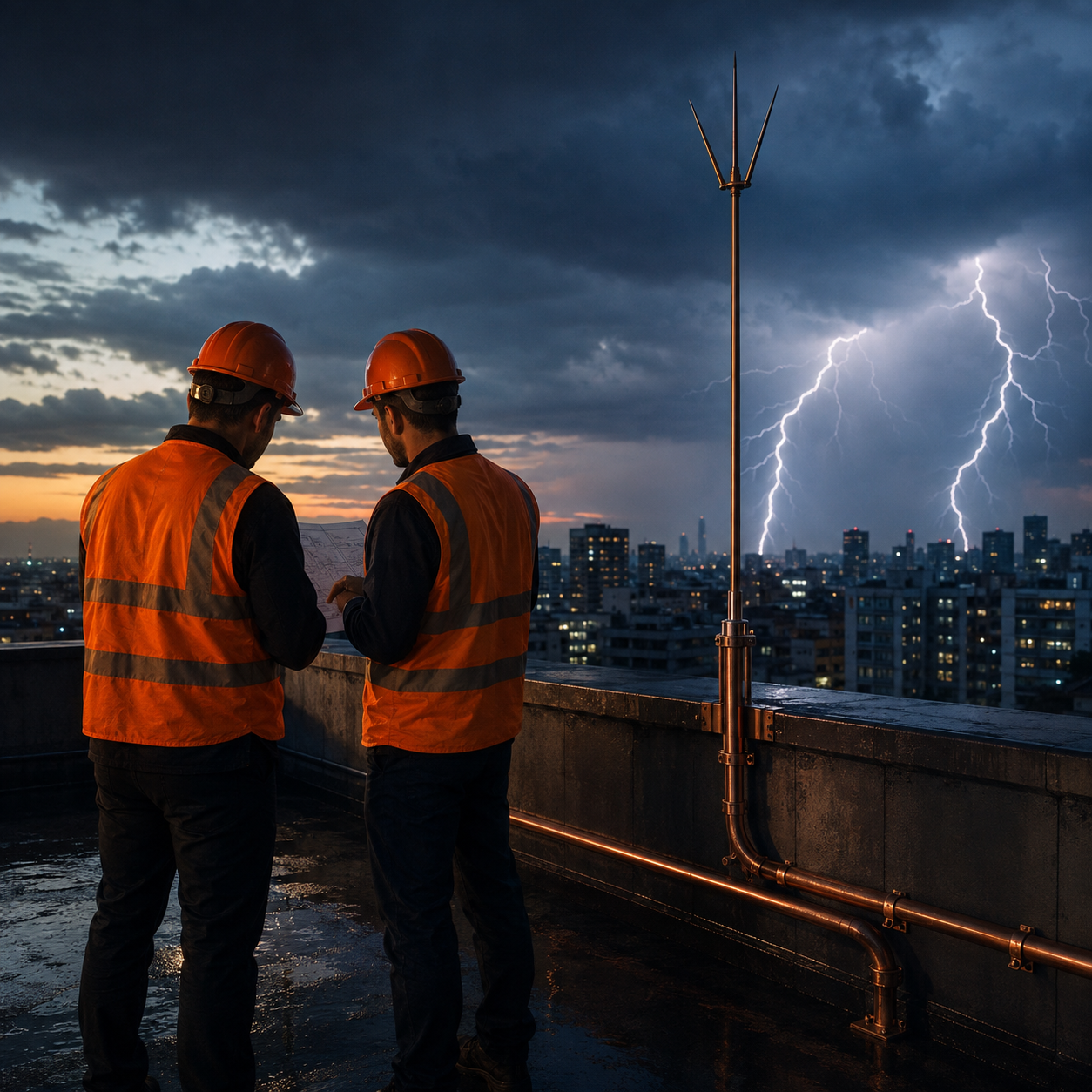
Down conductors are a fundamental component of a lightning protection system. They form part of the air termination network that intercepts lightning strikes, the down conductor system that carries the lightning discharge to the ground, and the earth termination/network that safely dissipates the lightning discharge into the ground.
Conductors, including down conductors, are an integral part of the grounding system. They provide a low-impedance path and must be correctly sized for fault currents, sufficiently robust against mechanical damage, and resistant to the effects of corrosion.
What Is an Insulated Down Conductor?
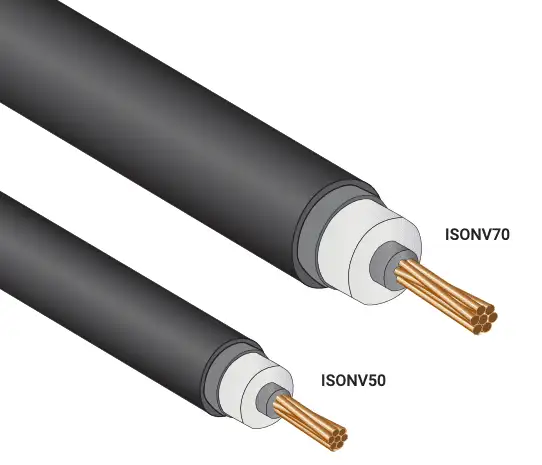
An insulated down conductor is a type of down conductor that includes multi-layer insulation and a semiconductive outer sheath. This design provides resistance from the upper terminations to the first grounded connection point, eliminating partial discharges that may occur in bare conductors.
The insulation of an insulated down conductor provides a separation distance equivalent to a 1-meter air gap. This reduces the risk of side flashing and makes it particularly suitable for structures with critical electronic equipment located nearby.

Features and Benefits of the Insulated Down Conductor
Flame Resistance and Construction
Insulated down conductors such as the Erico Insulated Lightning Conductor Cable are flame-retardant in accordance with IEC EN 60332-1-2. They consist of a stranded copper core surrounded by braided cross-linked polyethylene (XLPE) insulation layers and an aging-resistant polyvinyl chloride (PVC) sheath. This construction makes the cable flexible and highly suitable for routing in outdoor areas, on roofs, walls, and embedded in concrete.
Exceptional Lightning Current Carrying Capacity
The Gromtor Insulated Lightning Conductor Cable has a tested lightning surge current carrying capacity of 200kA (1.2/50μs) in compliance with IEC EN 62561-1 requirements. This high capacity provides effective protection against lightning strikes, safeguarding both the structure and its occupants.

Application Flexibility
Insulated down conductors such as the Gromtor Insulated Lightning Conductor Cable can be used with standard connection accessories for an 8mm conductor. They can also be used together with insulated lightning conductor support poles or in applications where maintaining the separation distance between the down conductor and the protected structure is difficult, such as near photovoltaic array panels.
When Should an Insulated Conductor System Be Applied?
The decision to apply an insulated down conductor system depends on various factors. Some scenarios where the use of an insulated down conductor system may be appropriate are listed below:
Structures with Critical Electronic Equipment
In structures with critical electronic equipment nearby, such as data centers, control rooms, or communication facilities, the use of an insulated down conductor system can help reduce the risk of damage caused by side flashing. The insulation provides a separation distance equivalent to a 1-meter air gap, minimizing the likelihood of side flashing.

Air Terminals
In scenarios with passive air terminals, an insulated down conductor system can be applied. A conventional air terminal is installed, and the required protection is provided using the IEC 62305 Protection Angle Method design. The insulated down conductor system ensures that lightning strikes are carried to the grounding system via a defined path, minimizing the risk of damage to the structure.

Hybrid Approaches for Rooftop Equipment
For modern rooftop equipment, a hybrid approach can be adopted. This approach combines an insulated down conductor with a semiconductive coating, allowing installers to maintain separation requirements independently of the routing equipment. This provides effective lightning protection while meeting the specific needs of rooftop installations.
Using an insulated down conductor for lightning protection can offer numerous benefits, including reduced risk of side flashing, application flexibility, and effective lightning surge current carrying capacity. The implementation of an insulated down conductor system is particularly beneficial in structures with critical electronic equipment and air terminals. By considering these factors and the specific requirements of the facility, the lightning protection system can be optimally designed and implemented.