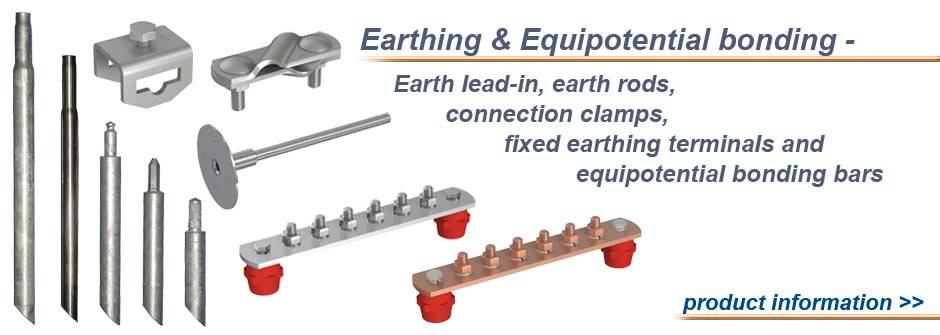
Equipotential Bonding System and Grounding
In our country, lightning rods and Faraday cage systems are installed on structures in accordance with specifications and project requirements to protect against the physical effects of lightning. For the safety of electronic devices, low-voltage surge arresters – internal lightning protection (surge arrester) systems – are installed in panels and in front of devices. In addition, foundation grounding and equipotential bonding systems, which must be included in the project, are among the most important elements of lightning and surge protection projects. These four systems together ensure long-term safety for structures and their occupants. Beyond being designed by expert engineers, the correct implementation of lightning protection systems is of critical importance. Even the smallest mistake during installation of these systems, which ensure life safety and facility continuity, may result in the failure of the entire project. Therefore, during implementation, engineers must accompany expert installation teams.

Importance of Using isCon Insulated Down Conductor
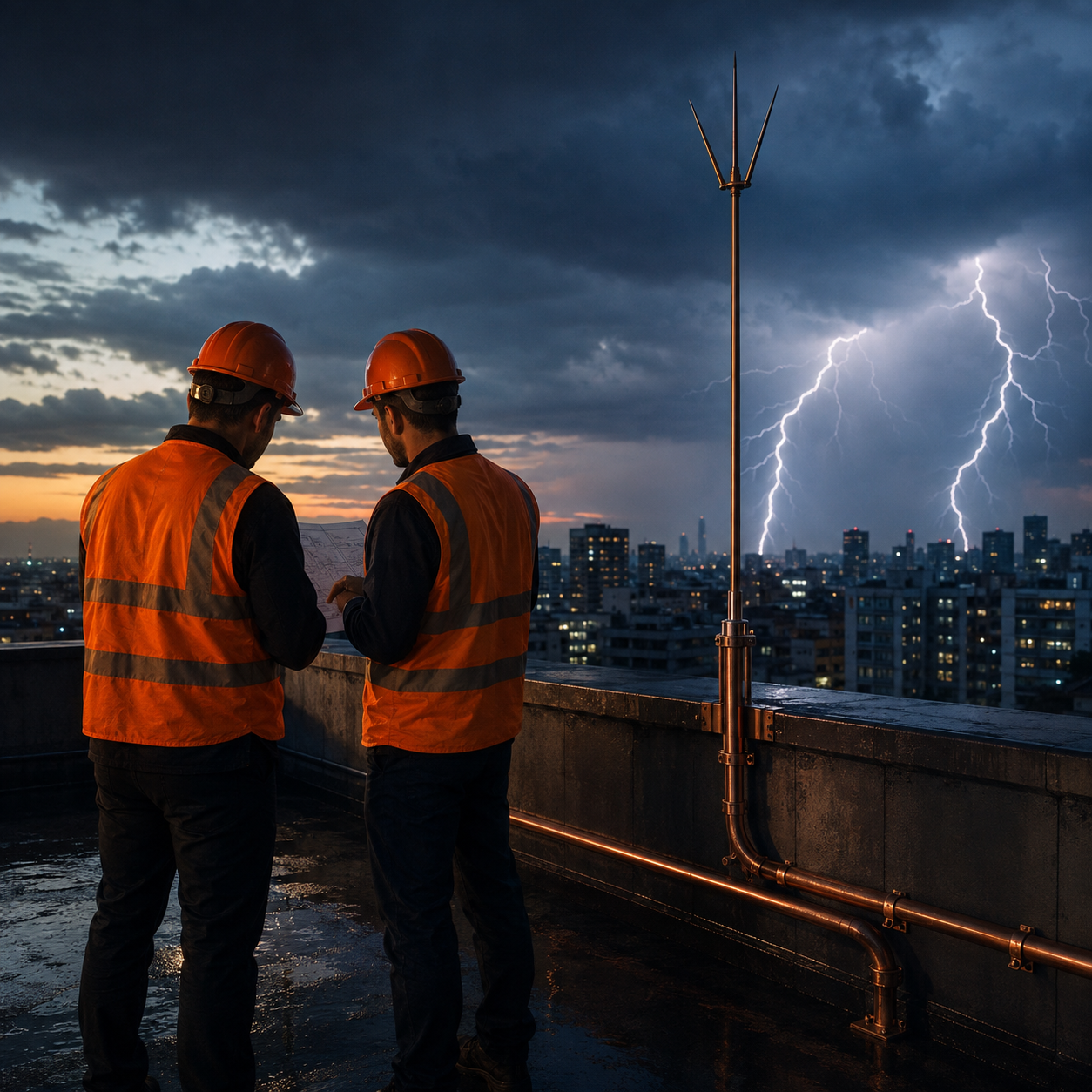
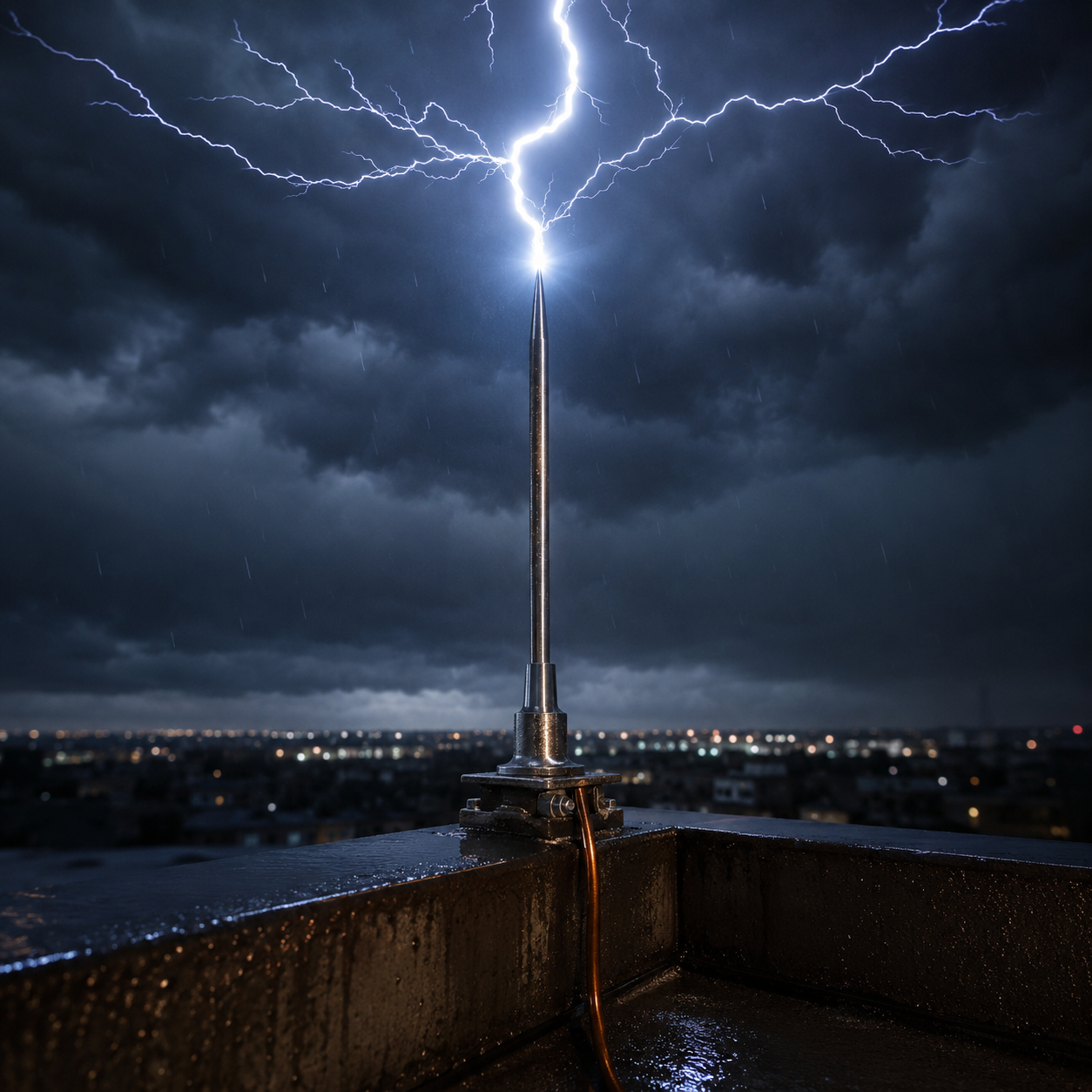
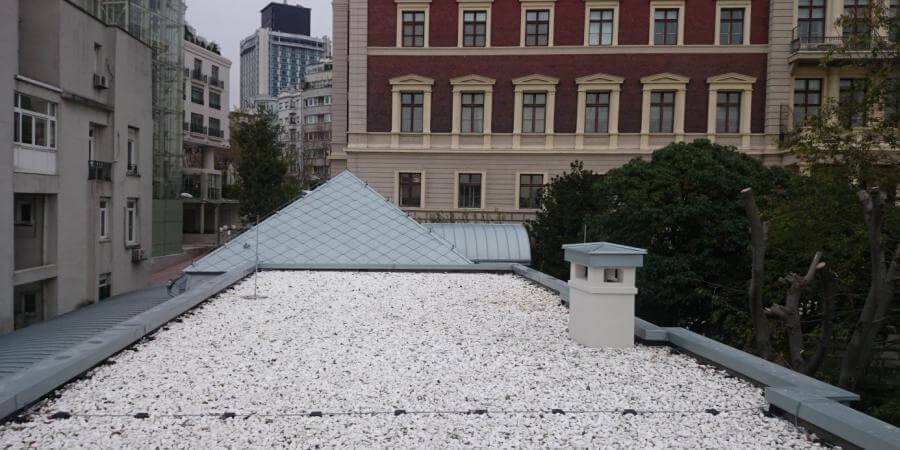
In both lightning rod and Faraday cage systems, ensuring insulation of down conductors is essential. If lightning-resistant insulated cables (isCon) are not used, the “S” separation distance specified in TSE EN 62305 standard must be maintained, and the thickness of materials used must comply with TSE EN 50164 standard. During a lightning strike, a magnetic field is generated and, due to the impulse characteristics, the strike can penetrate the facility through parallel lines. Therefore, isolating the impulse as much as possible is extremely important. In lightning rod systems, measuring the ‘h’ radius to ensure standard protection zones; in Faraday cage and mesh methods, designing conductor meshes and air terminals according to protection angles; designing sharp edges and corners based on their risk of attracting strikes; ensuring jumping and expansion distances; and using flexible mounting accessories are all critical details that must be calculated during installation.
Spark Gap Technology
In systems designed according to the rolling sphere method, coordination of the radius and the position of air terminals is the most critical point of the entire project. In both systems, grounding must be implemented in a claw configuration, thermowelding must be used, bimetal products should be installed if required, and corrosion tape must be applied. Another crucial aspect is taking precautions against step voltage at the grounding point. If no precautions are taken at the point where grounding begins with copper meshes and no safety zone is established, it can lead to serious electric shock hazards in the future. This frequently overlooked issue in residential projects poses a major danger. In both lightning rod projects and Faraday cage systems, it is necessary to ensure controlled discharge of voltage, and using spark gap connection devices at grounding points is vital for both human safety and electronic system protection.
Use of Class B, C and D Surge Arresters
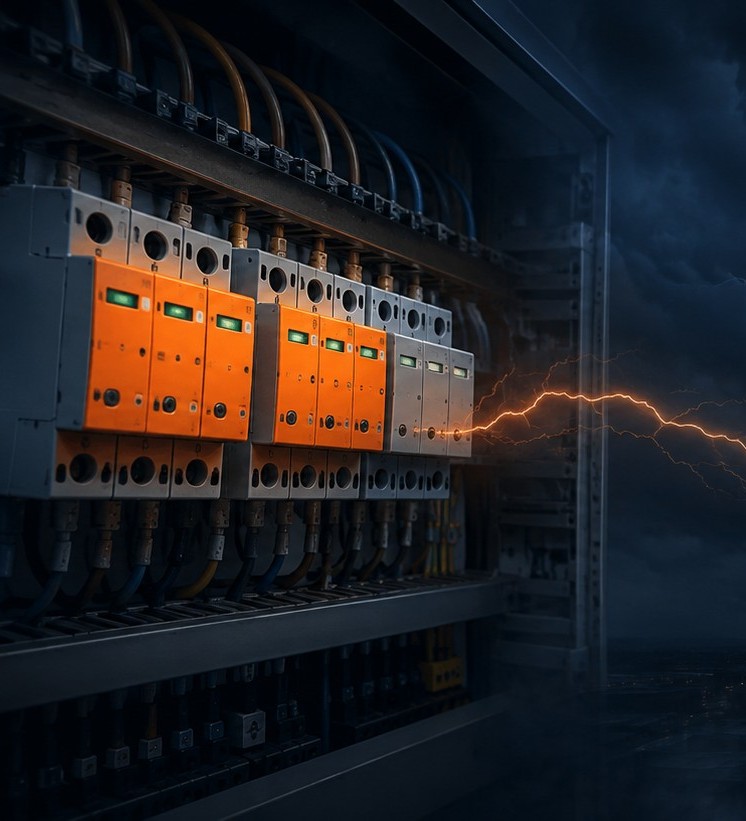
Internal lightning protection systems ensure the safety of electronic systems against lightning and overvoltage. Impulses directed at a facility can damage all devices, and it must not be forgotten that internal lightning protection systems are mandatory in structures with external lightning protection systems. Internal lightning protection systems are grouped as Class B, Class C, Class B+C, and Class D. Class B, C, and B+C are panel protections connected in parallel, while Class D devices are installed in series in front of equipment. Class B protects against lightning, while Class C and D protect against other impulse types. Minimum cable cross-sections must be 16 mm² for Class B, 6 mm² for Class C, and 1.5 mm² for Class D, and grounding types must be considered when selecting products. Differences between TT, TN-S, and TN-C grounding-neutral systems are critical in product selection. V-shaped connections should be used, cable lengths minimized, and grounding conductors routed directly to grounding bars without unnecessary loops for facility safety. When necessary, surge arresters may be integrated into the system via separate panels under the name AGKP. Only spark gap technology devices should be installed before meters; varistor-based devices are not suitable in this position. It is recommended to use fuses in front of surge arresters to protect the devices and facilitate cartridge replacement. If the installation team is not expert, power must be disconnected during installation to avoid dangerous outcomes. Just as every panel contains fuses and relays, surge arresters must also be installed before panels are mounted in the building.
Measurements before and after installation of lightning protection systems are mandatory to ensure correct implementation. Our goal is to control the impulse path, and therefore resistance values are defined by standards. Measurements to ensure equipotential bonding are equally important; an equipotential difference above 0.2 ohms poses a risk. All grounding systems, including lightning protection, must be collected at local equipotential bars and connected to the main equipotential bar to ensure resistance equality. Only then should surge arresters be used.

During foundation grounding, selecting strips with a thickness of 70 microns, using thermowelding, ensuring connection equipment thickness is not less than 3 mm, applying corrosion tape, extending strip branches outside the building from mesh system corners, and ensuring flawless bonding with rebar are fundamental criteria. Attention to mesh count and symmetry by expert teams increases the building’s safety factor.
In conclusion, application engineering is extremely important in lightning protection and grounding systems. Having these works carried out by expert companies is vital for safety.
Raycap aims to establish flawless lightning and surge protection systems through both its standards-compliant products and its expertise in implementation. With its trained engineering and installation teams, it provides support in project design, product selection, and application stages for all your projects.