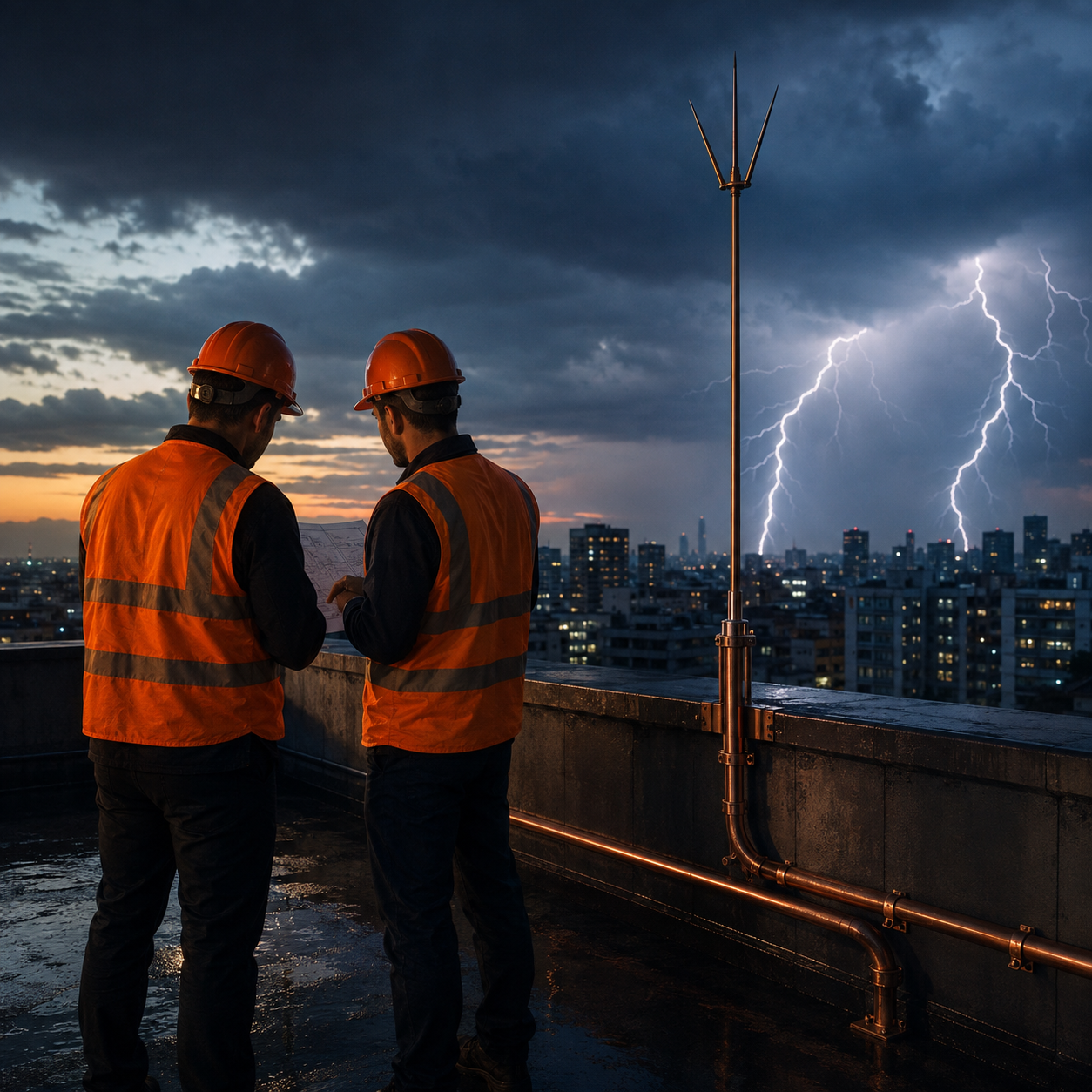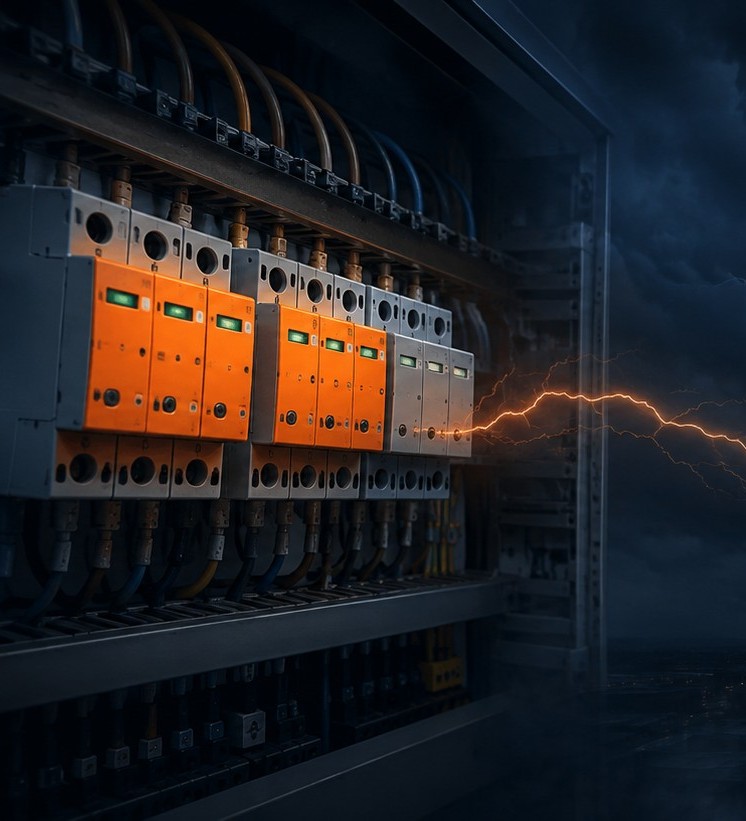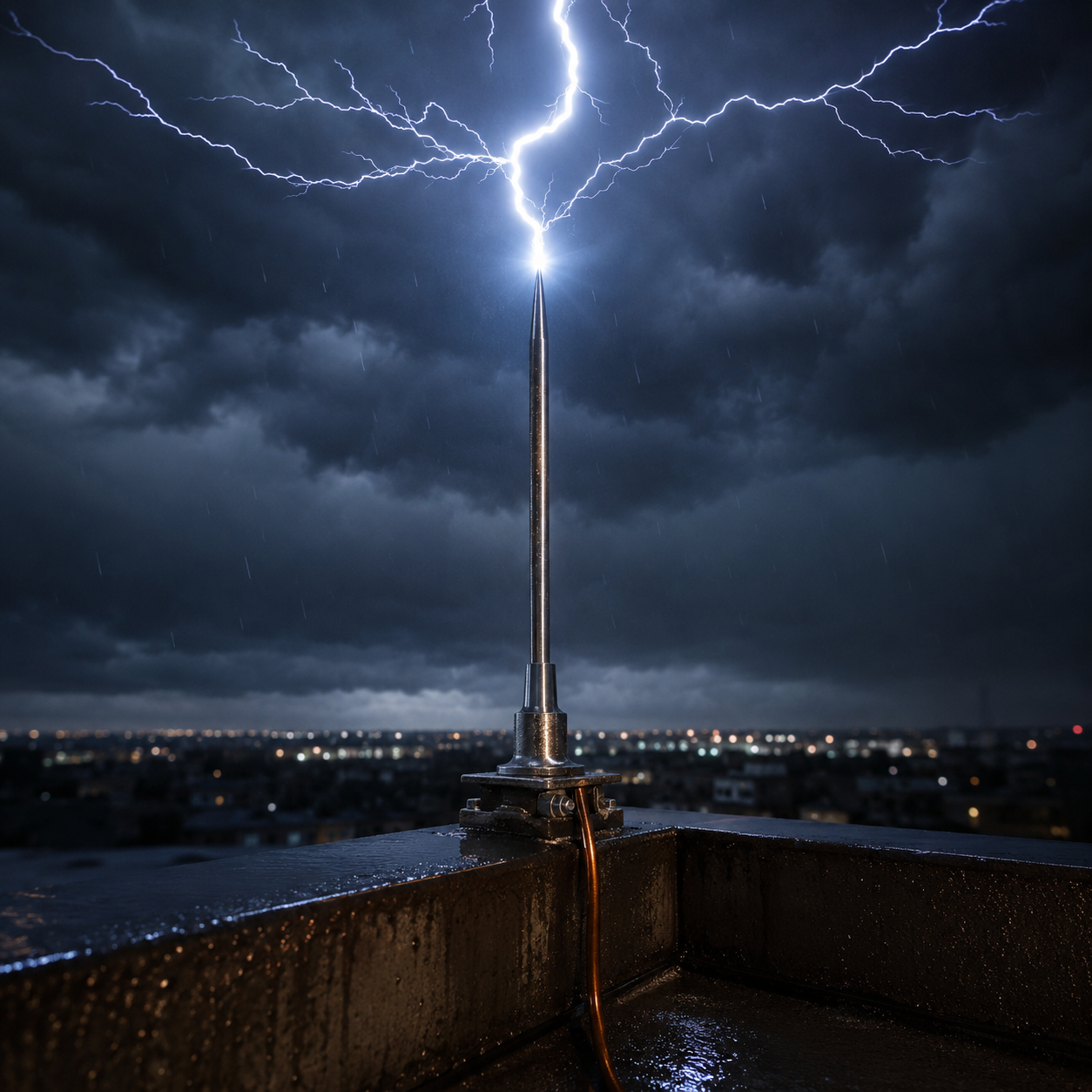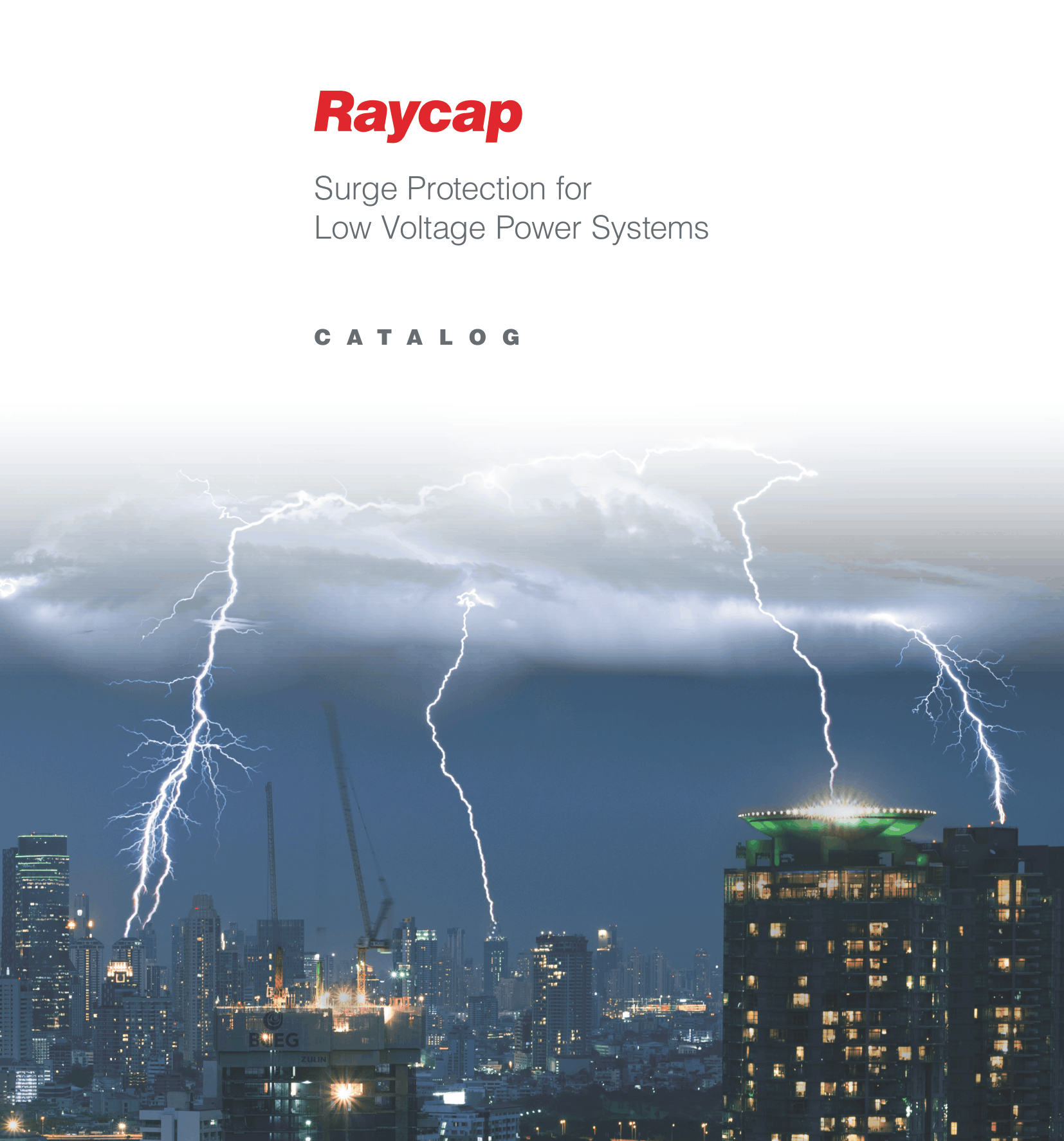
Remember: Applications consisting solely of Lightning Rods and Faraday Cages are NOT sufficient to protect your devices from lightning!
Unfortunately, the emergence of the need for protection occurs in inverse proportion to technological developments. The reason is that as electronic devices become much smaller in size with technological progress, their operating voltages have also dropped to much lower levels. It is well known that during the historical transition from vacuum tube devices to transistor-based structures and integrated circuits, the operating voltages of components used on electronic boards decreased from 3000 V to 24 Volts and down to 5 V DC. Therefore, there has been a transition toward increasingly sensitive electronic devices. Since voltage levels generated during electrical switching operations (inductive loads) or lightning discharges in natural events (up to 200 kA) have not decreased proportionally with these technological developments, we must equip our systems and equipment with the necessary protection components to shield them from these adverse effects.
If internal lightning protection systems are not present in your electrical installation, all electronic devices inside a structure that has an external lightning protection system on it or within a 2 km radius are under threat due to coupling effects caused by lightning strikes!
From industrial facilities to residential buildings, from hospitals to base stations, surge protection devices are needed wherever electrically powered equipment exists in our lives. We certainly do not want our LED TV at home or any machine in a factory to burn out due to overvoltage. Sensitive data processing systems, telecommunications and network infrastructures, and mass production lines must continue to operate without damage. Even one hour of downtime in these systems can cause losses amounting to millions. Therefore, with a small investment, your systems and devices should be protected. However, due to precautions not taken in advance, millions in damages continue to occur every year due to overvoltage.
The scope of use of surge protection systems includes protection of the main distribution network, sensitive equipment protection, data lines, measurement and control systems, as well as protection of metal pipes via spark gap separation distances. Systems can be installed centrally or in a distributed manner.
How Do Surge Overvoltage Impulses Occur?
When we examine the causes of surge overvoltage impulses, they can be listed as lightning impulses, switching impulses, transient voltage fluctuations, harmonics, and voltage drops. The distinguishing feature of these impulse types is their short duration, which is why internal lightning protection systems are required to protect our systems. The fact that fuses and relays respond only to long-duration impulses proves the necessity for internal lightning protection devices to be installed in every panel, at least like a fuse.
As seen in the graph above, the highest voltage peak in low-voltage consumer networks occurs due to lightning discharge. In the event of a direct lightning strike on an external lightning protection installation or low-voltage overhead line, the high energy content of the lightning voltage usually causes connected loads to be disabled and insulation damage. In building installations, induced voltage increases on power or data lines can reach several times the nominal operating voltage.
Overvoltages caused by switching operations do not cause voltage increases as high as lightning discharges, but they occur very frequently and may cause installation failures. While switching-induced overvoltages can reach two to three times the operating voltage, lightning voltages can reach twenty times the nominal voltage and carry extremely high energy. Failures often occur later, as electronic components age over time due to damage caused by smaller transient voltages.
Transient voltage fluctuations are voltages that occur for very short durations in the microsecond range but can reach very high amplitude values compared to nominal voltage!
As stated in the first paragraph, the design of lightning and surge protection systems must be carried out in line with standards and engineering specifications. In this article, I aimed to emphasize the necessity of using internal lightning protection; you can see the system logic in the graph below. However, for system implementation and design, you can always receive support from the expert engineering staff of RAYCAP, as system selection is at least as important as system implementation.