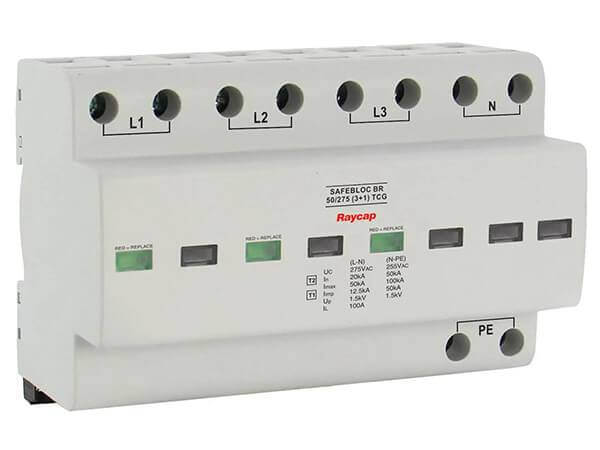
Cascaded protection and coordination in surge arresters can be explained in 2 ways.
1-Cascaded Protection Principle
A design can be made with Class B+C in the main panel, Class C in the distribution panel, and Class D at the final point, or according to the Type 1-2-3 product sequence. The aim here is to gradually reduce the effect of the lightning impulse. In other words, a 100 kA impulse encounters a 100 kA protective device in the main panel, 40 kA in the secondary distribution, and a 10–1 kA protection module at the final point. In parallel with current values, Up protection levels also follow the same cascade. For example, while the device installed in the main panel reduces a 3 kV impulse to 1.5 kV, the Class D device reduces it to 0.9 kV. In this way, cascaded protection can be achieved.
2-Up Value Comparison
In the Cascaded Protection Principle, the importance of distance is the second step that affects coordination. The main point of coordination here is that the device with the lower Up level reacts faster; if the distance is short, the device may fail because its protection level is lower. Therefore, either the distance or the Up level must be adjusted at this point.
The specified distance should be over 20 meters. Alternatively, the device providing 100 kA protection should reduce the Up level to a lower value than the Up level of the device providing 40 kA protection.
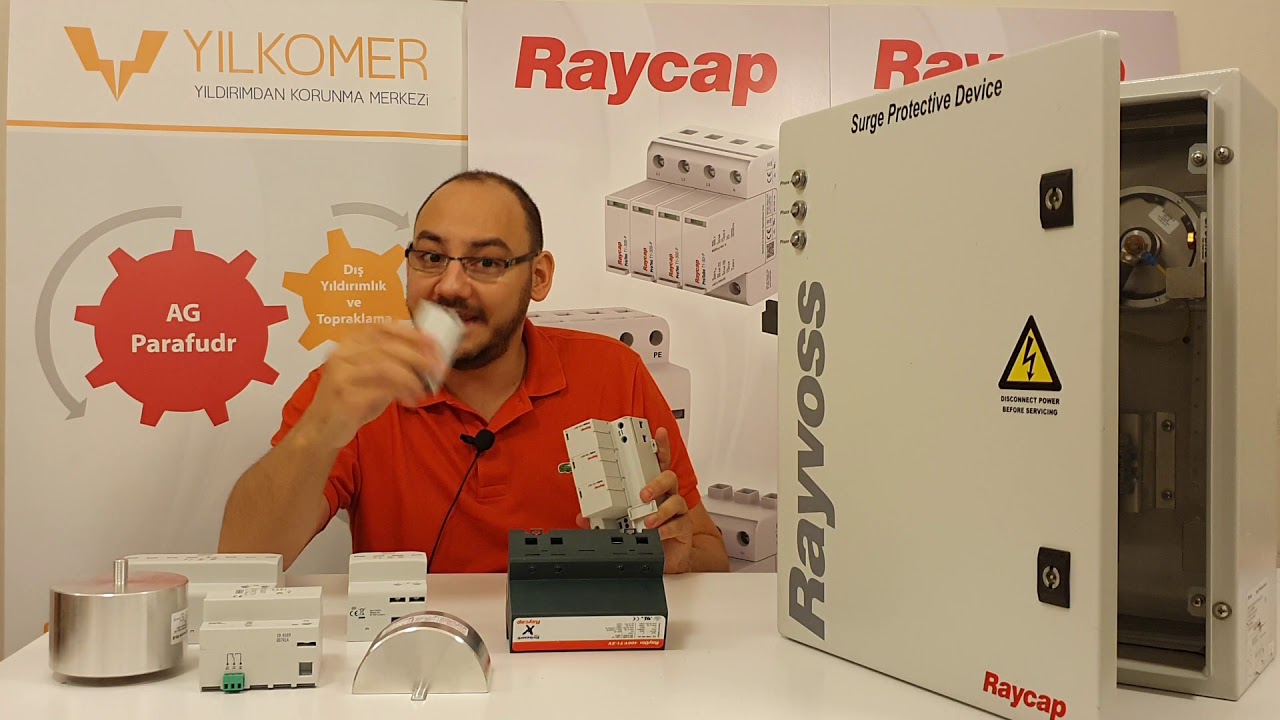
You can examine the related topic more clearly in our video.