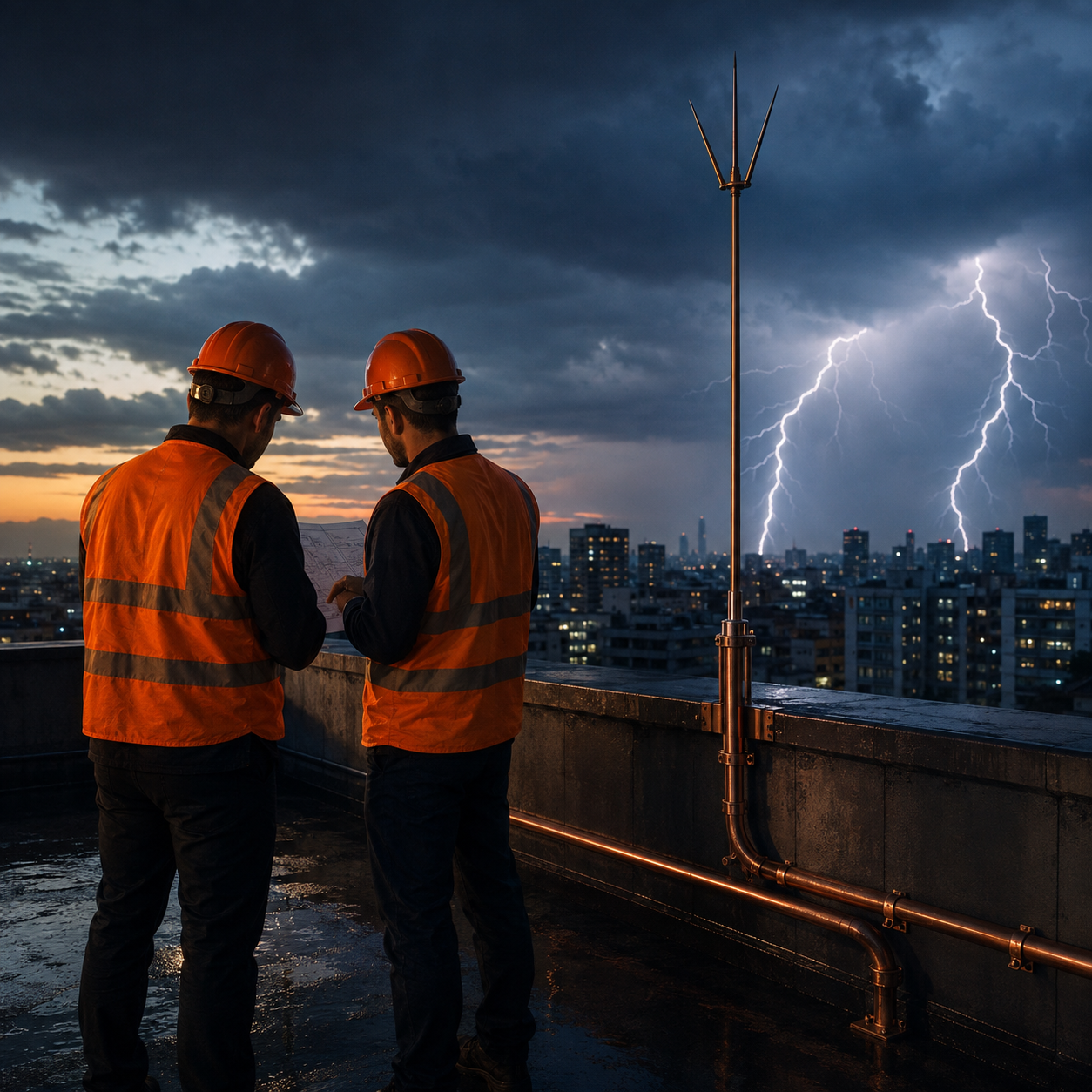
First of all, we must design a system based on calculations so that every metal reinforcement and every point in the facility can benefit from the global grounding line. As a result of risk analysis, a ring conductor should be installed around the plant, and according to the mesh dimensions obtained from the risk analysis, a grounding grid should be woven at the foundation of the plant to allow easy dissipation of surges. This grid must reach fences, table legs, and all foundation reinforcements. The number of grounding rods determined by calculations should be designed in parallel with the soil resistivity value. Generally, grounding electrodes and grounding conductors used along the ring line should be buried starting from a depth of 80 cm and their tails should be brought to the surface. The most important consideration during foundation grounding system installation is the use of products and materials compliant with IEC 50164 Standard. Because corrosion risk will increase grounding resistance values in a short time. Therefore, selecting anticorrosive products, ensuring a 70-micron coating level if galvanized conductors are used, using connection elements not thinner than 3 mm, and preferably applying corrosion tape at every connection point are extremely important.

Making connections using Exothermic Welding is a more accurate application. Additionally, it is important that all used equipment and connection elements are made of the same type of metal. Using the same material type is essential against bimetal effects. It is not mandatory to use copper in grounding systems. As clearly stated in IEC 62305 standard, different materials with sufficient cross-sections and dimensions can be used. Galvanized alloy and stainless steel products are ideal, while MgSi alloy conductors are highly resistant to corrosion. After the foundation grounding design, the placement and design of passive air terminals should be completed, followed by functional grounding at opposite sides of the facility. However, every functional grounding must be connected to the equipotential system using spark gap arresters. At this stage, design and implementation must be carried out by expert engineers. In PV projects where lightning rods are not recommended, failing to bond lightning rod grounding to the equipotential system poses a significant risk.

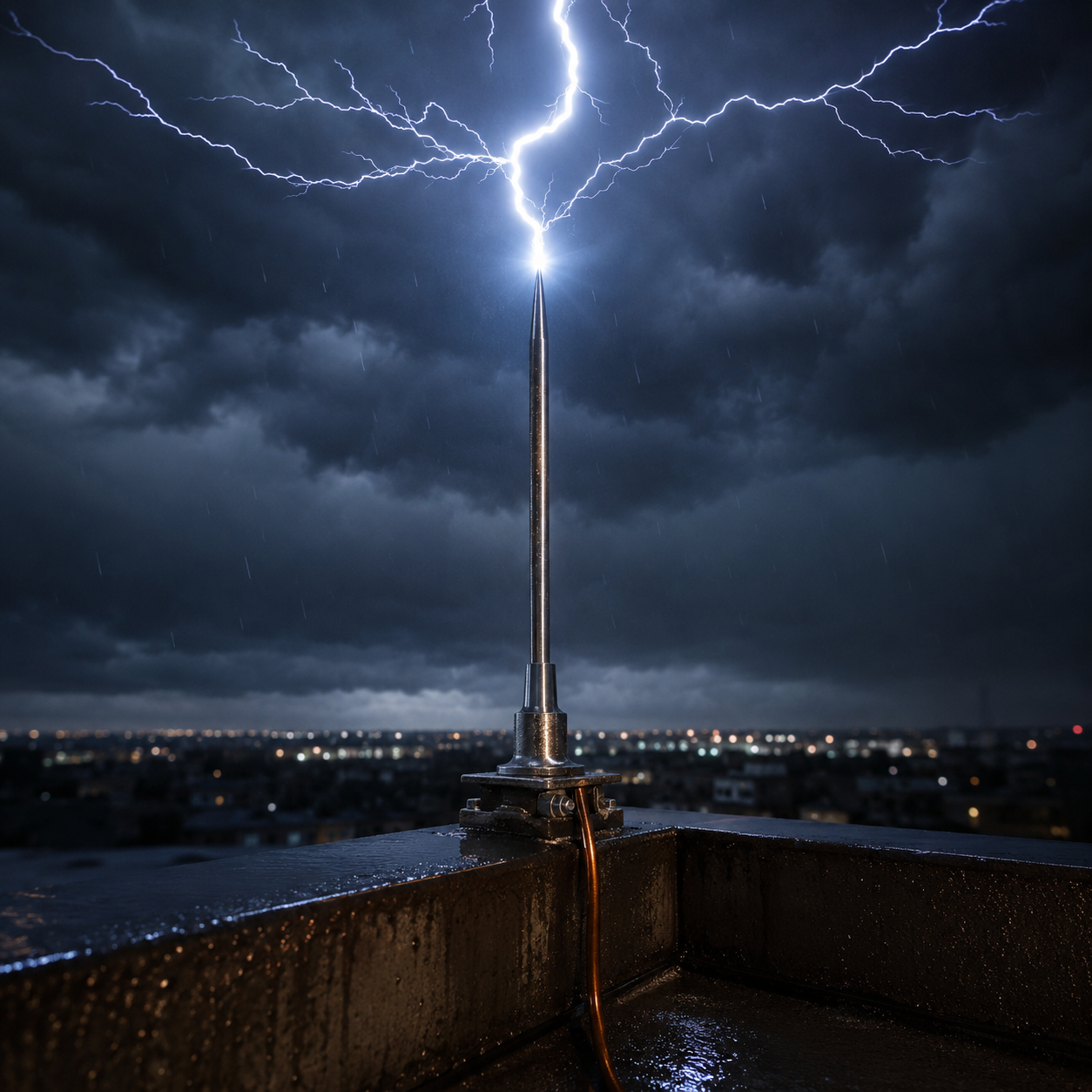
In the Lightning Protection System, passive air terminals should be preferred and bonded to the equipotential system. The operational and protective grounding resistance values of transformers are extremely important. Transformer protection and operational grounding practices and resistance values are determined by standards, and considering long-term operation, keeping all grounding values below 1 ohm and using corrosion tape are critically important. Grounding of field distribution panels and combiner panels must never be separated; they must be bonded to the equipotential system. This is because lightning, sudden overvoltage, and other fault currents will flow to the panel with the lowest resistance within 25 ns, leading to negative consequences. Therefore, field panels, combiner box grounding, and inverters must benefit from the global grounding system. After all grounding systems are installed and bonded to equipotential, equipotential control and measurements must be performed using calibrated devices within the scope of IEC 62305 standard. Expert engineering supervision is extremely important at this stage. The resistance difference at 100 specified points must not exceed 0.2 ohms. Therefore, measurements at different locations are crucial. However, design, implementation, and differences in soil resistivity around the plant may require different practices. From time to time, intentional low-resistance discharge points may be created in the facility. This should be done in areas with uneven soil resistivity values. Calculations, material selection, implementation, and measurement stages related to grounding must absolutely be performed by experts. Otherwise, it is very difficult for the facility to remain electrically reliable over the long term.

As Lightning Protection Center, we provide all grounding calculations, material selection, implementation, and reporting services for Solar Projects. For more information, you may contact us at info@yilkomer.com
.