The IEC 62305 Standard has been adopted in our country as TSE EN 62305. This standard foresees the use of the Faraday Cage system. So how should the Faraday Cage system be properly designed? As the Lightning Protection Center, we aim to clarify this subject in this article. As is well known, the “Faraday Cage” is not a single system but rather a combination of integrated systems. By applying the Mesh Method and the Rolling Sphere Method together, structures are protected both with conductors and air termination rods. If there is no prominent high point on the structure, even the mesh method alone, when combined with properly placed sharp points, can provide a correct and effective design. The first and most important rule in designing a lightning protection system is to perform a risk analysis.

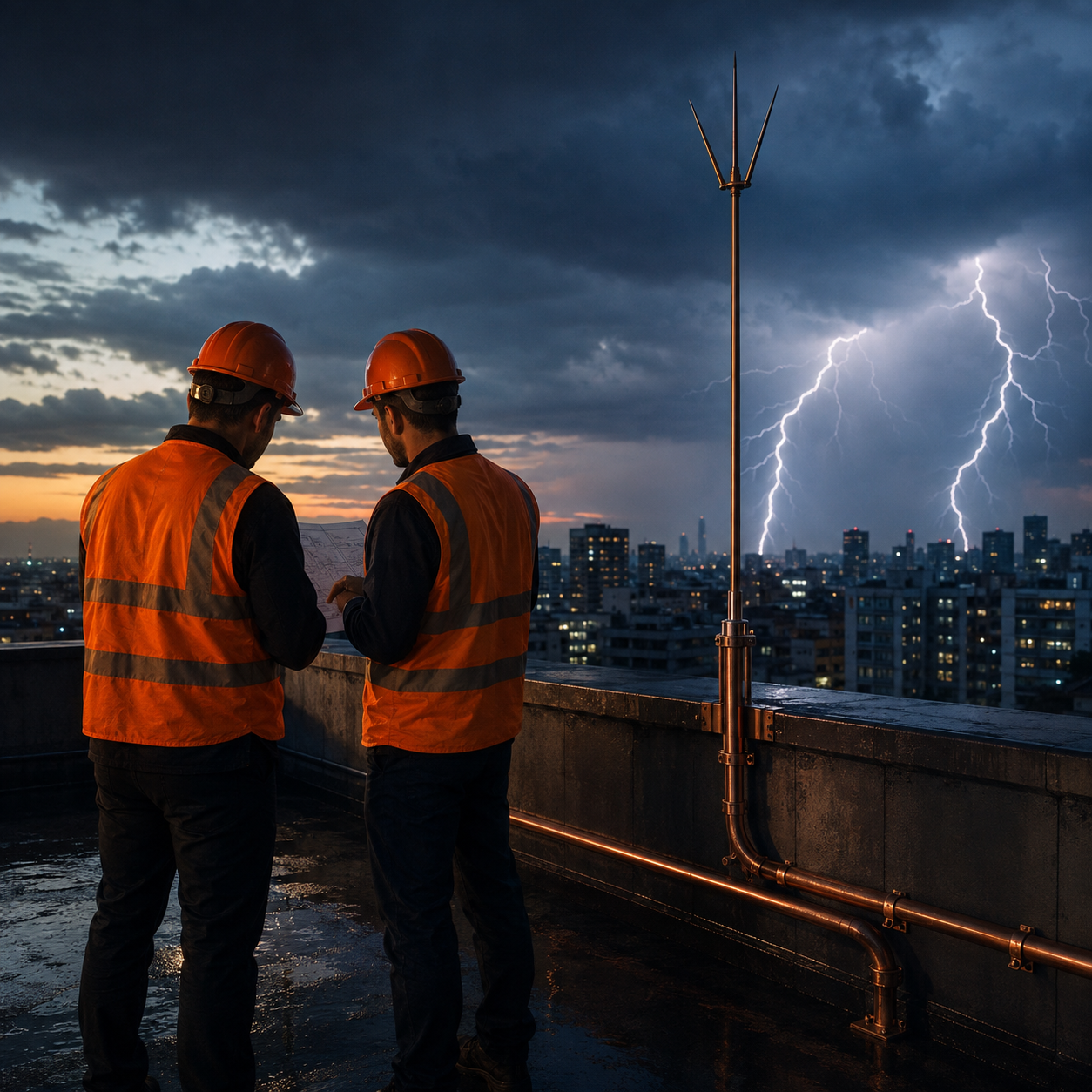
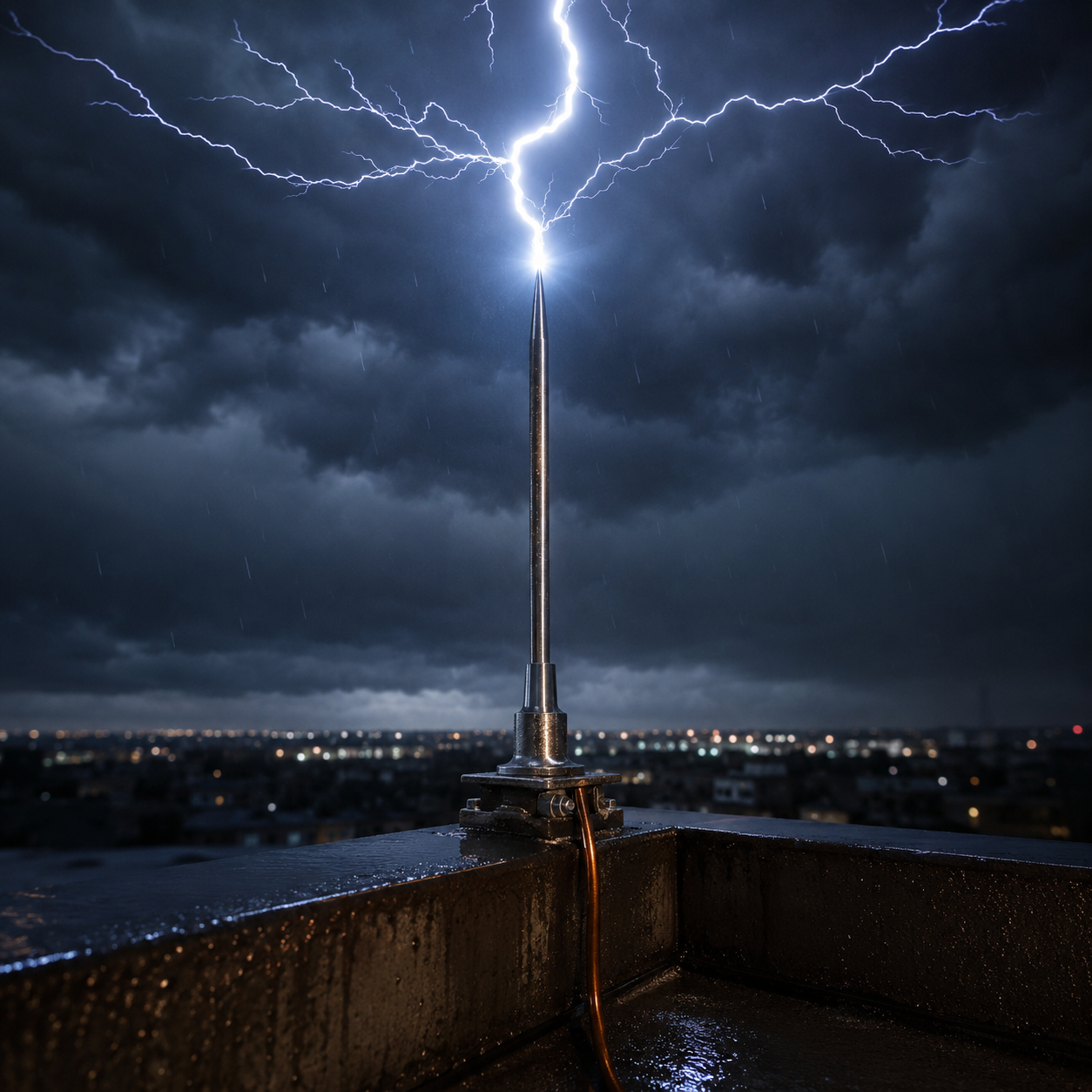
By applying the Mesh Method and Rolling Sphere Method together, structures are protected both by conductors and air termination rods.
Many parameters such as the dimensions of the structure, its geopolitical location, physical condition, materials used, function, number of occupants, status of electronic systems, and the presence of flammable or explosive substances are evaluated using specially designed licensed software. If available, the technical drawings of the structure also play a role in the assessment. If drawings are not available, an on-site inspection becomes a critical first step for an accurate risk analysis. The standard defines four basic risk levels. Based on the results obtained, the conductor layout, mesh sizes, number of down conductors, and air termination design are determined accordingly.

After the roof design is completed, the down conductor design becomes critical in terms of electromagnetic field effects on electrical equipment and fire risk.
Various calculation and design criteria that differ from facility to facility—such as roof height, rooftop structures, and the height reached by explosive gases if present—must be evaluated after the risk analysis. For example, if a structure exceeds 60 meters in height, additional protective measures must be taken within the upper 20% zone, as side strikes pose a significant risk. After completing the roof design, the down conductor design is essential to minimize electromagnetic effects on electrical devices and reduce fire risk. Down conductors must be installed at a calculated separation distance (s-distance) from electrical lines. Failure to maintain this separation distance can result in serious financial losses. The same separation distance principle also applies to lightning rod systems. If the required separation distance cannot be maintained, specially insulated lightning down conductors must be used.
As a result, protection against both the electrical and physical effects of lightning is achieved. Material selection is just as important as the design itself. Aluminum MgSi alloy roof conductors, connection clamps, and insulated wall conductor systems must fully comply with the IEC 50164 standard. In addition, rapidly advancing technology offers a wide range of specialized systems focused exclusively on Faraday Cage applications. Insulated tripod air termination systems, for example, provide maximum safety while offering an aesthetic appearance. These mast systems can reach heights of up to 12 meters and deliver highly successful results in facilities such as filling stations and solar power plants.
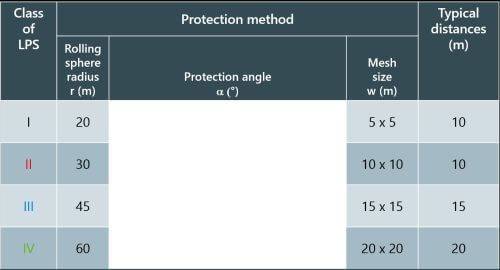
In general, Faraday Cage systems require expertise in site inspection, risk analysis, design, material selection, and implementation. In this article, we have shared some of the important tables included in the standard. For detailed information and technical support, you may contact the expert engineering team of the Lightning Protection Center.