
How Do Type 1+2 (B+C) Class Surge Protectors Differ from Type 2 (Class C) Surge Protectors?
28 June 2016
Protection of Railway Stations Against Overvoltage | Example
15 July 2016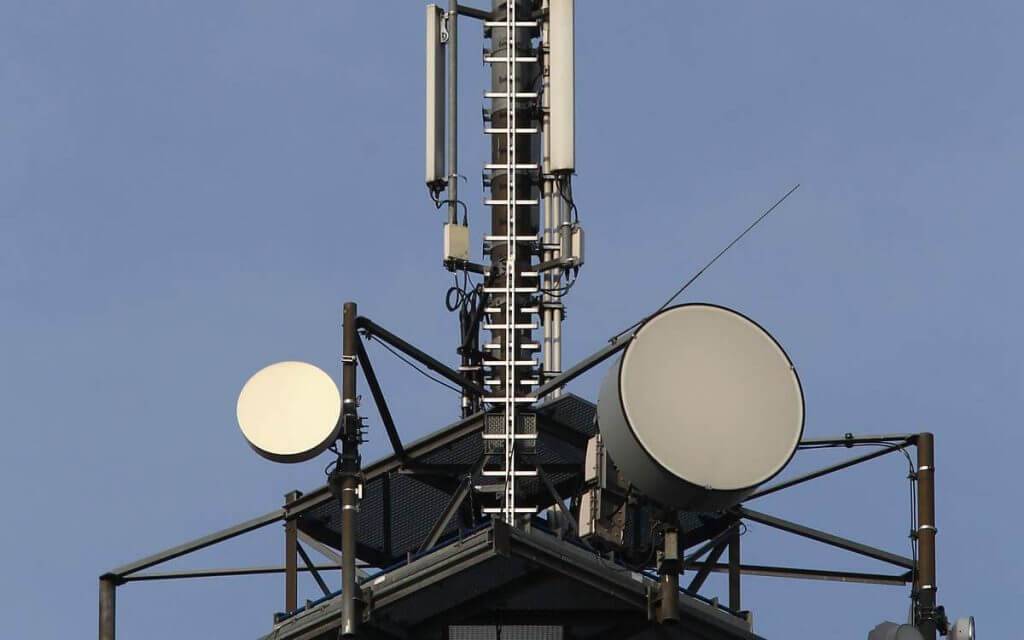
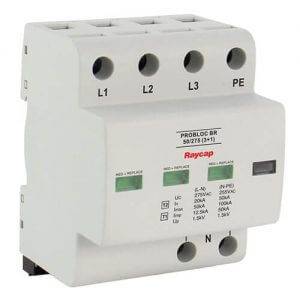
Within the scope of IEC 62305 and DIN VDE 0855-300 Standards, power and fine protection surge arresters must be used in radio transceiver stations. Station receiver and transmitter systems are damaged as a result of sudden voltage surges, primarily lightning-induced impulses. It is especially important to protect radio stations installed at high points that are difficult to access against impulses. Every station inevitably contains a power supply (230/400V), and due to the problems we experience in the energy line, protection must be provided primarily at the power supply inputs and outputs. Compact model Type 1+2+3 protection modules against lightning impulses coming through the ground line and indirect paths must be used at the power supply point and before the meter. The selected product should be chosen by considering TT, TN-C, or TN-S earthing types within the scope of the IEC 60364-5-53 norm. Considering the difficult-to-reach points and the difficulty of replacing burnt surge arrester cartridges, it is important to choose products with VG technology or alternatively spark gap technology. Selection of surge arresters is extremely important to prevent system power interruption and to prevent the station from being disabled. If 2 different types of external products are to be used in the same station, that is, if Class B surge arrester and Class C surge arrester (Type 1 and Type 2) are to be used separately, a design must be made according to coordination and selectivity criteria. Otherwise, the type 1 surge arrester installed for lightning impulse protection will not activate and will prevent the protection of the system as the type 2 surge arrester takes fast action. We have written all the details on this subject in our previous articles on our blog page, so we are not going into details about selectivity in surge arresters in this article.
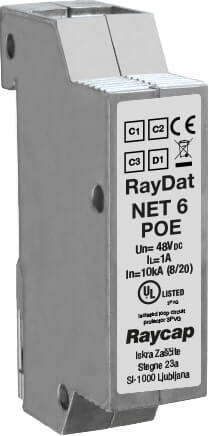
 Apart from energy lines, we must definitely take protection measures within the fixed network connections-network infrastructure, which are frequently affected by impulses. In particular, RBS switching technology elements, base station control units, and mobile switching centers can be affected by lightning and sudden surge impulses in the order of nanoseconds. Especially fixed network connections carry lightning impulses to the facility in the outdoor environment. Receiver and transmitter connections are also affected as a result of direct lightning impulse impact. In order to prevent all these problems, fine protection products suitable for all weak current and communication systems should be selected. At all these points, respectively;
 LSA Plus Telecom line protection modules
- Coaxial communication and antenna protection surge arresters (Products must be selected according to connector type)
- Cat line protection modules-RJ45, Cat6, Cat5, RJ11 Line Protection Surge Arresters
- 24 V, 12 V weak current protection surge arresters for communication modules
Here, selecting the right product for the right point by analyzing the system features is extremely important. The frequency range of the product to be used at the transmission point in radio systems is of great importance. A product whose frequency range is not selected correctly will prevent the system from working correctly and will not provide the foreseen protection. Point-to-point remote supply voltage (PTP) must be determined correctly according to the application type. Operating voltage is extremely important for Uc surge arresters. Therefore, the frequency value, connector type, and Uc voltage value of the product to be selected are important. In addition, the low passive intermodulation (PIM) values of the system should be carefully examined. As Yılkomer, product selection is carried out by taking into account all technical values in 2400 different surge arrester types we offer to our customers.

Parallel to the LV Surge Arrester system, the quadruple protection systematic is also valid for the lightning protection of base stations. It is important that the external lightning protection system creates a sufficient protection angle, and after descending in an isolated manner and being grounded, the entire system (including the external lightning protection system) is at equipotential. After correct grounding calculations, radio and base stations, which are difficult to access and of great importance in communication, will be protected against lightning impulses with the LV Surge Arrester system design we mentioned in our article. For system design, product requests, and detailed technical information, you can always contact the Yılkomer expert staff.