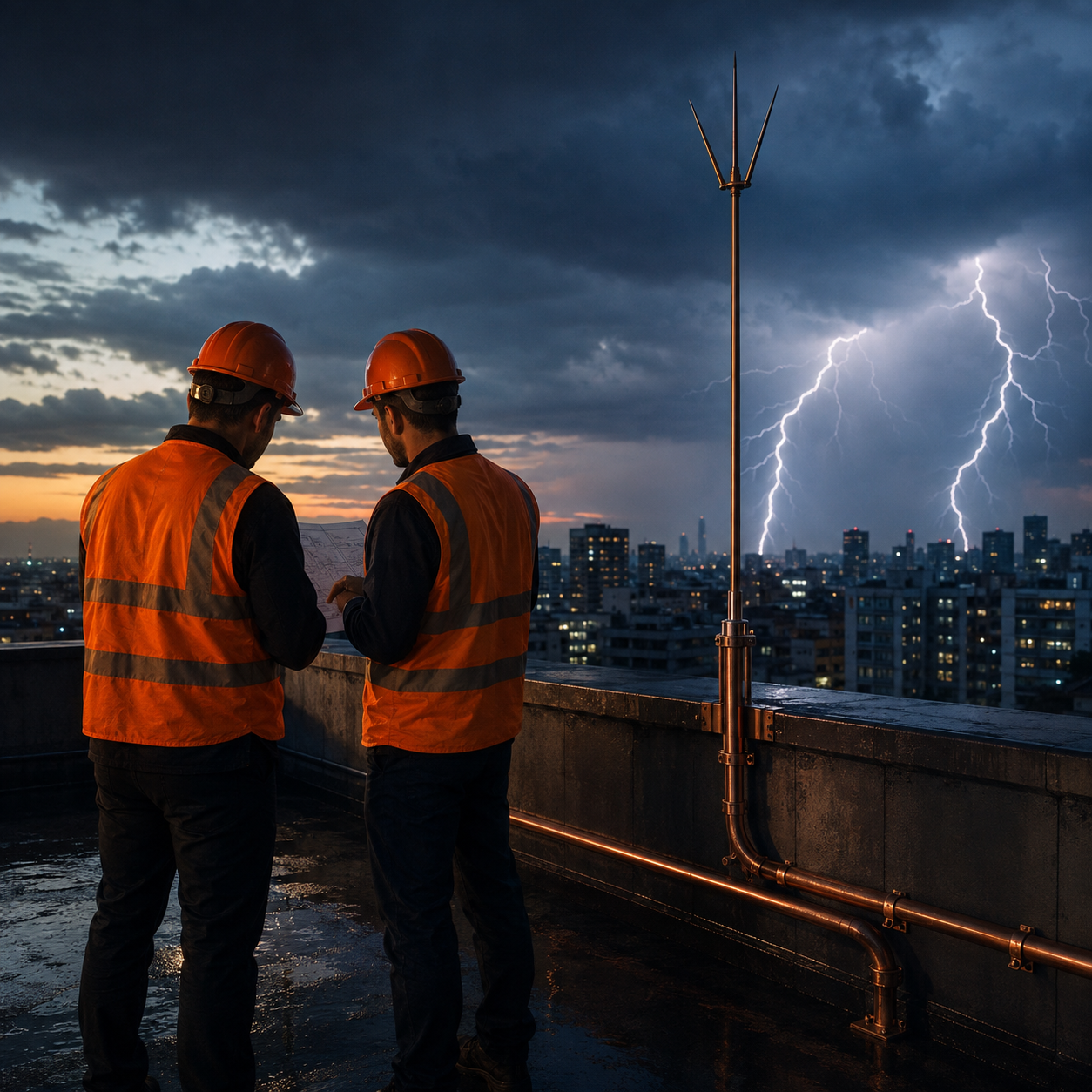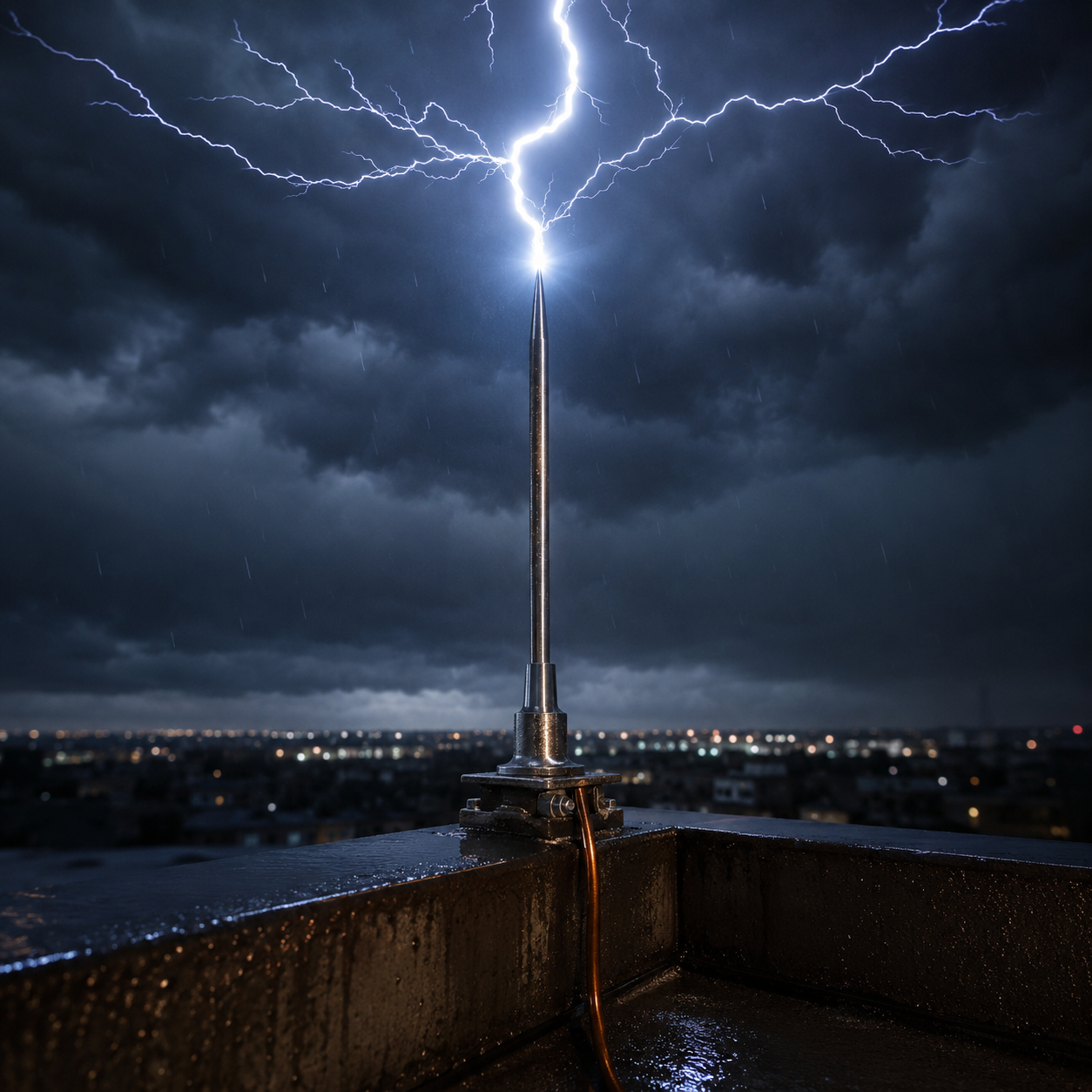
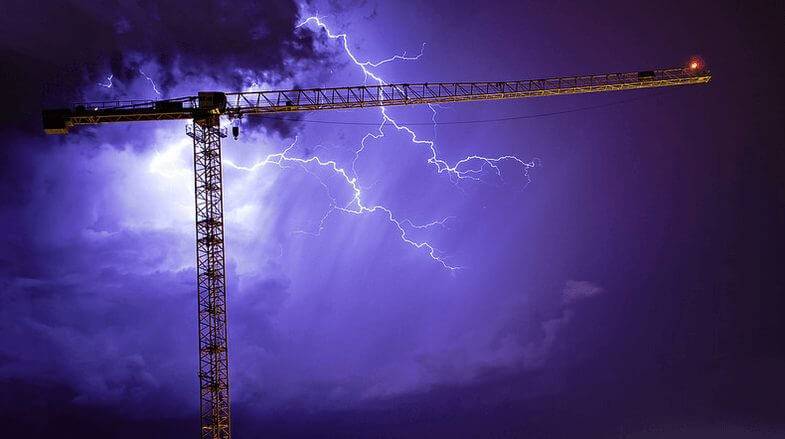
Under normal conditions, the cross-sections of cranes are sufficient to conduct lightning discharges to the ground; however, due to their height, strikes can also hit cranes from the sides. At this point, according to IEC 62305 risk analysis, the lightning rods positioned at the top of the crane must also be extended to the sides. According to the rolling sphere method, this is the only way to guide lightning. The lightning rod is the first step; after the strike, to prevent adverse effects such as tipping, the crane’s grounding must be well executed, and the ground resistance should be minimized to allow current to flow quickly. Different calculations can be made according to plate, rod, or mesh grounding methods, but the crane should be able to conduct strikes to the ground from at least four points.
As Yıldırımdan Korunma Merkezi, you can contact us to get detailed information about the protection of crane systems.
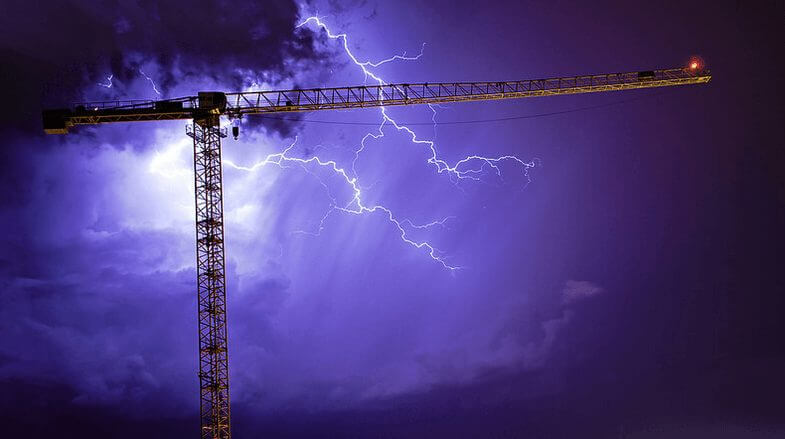
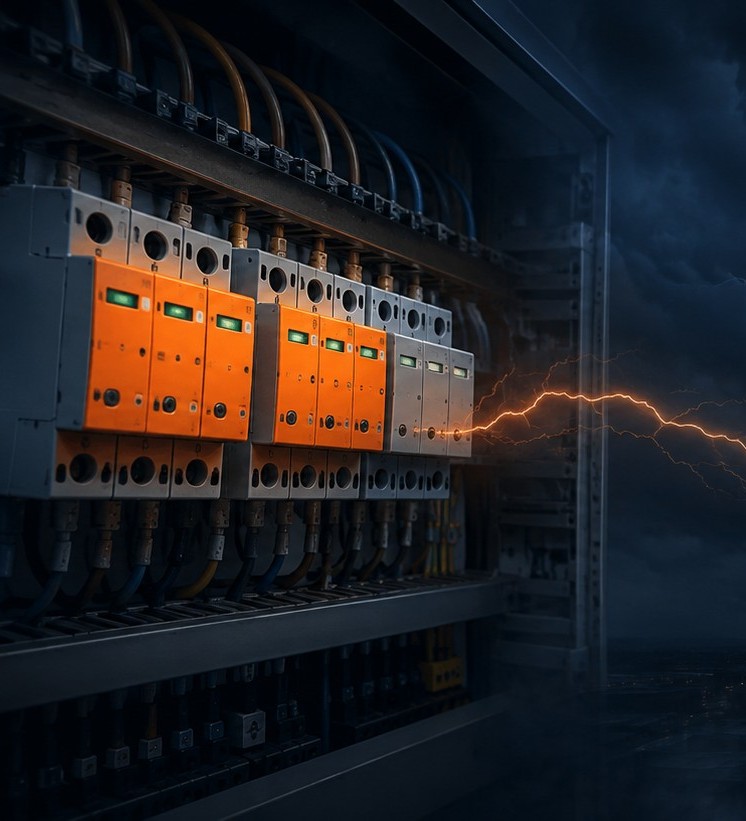
In parallel with physical protection, to protect the electrical and automation components of cranes from lightning, an LV surge arrester system should be used. Especially for 24 V sensitive sensor systems, data protection will prevent adverse situations such as crane lock-ups. Products tested with 10/350ms curves according to IEC 61643 should be used in crane systems. In construction sites where cranes will work at fixed positions for a long time and where there is high human density, vertical and lateral lightning rods designed according to the rolling sphere method can reach the ground via insulated conductors. This will eliminate shocks and magnetic effects caused by touch. A crane directly exposed to lightning, if it does not have a system to dissipate the strike easily, can experience moment disturbances and tip over due to physical effects. In conclusion, directing the strike and correctly calculating the crane’s grounding system will prevent problems.