
Electric vehicle (EV) charging stations are at the center of today’s sustainable mobility solutions. These technological advancements provide environmentally friendly transportation options, delivering significant benefits at both individual and societal levels. However, for the safe and reliable operation of EV charging stations, the correct installation and maintenance of grounding systems, which are a fundamental element, are of great importance.
Grounding plays a vital role in the safety of electrical systems. Incorrect or inadequate grounding can lead to serious hazards such as electric shock and electrical burns. Therefore, the proper design, installation, and maintenance of grounding systems in EV charging stations are critical for user safety.
For the proper operation of protection devices, especially the functionality of LV surge arresters and residual current devices, and for the prevention of touch voltage, EV charging stations must be correctly grounded.
What Is Grounding in Electrical Systems?
Grounding is a fundamental concept for safety in electrical systems. Simply put, grounding means establishing a low-resistance connection between the metal parts of electrical systems and the earth. This connection ensures that, in fault conditions, electrical current is safely directed to the ground.
In addition to reducing the risk of electric shock, grounding also plays an important role in protecting electrical devices and systems. If the metal enclosure of an electrical device is not grounded, in the event of a fault, electrical current may pass through this metal enclosure and expose the user to the risk of electric shock. Grounding protects users by safely directing the electrical current to the ground in such situations.
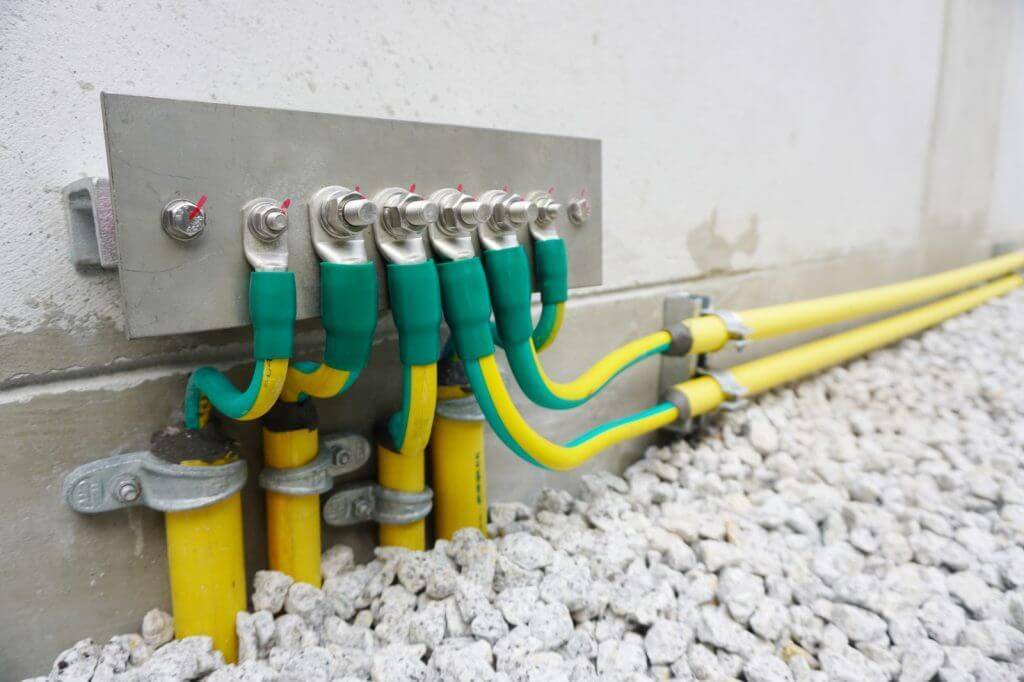
Grounding Systems in Electric Vehicle Charging Stations
In EV charging stations, grounding systems are particularly critical. Since charging stations are directly connected to electrical systems, grounding systems play a vital role in ensuring user safety in the event of any malfunction.
Generally, two types of grounding systems are used in EV charging stations: TT grounding and TN grounding. The main difference between these two systems is related to the sharing of the grounding electrode.
TT Grounding
In the TT grounding system, the charging station has its own separate grounding electrode. This electrode is usually in the form of a copper rod and is fixed into the ground. In this way, the charging station has a grounding system independent of the main electrical system.
TT grounding is preferred in areas with a high risk of lightning strikes or low soil conductivity. The use of an independent grounding electrode increases the safety of the charging station. After external grounding, it is important to re-establish equipotential bonding.
TN Grounding
In the TN grounding system, the charging station shares the common grounding electrode of the main electrical system. In other words, the charging station and other electrical devices use the same grounding electrode.
TN grounding is generally preferred in areas with low lightning risk and high soil conductivity. This system is more economical and easier to install compared to the TT grounding system. It can be directly integrated into the equipotential system.
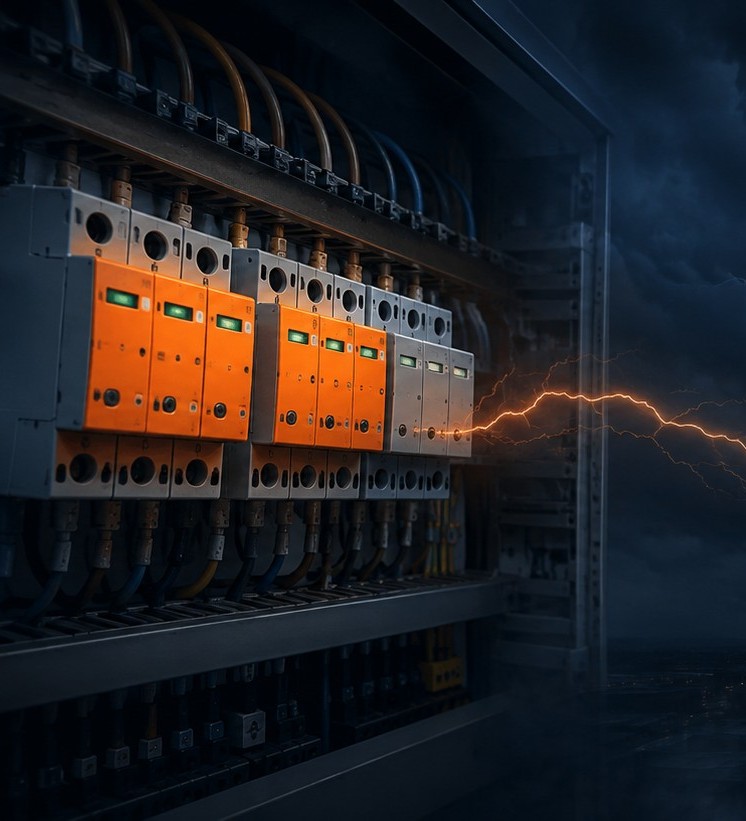
In both cases, the use of LV surge arresters as TYPE 1+2+3 must be ensured.

Residual Current Protection: Additional Safety in Electric Vehicle Charging Stations
Residual current device protection is another important safety feature used in electric vehicle charging stations. Residual current devices continuously monitor the electrical current in the circuit and, when any leakage current is detected, quickly disconnect the circuit and cut off the power.
Type F and Type K residual current devices are important for resistance against nuisance tripping and harmonics.
Leakage current means that electricity flows through an unintended path. This situation can lead to hazards such as electric shock to the user or damage to equipment. The residual current device ensures the safety of life and property by detecting such situations and quickly disconnecting the circuit.
According to the NFPA 70-2017 standard, in single-phase outlets below 150 volts and 50 amperes, electric vehicle charging stations must be protected by residual current protection. This requirement is vital to prevent the risks of electric shock and electrical loading when people come into contact with the charging station.
Together with grounding systems, residual current protection is critical for the safe and reliable operation of electric vehicle charging stations. The combined use of these two safety features ensures the protection of users and equipment.
Installation and Maintenance of Grounding Systems
The correct installation and regular maintenance of grounding systems in electric vehicle charging stations are extremely important for their safe and reliable operation.
Grounding System Design
The design of the grounding system should be carried out by taking into account the specific needs of the charging station and local electrical codes. In this context, factors such as determining the grounding type to be used (TT or TN), and the sizing and positioning of the grounding electrode and conductor should be considered.
Installation
The installation of the grounding system should be carried out by a qualified team that is familiar with relevant industry standards and codes. The grounding electrode must be securely placed in the ground, and the conductor must be properly connected to the electrode and the charging station. In addition, the resistance of the grounding electrode should be regularly tested to ensure it is within acceptable limits. The correct resistance value is the value at which protection devices operate properly.
Maintenance
The grounding system should be regularly inspected and maintained. In this scope, the resistance of the grounding electrode should be checked, and it should be verified that the conductor is in good condition and correctly connected to the charging station. Any damage or corrosion occurring on the grounding electrode or conductor should be repaired immediately to prevent deterioration of the grounding system.
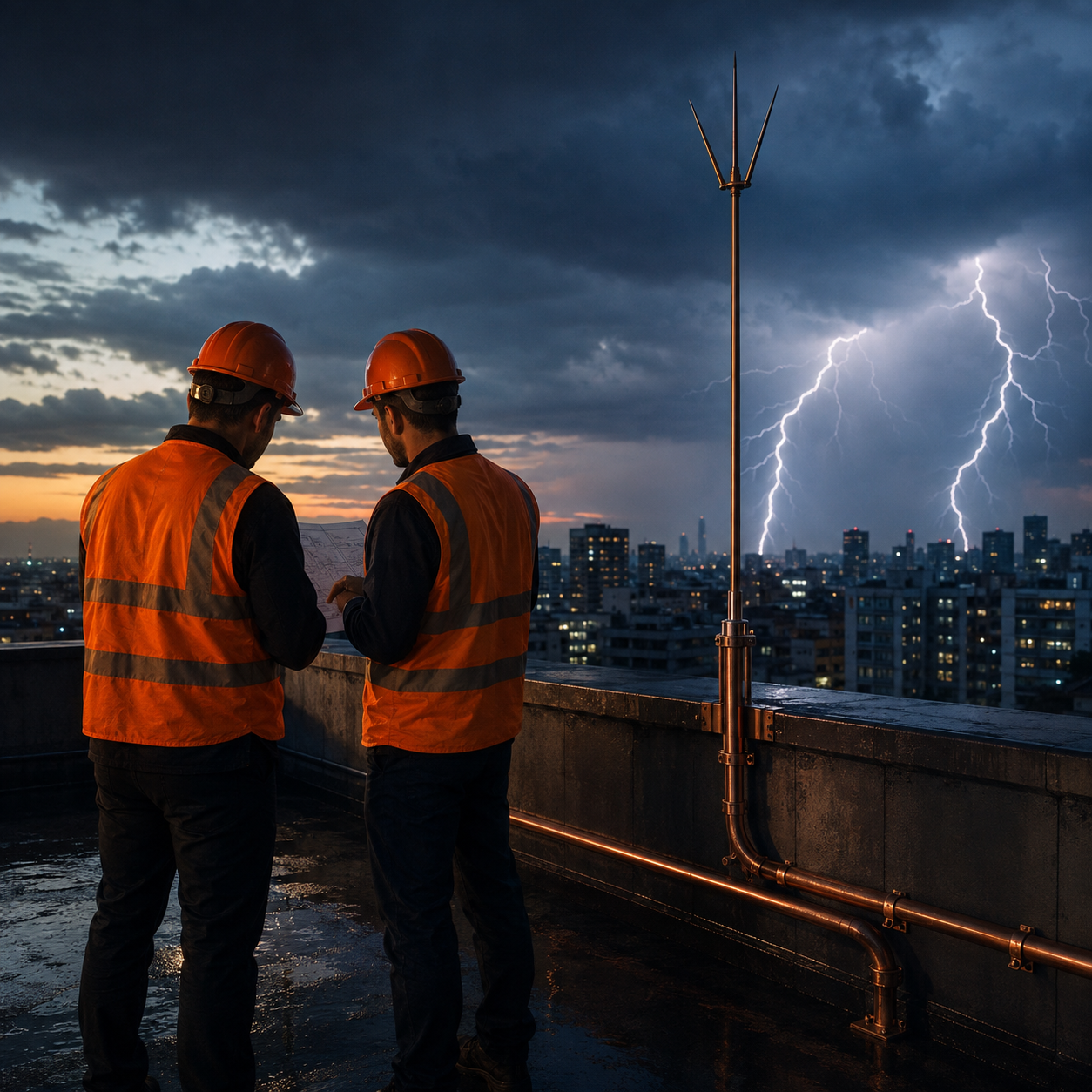
Other factors affecting the performance of the grounding system should also be taken into consideration. For example, soil conductivity can determine the effectiveness of the grounding system. Therefore, if possible, a location with good soil conductivity should be selected. Lightning protection is also an important issue, especially in regions with a high lightning risk. A lightning protection system can be installed together with the grounding system to provide additional protection against electrical disturbances.
The correct installation and maintenance of grounding systems in electric vehicle charging stations are critical for safe and reliable operation. Grounding systems designed, installed, and regularly inspected in accordance with industry standards and best practices play a vital role in ensuring user safety, preventing damage, and maintaining the sustainability of the charging infrastructure.

Benefits of Grounding Systems
The use of grounding systems in electric vehicle charging stations provides several important benefits:
•User Safety: Grounding significantly reduces the risks of electric shock and electrocution. In fault conditions, it protects users’ lives by ensuring that electrical current is safely directed to the ground.
•Equipment Protection: Grounding prevents damage to electrical devices and systems. In fault conditions, safely directing electrical current to the ground prevents equipment damage.
•Reliable Operation: Properly installed and regularly maintained grounding systems ensure the safe and uninterrupted operation of electric vehicle charging stations. This increases user satisfaction and the reliability of the charging infrastructure.
•Compliance and Standards: Grounding systems ensure that electric vehicle charging stations comply with relevant safety standards and local electrical codes. This is important for meeting legal requirements and preventing potential legal issues.
•Lightning Protection: Grounding systems help protect electric vehicle charging stations in the event of a lightning strike. Lightning protection increases the safety and durability of charging stations and also minimizes impacts on vehicles.
These benefits provided by grounding systems are vital for the safe, reliable, and sustainable operation of electric vehicle charging stations. Proper design, installation, and maintenance increase user safety and satisfaction while ensuring equipment protection and efficient operation of the charging infrastructure.
In electric vehicle charging stations, grounding systems are one of the key elements of safety. Proper grounding practices ensure user safety while guaranteeing the protection and reliable operation of equipment.
TT and TN grounding systems can be preferred according to different regional needs. In addition, residual current protection is also a critical safety feature in electric vehicle charging stations. Regular maintenance of grounding systems and additional measures such as lightning protection further enhance the safety and durability of the charging infrastructure.
As the electric vehicle industry grows rapidly, the correct design, installation, and maintenance of grounding systems are of vital importance to ensure user safety, equipment protection, and the reliable operation of charging stations. Grounding is a critical component for the safe and sustainable future of electric vehicle charging stations.
For grounding applications, equipment supply, and the supply of protection devices, you can contact Yılkomer’s expert engineers.
Remember, Yılkomer ‘Protects Your Values!’