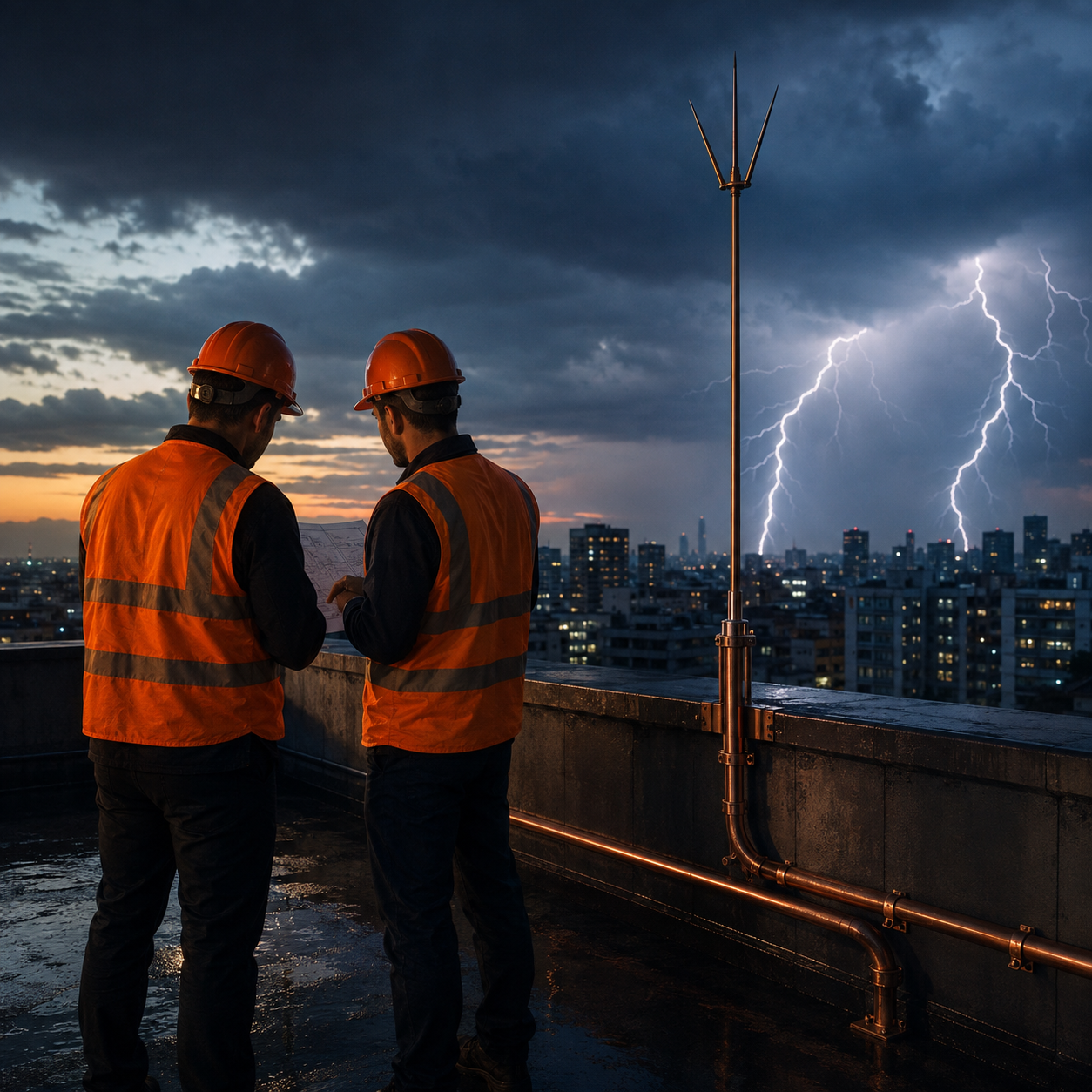
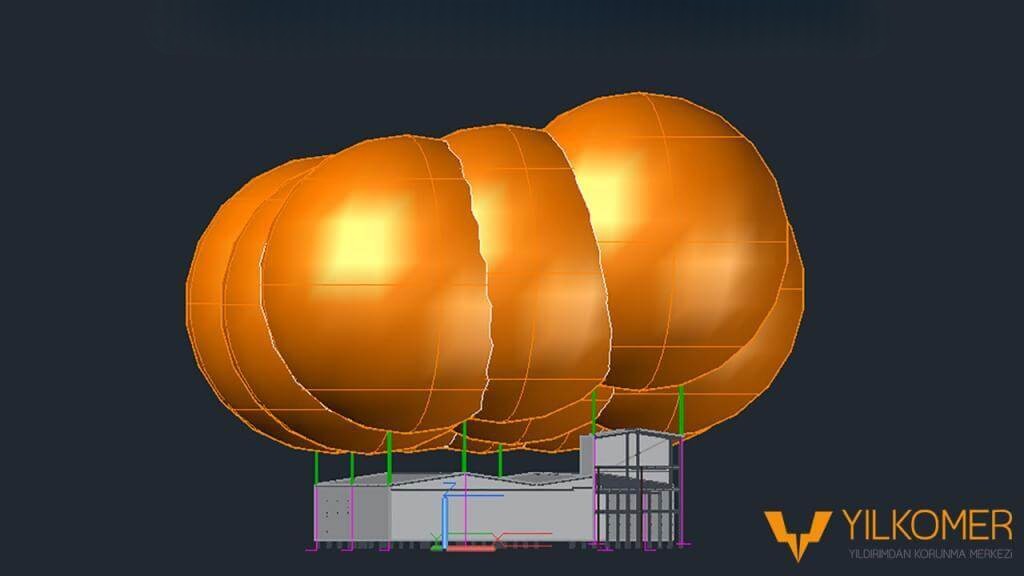
In very simple terms, lightning is a sphere, and the method by which you try to keep this sphere away from the building and facility using air terminals is called the “Rolling Sphere Method.” At the point where the sphere touches the structure to be protected, lightning wins. Your design must be so flawless that the sphere must not touch the ground or the structure. Lightning risk, the dimensions of the structure, the facility, and the heights of the air terminals affect the size of this sphere. The key point here is to correctly determine the radius R of the sphere based on an accurate risk assessment and to start our design and calculations correctly from the very first step.
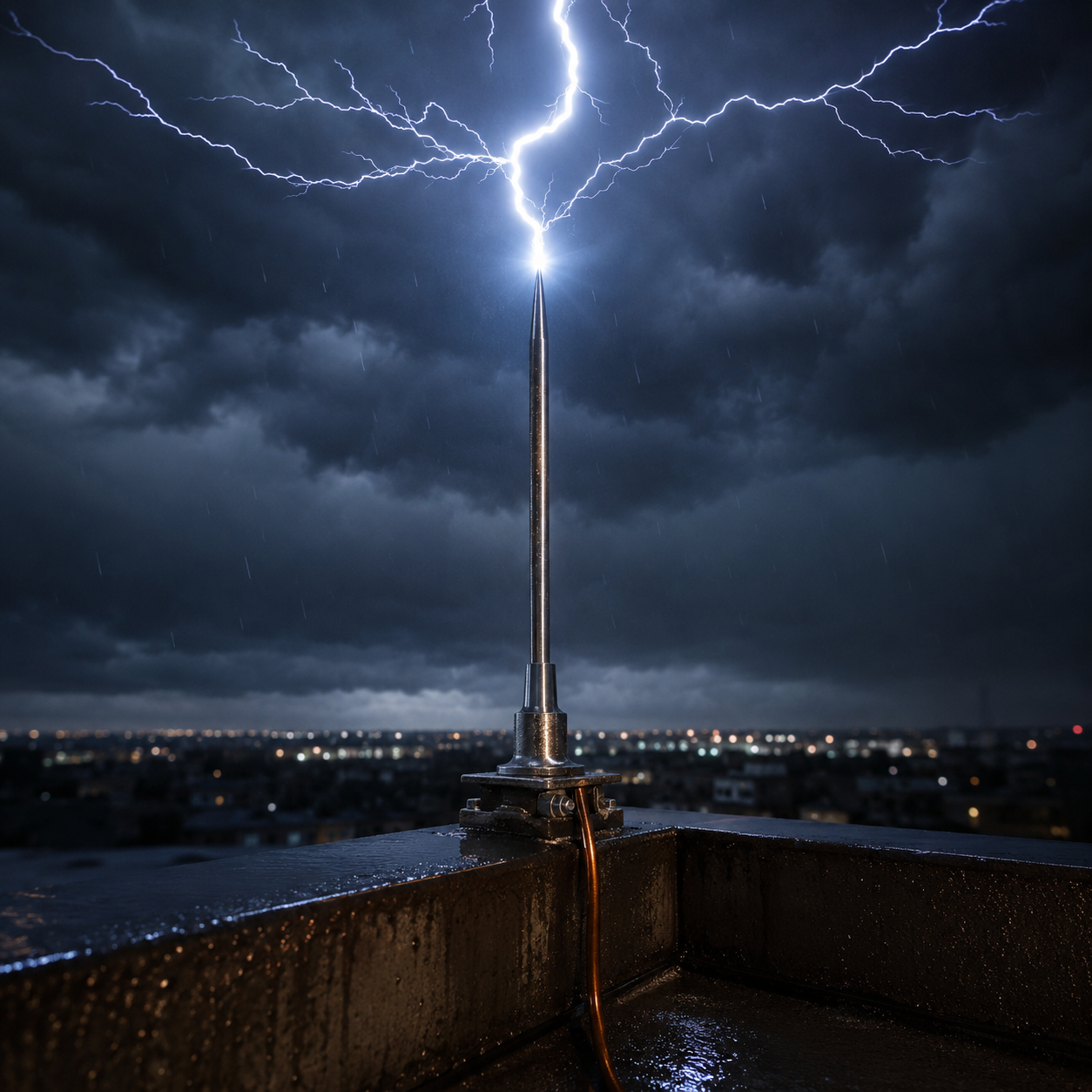
According to the IEC 62305 Standard, the rolling sphere method is one of the design approaches carried out with passive air terminals. Active lightning rods are not included in these definitions. Rolling sphere method designs carried out with passive insulated air terminals stand out as the most reliable lightning protection system designs. The rolling sphere method does not attract lightning; it comes into play when lightning is about to strike and enables us to protect all sharp and corner points. Designs generally made with tripods and high air terminals stand out as more ergonomic and highly secure solutions.

With the rolling sphere method, all facilities such as industrial plants, energy facilities, mosques, and prefabricated structures can be protected.

Within the scope of the standard, the risk of the facility to be protected must first be determined according to the risk analysis, and the radius R must be selected.

Here, the rolling sphere radius can be taken as 20 meters for Risk 1, 30 meters for Risk 2, 45 meters for Risk 3, and 60 meters for Risk 4.
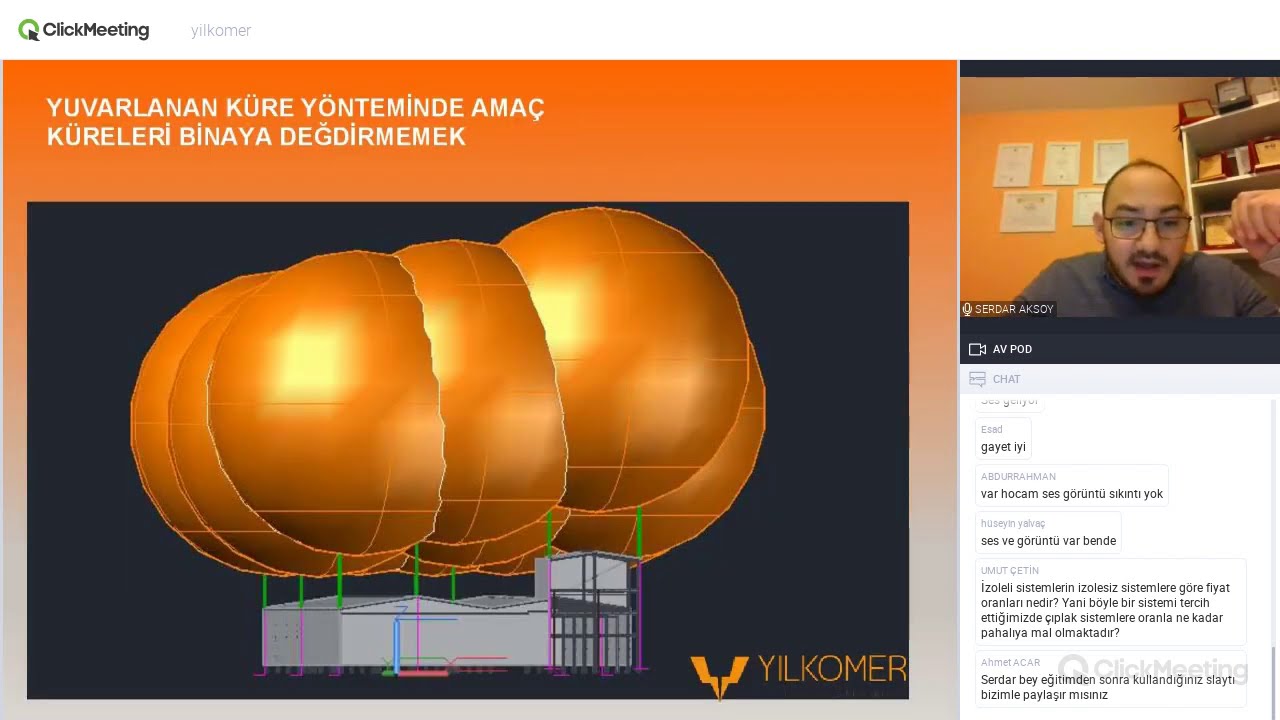
Basically, the focus should be on calculating the distance d between two air terminals.

The air terminals placed in the AutoCAD environment and the penetration tangential distance p are calculated by drawing, and the distance d should be selected using the relevant square-root formula.


Here, the height of the air terminal directly affects the penetration coefficient. Therefore, long-height tripod systems will facilitate our design.

As a lightning protection center, we design according to the rolling sphere method using proven products in lightning protection such as insulated air terminals, insulated tripod systems, and insulated down conductors, and we protect your facilities.
By contacting the expert team of the lightning protection center, you can receive support for site survey and design and ensure turnkey lightning protection for your facility.
LIGHTNING PROTECTION STANDARD PDF
Do not forget Yılkomer Protects Your Values!
APPLICATION REQUEST FORM