Therefore, TS EN 62305 (Lightning Protection of Structures Standard) must be fully and completely implemented in such structures.
It is possible to group these rules under 4 main headings.
- External lightning protection system (LPS)
- Internal lightning protection systems (LEMP)
- Grounding system
- Equipotential bonding system
External Lightning Protection System (LPS) in GSM Communication Towers
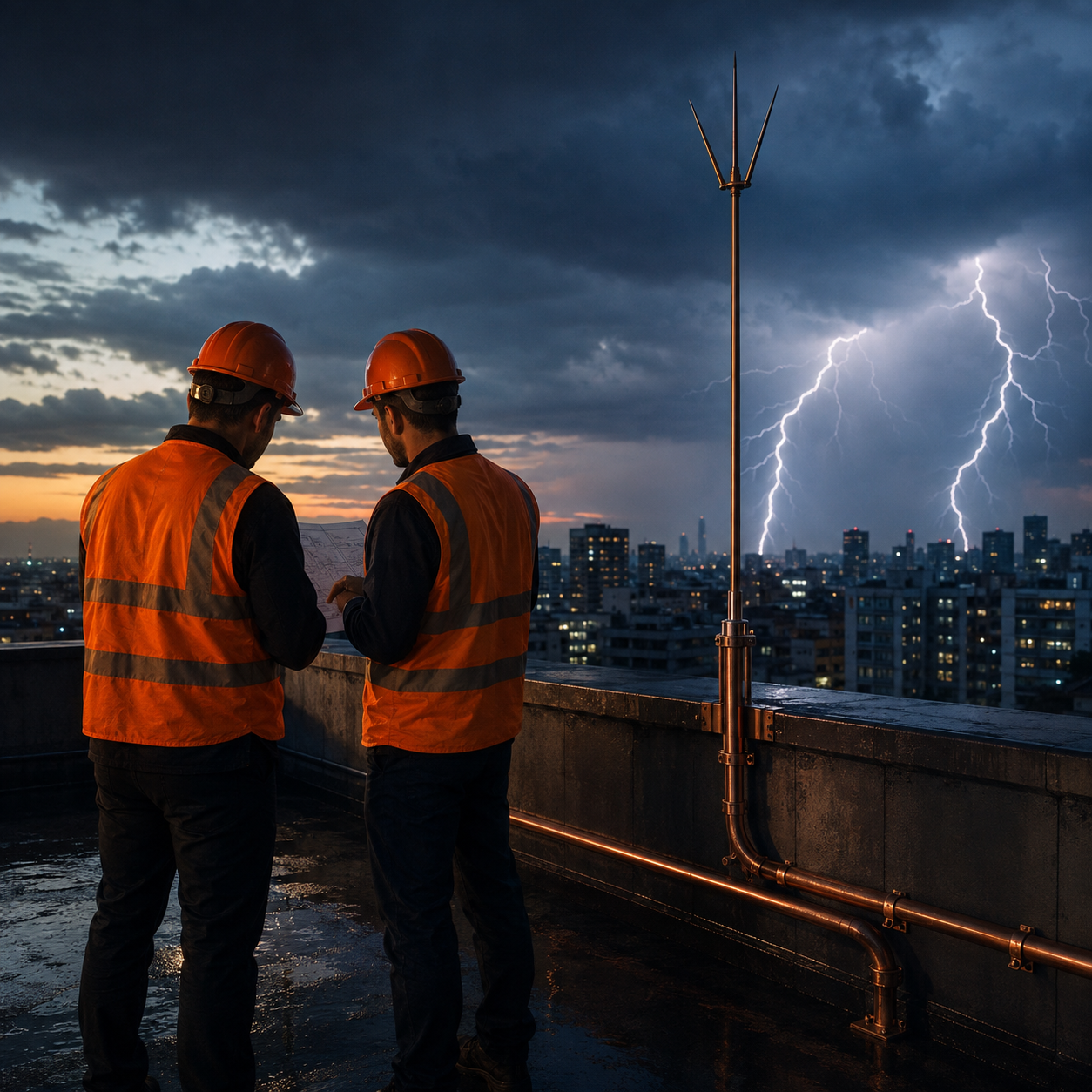
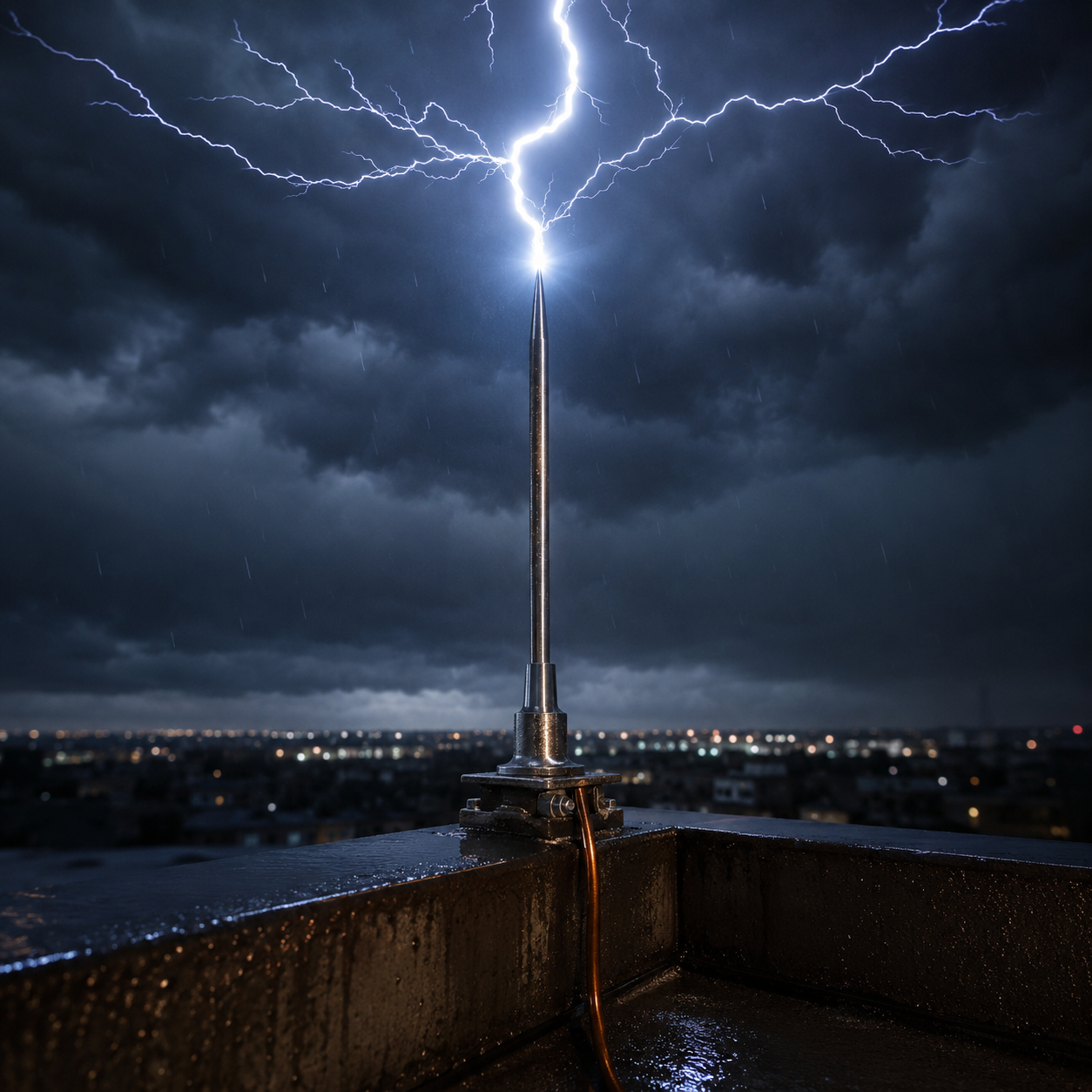
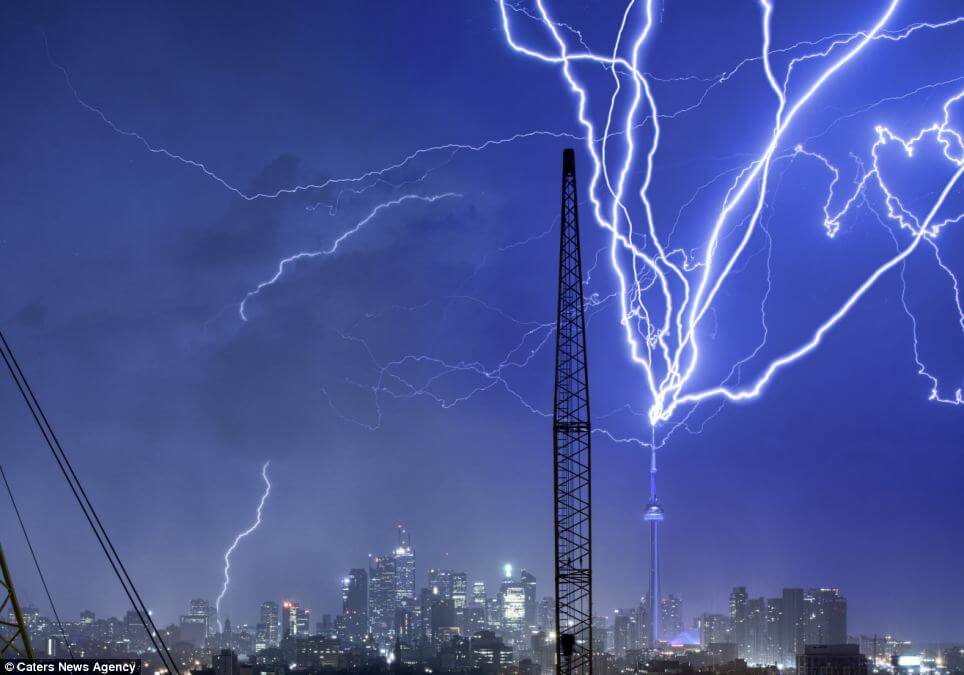
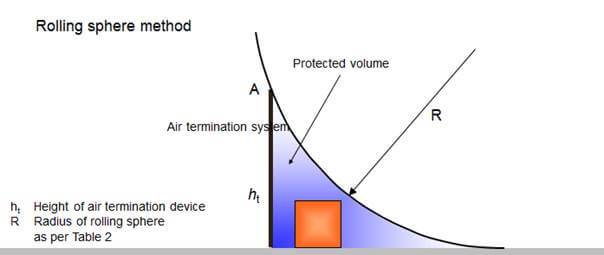
In GSM communication towers, Risk Level-1 should be selected in accordance with TS 62305. In such risky areas, loss of life, service interruptions, and economic losses may occur. For this reason, lightning air terminals must be positioned fully and properly in accordance with the standard by applying the rolling sphere method and the protection angle method, against strikes coming from the top and sides of the tower. To prevent random current flows, Raycap damping elements should be installed at the connection points between the tower’s metal structure and the air terminals. Before implementation, cross-section and layout projects must be prepared, and it must be confirmed that all system components requiring protection are within the protection zone. Otherwise, direct lightning strikes may cause damage to the lines connected to the antenna group. When positioning the down conductor, the distance between fixing clamps should not exceed 1 meter. Insulated air terminal down conductors designed by the German manufacturer J.Pröpster and successfully tested up to 100 kiloamperes can be applied in these facilities. The mounting poles of the air terminals on the tower should be reinforced considering wind loads. Systems designed according to the Rolling Sphere method with passive systems are the most accurate solutions for such facilities.
Internal Lightning Protection System (LEMP) in GSM Communication Towers
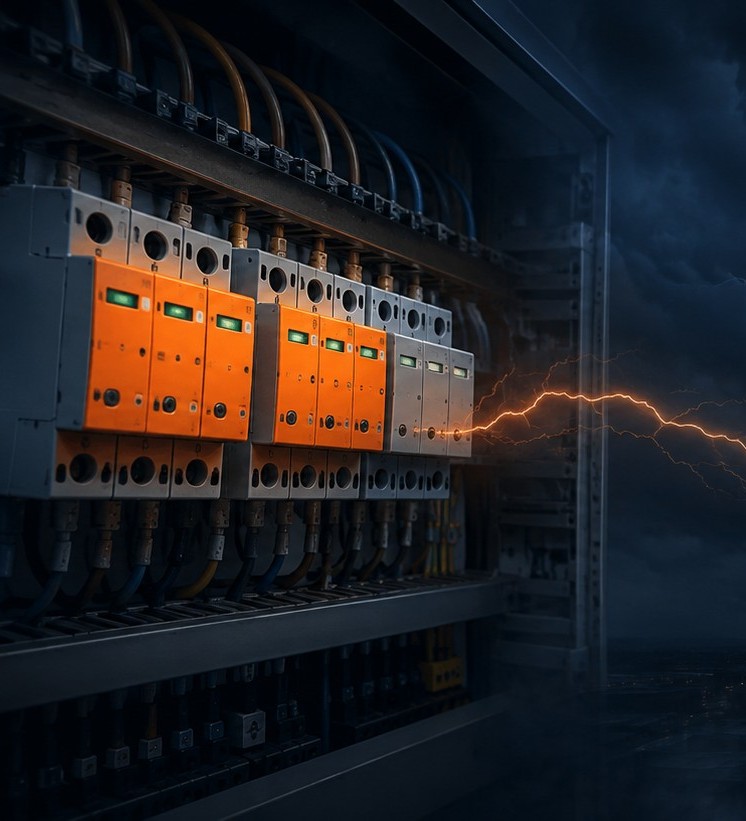
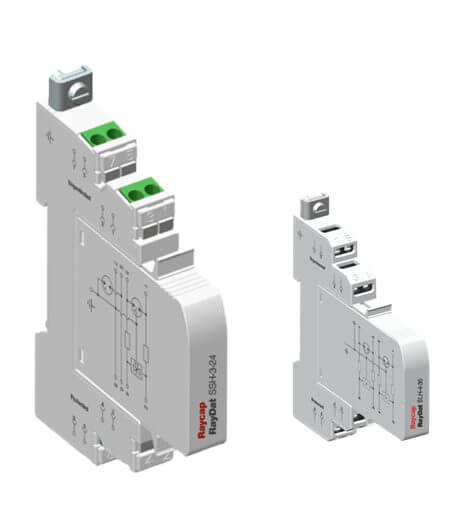
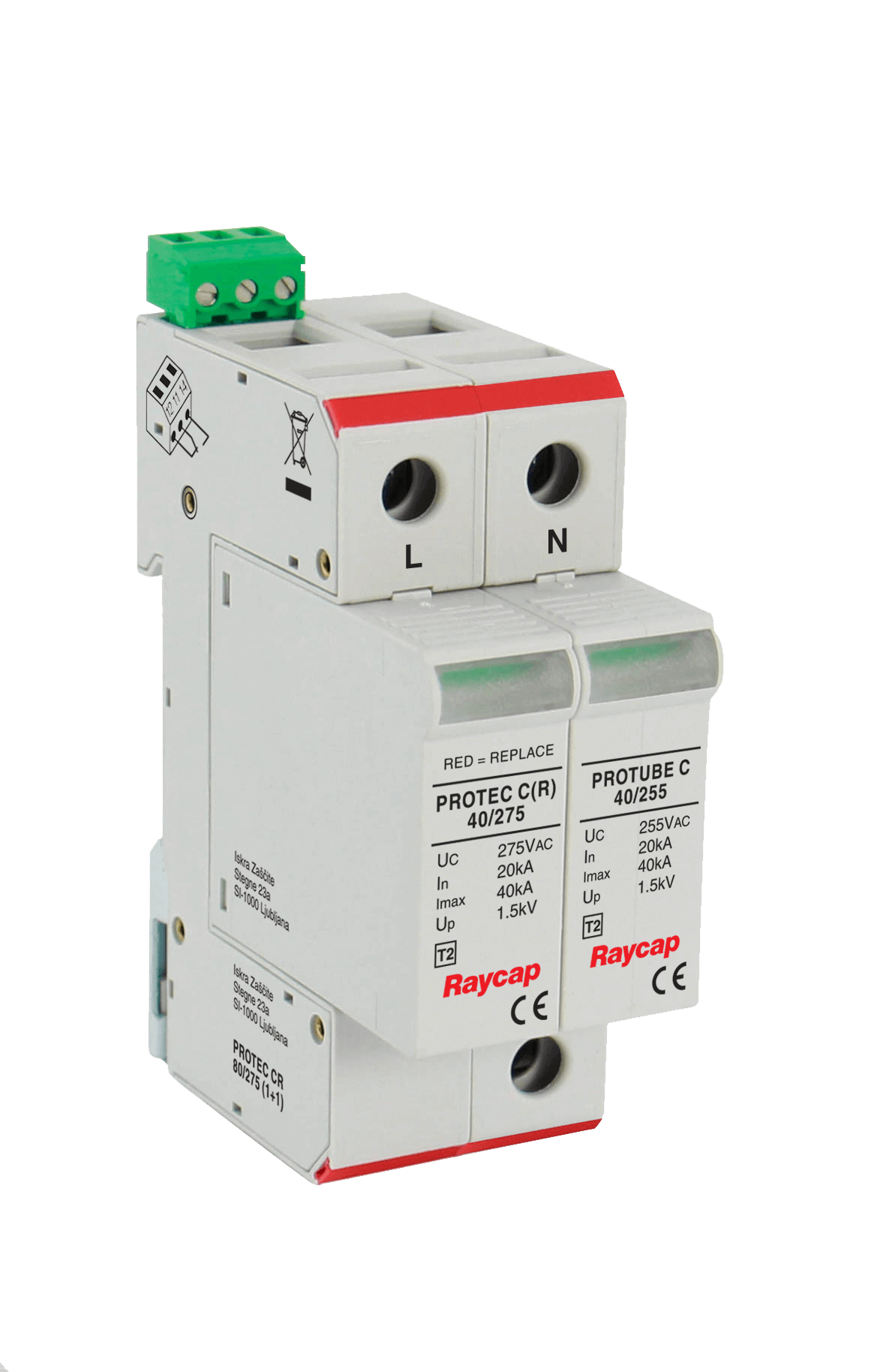
In these facilities, the internal lightning protection system can prevent damage caused by lightning and surge impulses transmitted via cables or grounding lines by dividing the site into Zone-0, Zone-1, and Zone-2 protection zones. For this reason, Raycap Safetec should be used at points where direct lightning strikes are likely, and Raycap Safetec should be installed in energy panels close to systems that need protection where surge impulses may occur. Class-3 type protectors should be installed on the power supply of the protected equipment, incoming antenna cables, CAT lines, and RS ports. If desired, all products can be selected with alarm contact outputs. Products with special arc extinguishing technology must be used against impulses coming from the ground-neutral line.

Grounding System in GSM Communication Towers
The soil resistivity at the base area of GSM towers should be measured, and together with foundation grounding, a ring grounding conductor should be formed around the tower line if possible, reducing the grounding resistance value below 10 ohms. In addition, precautions must be taken underground against touch and step voltages. Otherwise, there is a risk of injury and loss of life for personnel working on the tower. Connections that increase underground resistance should be avoided, and corrosion prevention measures should be taken. External lightning protection grounding connection points should be equipped with test boxes or manholes to allow periodic inspections.
Equipotential Bonding System in GSM Communication Towers
All protective conductors and foundation grounding in the facility must be connected together using equipotential bonding bars, thus preventing free current flows. After equipotential connections are made, loop impedance checks and continuity tests must be carried out. Loop impedance values must not exceed 1 ohm, and continuity test values must not exceed 0.2 ohms at any point. Raycap Safetec damping devices should be installed at points where the external lightning protection system is connected to the equipotential system.
In addition to these measures, there are further precautions that should be taken, which can be listed as follows.
- The incoming power line to the facility should be installed underground at a minimum depth of 80 cm, armored with steel and magnetic protection, preferably without joints, and should be additionally evaluated for voltage drop.
- The use of Class-1 surge arresters at the beginning of the energy transmission line and at the facility entrance, along with appropriate circuit breakers, fuses, and residual current devices.
- The selection of a TN-S network system to allow impulse currents to flow more easily.
- The use of magnetically shielded cables throughout the facility is crucial in such locations.
Lightning Protection Center carries out site surveys and risk analyses before implementation through its expert engineering staff, and the most suitable system is commissioned based on the resulting design.