
Unfortunately, incorrect information that is thought to be correct in grounding practices still appears in current applications. With this article, we wanted to explain some important points that raise questions about grounding.
As Yılkomer, we will continue to provide you with up-to-date information on low voltage surge protection systems, grounding, equipotential bonding, and lightning protection through short and informative texts.
We hope that the items summarized below will be beneficial for your applications.
- The use of rod-type grounding electrodes is not the only alternative in grounding applications; successful results can also be achieved with applications made using mesh and plate methods
- In grounding applications, implementations based on touch voltage are technically more correct. Compliance of only the spreading resistance should not be taken as the basis.
- If rod-type grounding electrodes are used in grounding applications, the distance between the rods should be at least more than 2 times the rod length.
- If a ring-shaped grounding electrode and a rod electrode are used simultaneously, the rod should be located at a distance equal to 5 times the side length of the ring opposite it.
- In TT system grounding types, the use of a residual current device is mandatory. Facilities where it is thought not to be mandatory and where no Residual Current Device is used are not compliant with regulations.
- All consumers receiving Low Voltage energy from energy supply organizations must use a TT Type grounding system
- While a target grounding value is sought in facilities using classical varistor-based surge protectors, no target grounding value is required in surge protection systems using Strikesorb technology.
- In grounding systems, if rod, ring, and mesh-type electrodes are used together, calculating the resistance of each and assuming they operate in parallel to find an equivalent parallel resistance leads to incorrect results.
- In grounding application and calculations, the soil resistivity value must be measured.
- In workplaces, it is observed that separate groundings are requested for different systems such as UPS, servers, computers, and low current systems. If there are different grounding systems in a building, a fault occurring in one will create dangerous voltages between these two systems. Therefore, all groundings must be equipotential.
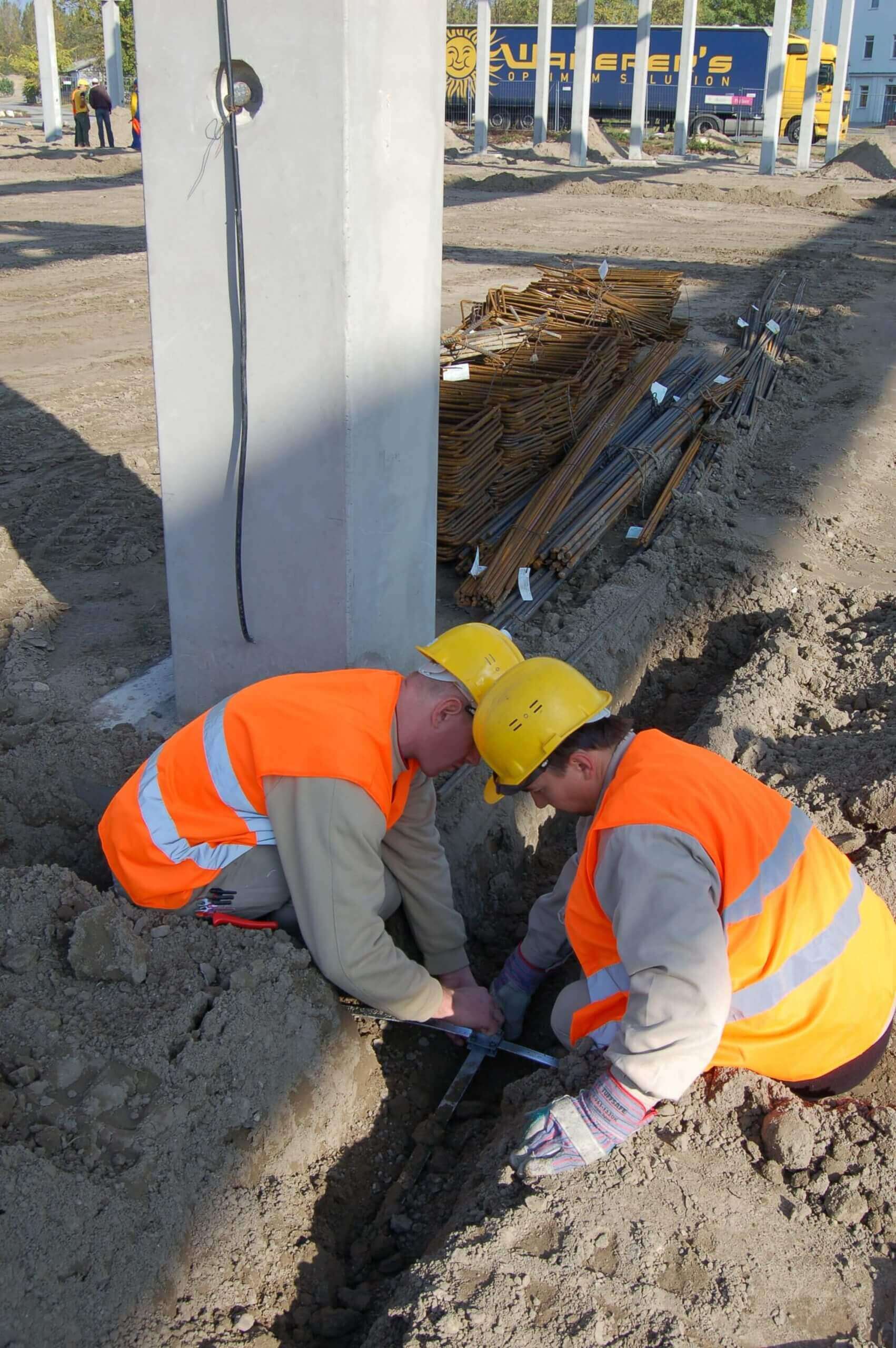
- The voltages occurring between neutral lines and grounding lines are not directly related to poor building grounding. The value read is the voltage drop on the neutral lines. It is not possible to reduce this value by adding additional grounding. In LV installations, trying to find a solution by grounding the neutral line with a separate electrode is hazardous. With this application, operational grounding is added to the network neutral. The proximity of this grounding to the building grounding (20m) is also hazardous.
- Lightning protection grounding must definitely be included in equipotential bonding. System grounding and lightning protection grounding must not be separate.
- In grounding applications, it is not mandatory to use only copper conductors and electrodes; galvanized grounding conductors can also be used in grounding applications. The use of aluminum-based conductors in grounding applications is not appropriate.
- Using different types of metals together in grounding applications is not appropriate. Using copper and galvanized conductors together causes a bimetal effect.
- The use of anti-corrosion tape at connection points in grounding applications provides a preventive effect against possible corrosion and increases in resistance
- The suitability of resistance values that activate protective devices is more important than the grounding resistance value itself. For example, if a facility grounding measures 1 ohm, it has no significance. What matters is whether the protective grounding operates within the system.
- Connecting lightning protection equipment to foundation grounding branches depends on certain conditions. Without performing a continuity test and without using Type 1+2 surge protectors throughout the building, this application is not appropriate.
You can always receive support from Yılkomer on grounding project design, equipment supply, application, and measurement.
Do not forget, Yılkomer ‘Protects Your Values!’