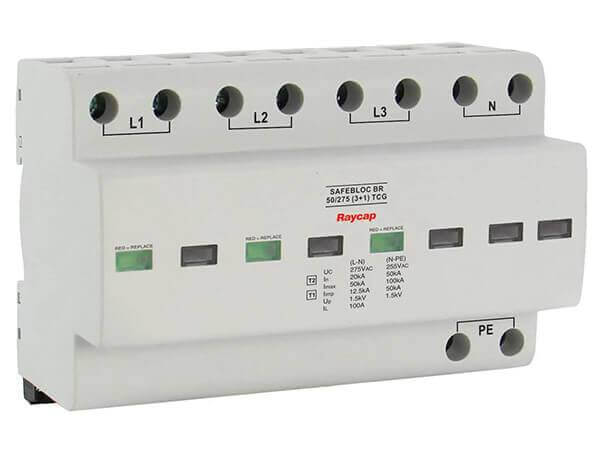
Use of AG Surge Arresters in Lightning Protection Systems
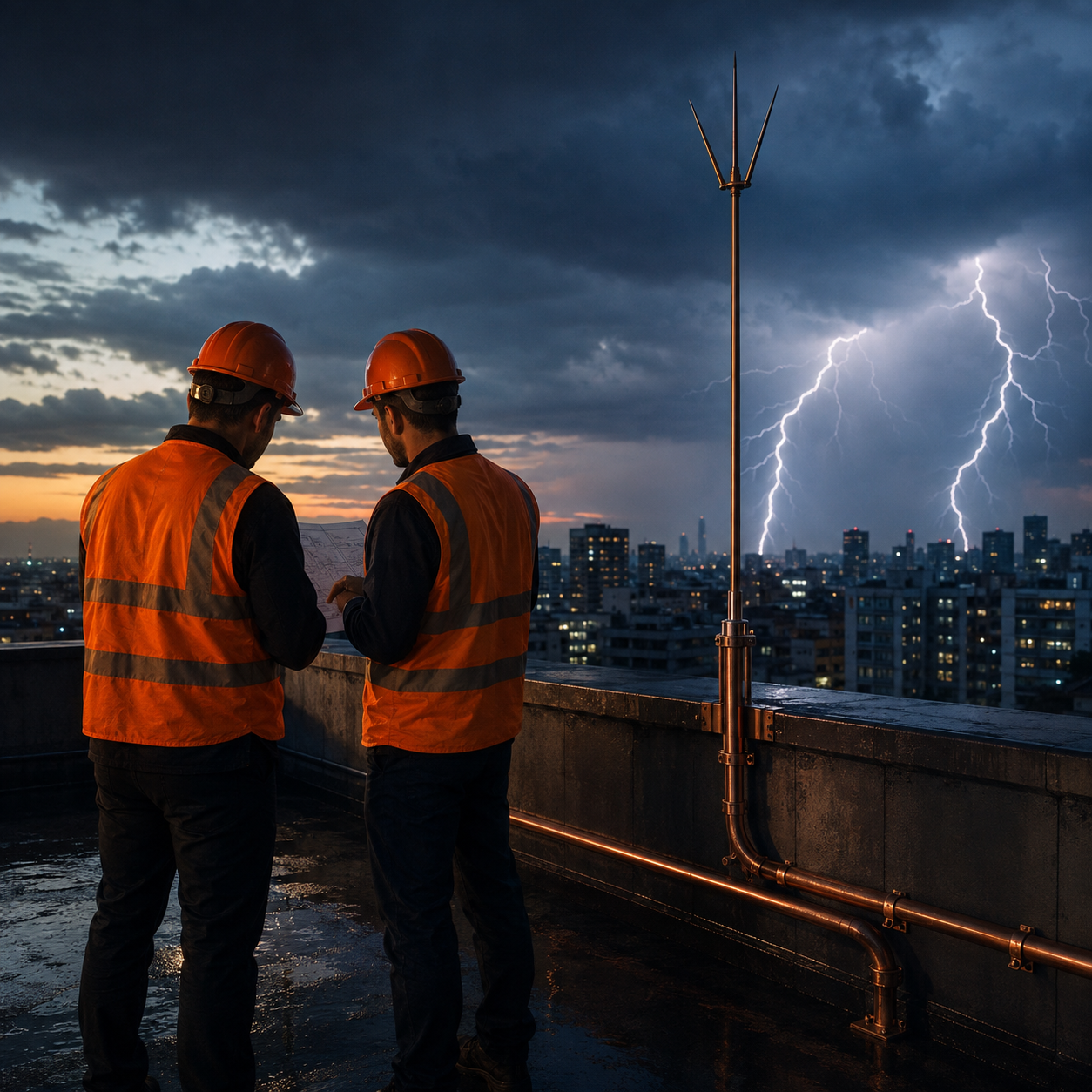
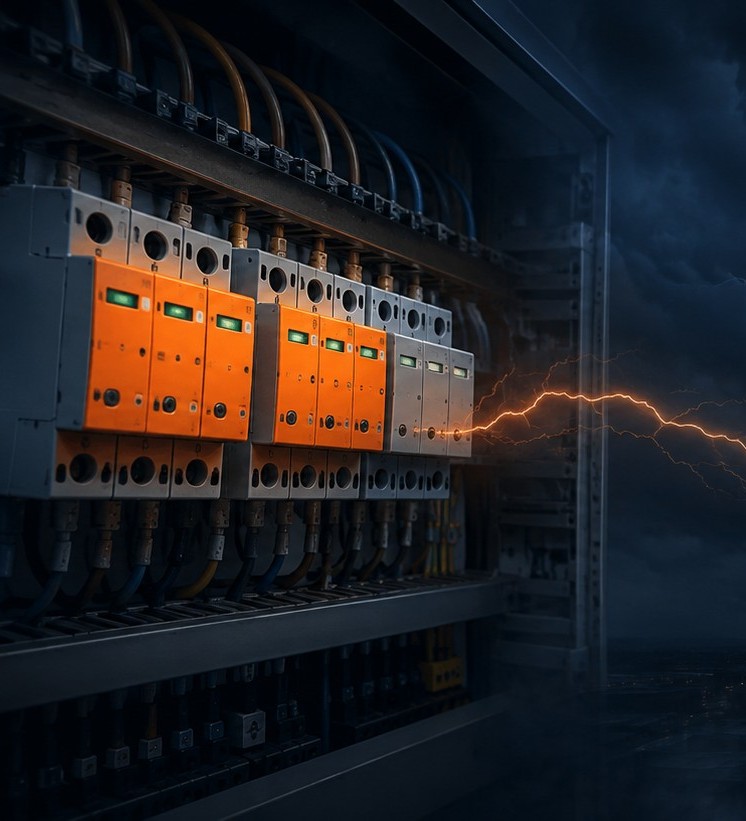
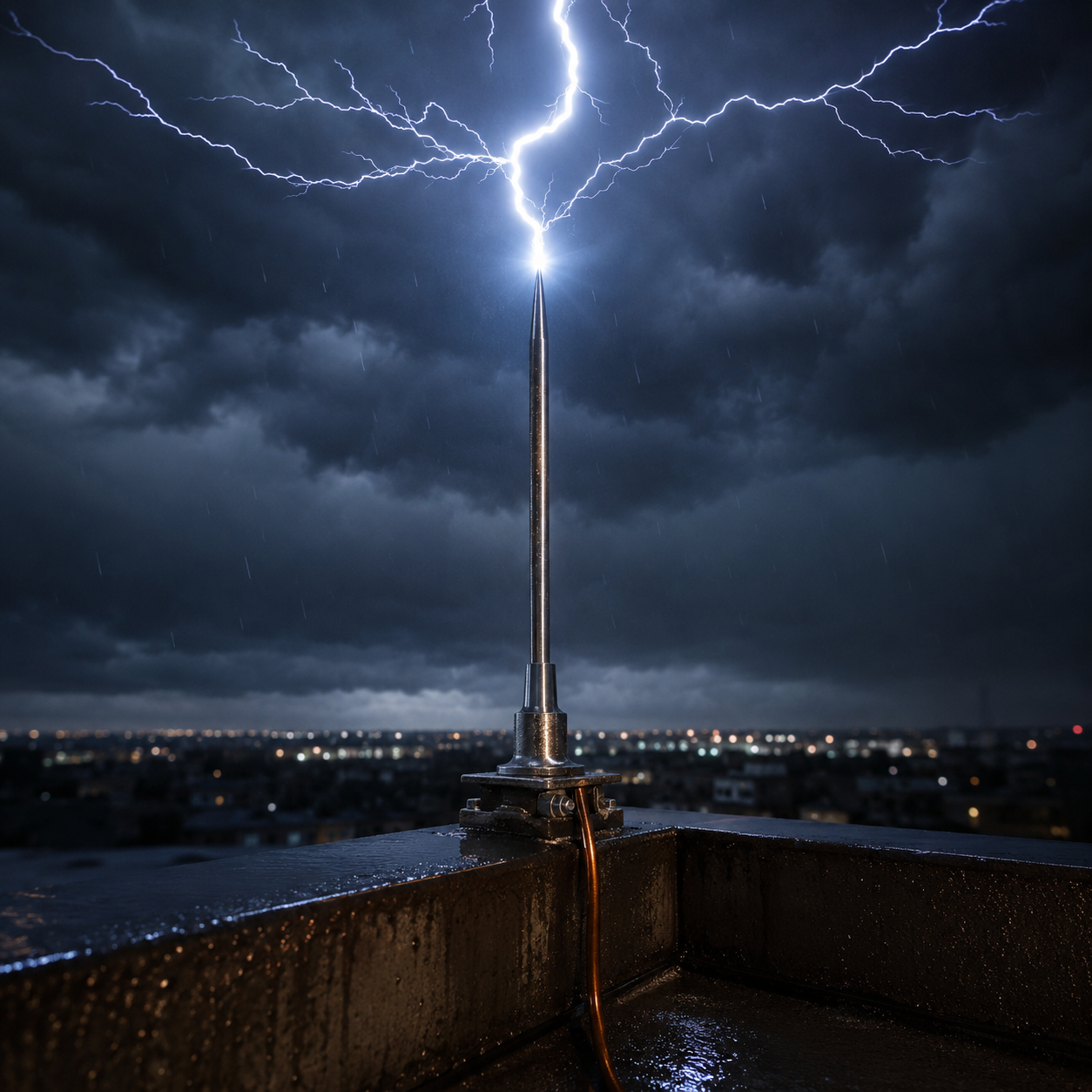
According to IEC 62305, the use of AG surge arresters is mandatory in systems with external lightning protection (lightning rods or Faraday cages). A lightning strike on our external lightning protection system can reach our electrical distribution panels via the down conductors, and potential damage can be prevented using Low Voltage Surge Arresters. Even if the building does not have an external lightning protection system, coupling effects from nearby strikes can affect the structure, making surge protection in distribution panels essential.

Class B Surge Arresters
To protect against direct and primary effects of a lightning strike, a Class B AG Surge Arrester system must be installed. Class B AG surge arresters are tested according to the 10/350 μs waveform and provide protection aligned with lightning characteristics.
To protect against voltage fluctuations on power lines, harmonics, switching surges, fault currents, inrush currents of shock coils, motor start-ups, and HVAC control systems, Class C AG Surge Arrester systems should be used.
For product selection, supply, and detailed specification work, you can contact the expert team at Yıldırımdan Korunma Merkezi.
B + C Class Surge Arresters
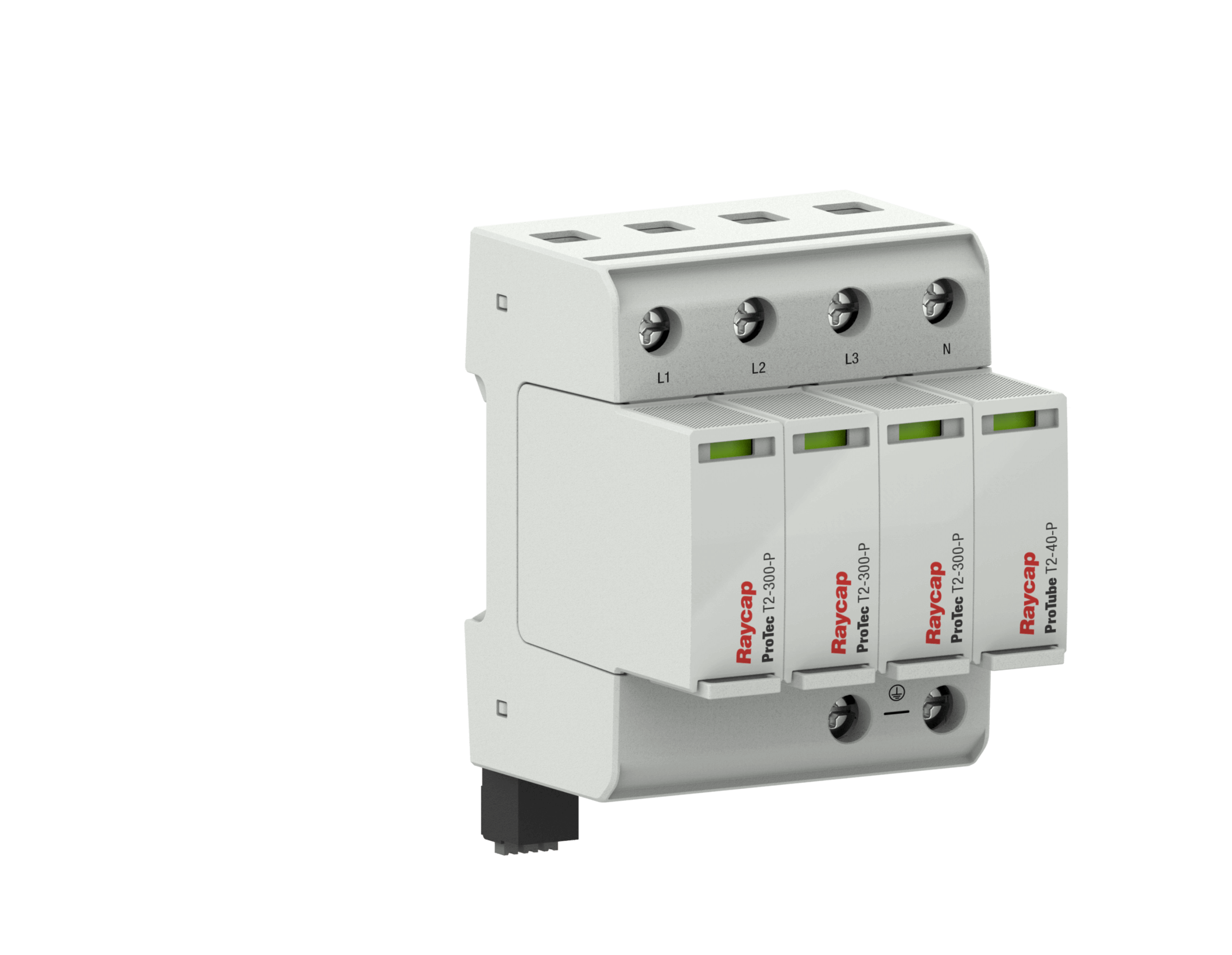
Product selection in our facilities proceeds with site survey and risk analysis. The distance between panels and the electrical characteristics of the installation directly affect product choice. In Turkey, 65% of surges are grid-originated while 35% are caused by lightning. Therefore, using B+C class surge arresters, which protect against both lightning and grid surges, is more appropriate than B class alone. While B class devices operate in 100 nanoseconds, Type 1+2 B+C products with modern compact designs can operate in 25 nanoseconds. Raycap AG Surge Arresters with VG technology combine varistor speed with gas discharge tube technology to allow multiple suppression cycles. Older B class surge arresters with only Spark Gap technology are slower and less sensitive. For instance, a B class arrester designed for 100 kA lightning pulses may be insufficient against a 5 kA grid surge, putting the system at risk. Therefore, B+C class surge arresters provide greater safety.
B+C Class AG surge arresters, rated for 25, 50, and 100 kA 10/350 μs and 8/20 μs surges, are connected in parallel to the system and can be monitored remotely via warning contacts.