
Dangers of Lightning and Surge Currents
Lightning discharges pose a significant threat to battery storage systems. The overvoltage caused by a lightning strike can exceed the dielectric strength of electronic components within the storage system. This may lead to the failure of electronic components, including information and communication technology, as well as malfunctions of inverters or battery units. If a lightning strike occurs as a direct impact, the metal roof of the storage system may be punctured, resulting in water damage during rainfall.
In addition, grid-related voltage surges caused by switching operations, ground faults, and short circuits also pose a potential threat. These transient overvoltages can damage electronic equipment and lead to costly maintenance and repair work. Therefore, understanding the nature of these threats and implementing robust protection measures is crucial for the longevity and reliability of these systems.
Lightning and Surge Protection Standards
Standards such as IEC 62305 provide guidance for protecting electrical systems against transient overvoltages conducted by atmospheric influences. These standards cover lightning and surge impulses, including lightning discharges, direct lightning strikes on grid lines, and transient overvoltages caused by switching operations.
They define whether protective measures are required, the protection categories, and the rated impulse withstand voltage levels relevant to the equipment requirements.
In addition, they consider the required availability of the system. Compliance with these standards is essential to ensure the safety and reliability of battery storage systems.
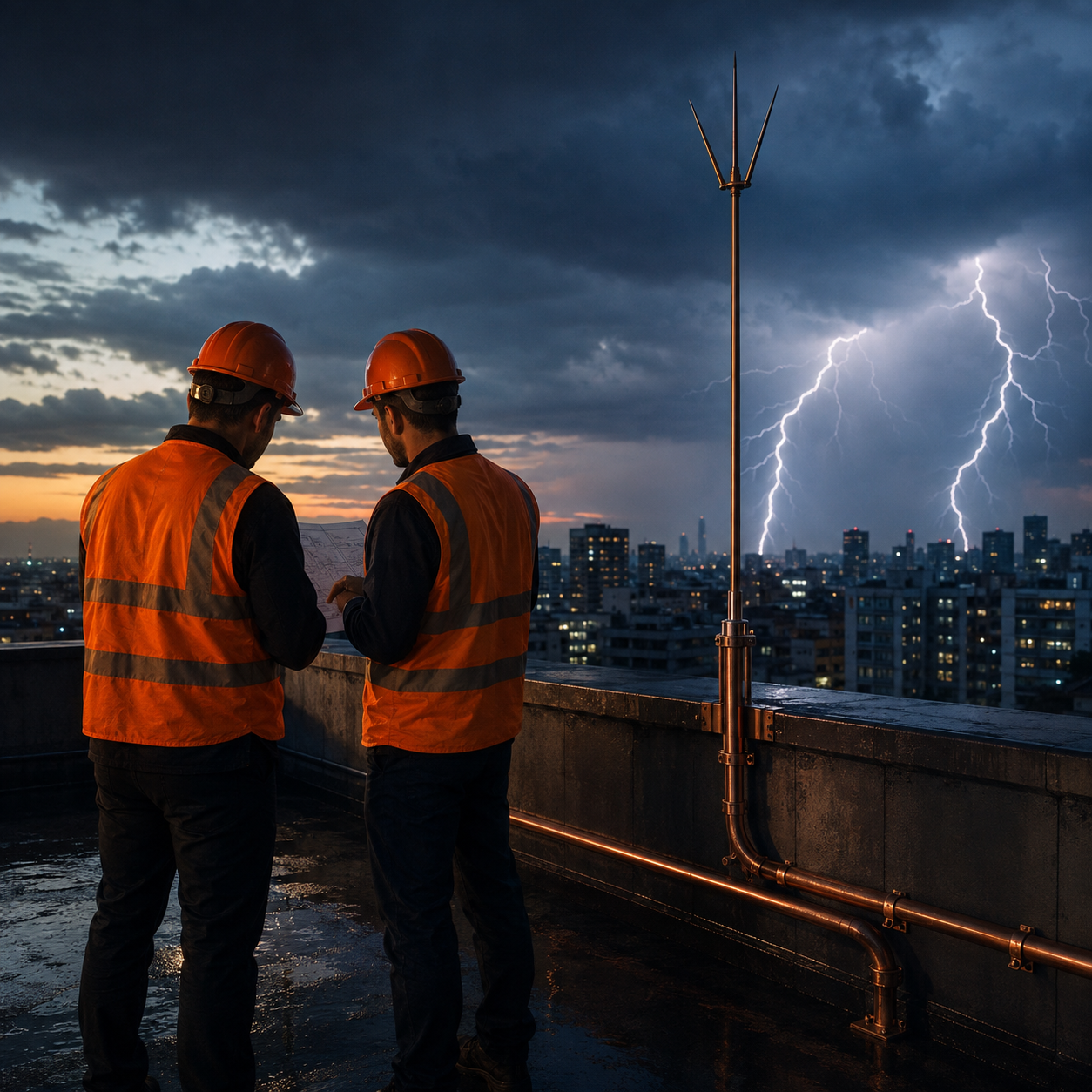
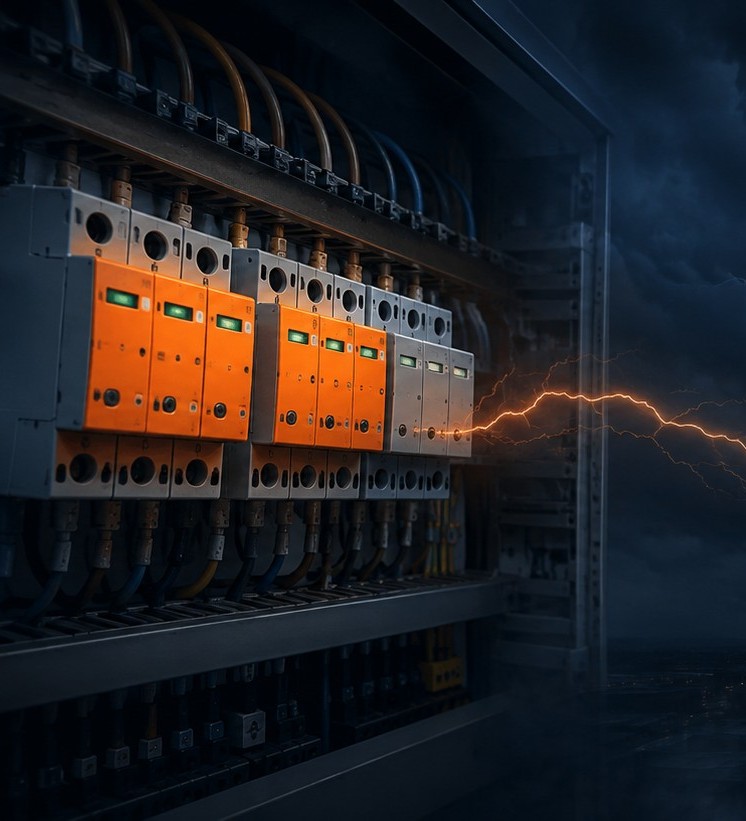
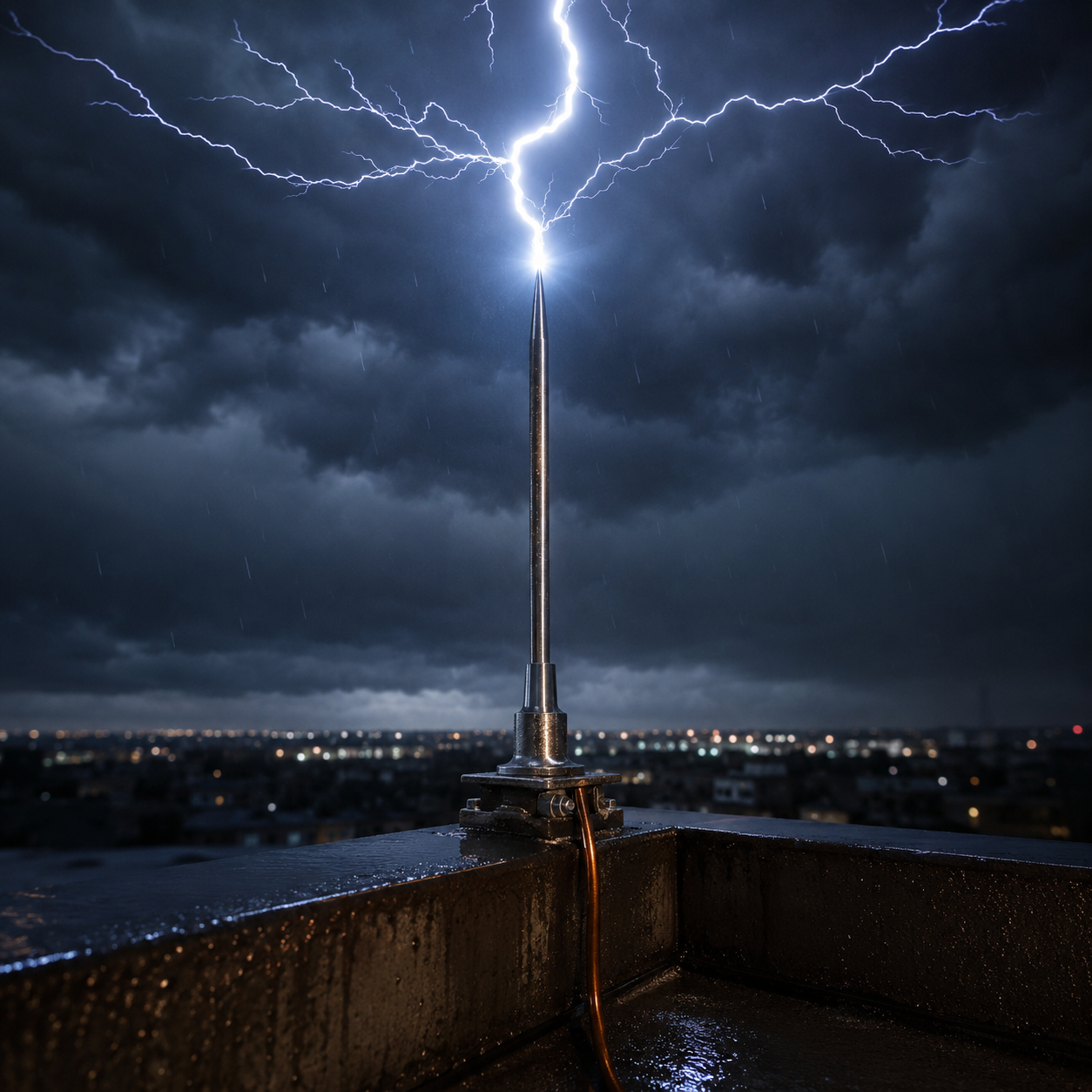
As Yılkomer, we provide protection for energy storage systems within the scope of the Rolling Sphere Method using Gromtor insulated passive air terminals, insulated down conductor systems, and tripod systems. The entire system is bonded equipotentially. Raycap AC and DC surge protection devices must be integrated at the system’s input and output points. Otherwise, the entire investment may be damaged within nanoseconds.

Lightning Protection for Solar Energy Storage Systems
When solar power plants are equipped with a battery storage system, electronic equipment, batteries, and inverters must be protected against surges. For example, a solar energy storage system (container structure) can discharge a direct lightning strike through the metal container together with grounding. To prevent holes from forming in the roof of the metal container, passive air terminals are installed at its four corners. The equipment inside the container is protected like a Faraday cage, meaning the required separation distances for electrical components are maintained. Any surge coupling via copper-based lines must be discharged by surge protection devices installed as close as possible to the points where the main supply lines enter.
This protection approach is based on the principle of creating a “protected zone” around the equipment to be protected. Air terminals and the metal structure of the container safely direct the lightning current to ground and keep it away from sensitive electronic components inside. However, this alone is not sufficient for full protection. Surge protection devices installed at the points where the main supply lines enter the container are essential to suppress any overvoltages that may still reach the equipment.
Battery Storage Systems and the Power Grid
If battery storage systems for the power grid are located inside concrete structures, maintaining separation distances from the external lightning protection system is impossible or at least very difficult. This issue is resolved by installing high-voltage-resistant insulated conductors. This prevents dangerous flashovers from the external lightning protection system to conductive parts such as supply lines. If batteries and inverters are located in separate containers, galvanic lightning currents may be coupled into the connection cables during direct or nearby lightning strikes. To prevent this, an earthing conductor installed above the cables includes them within the protected volume.
This protection approach is based on the principle of creating a “protected volume” around the cables connecting separate containers. The earthing conductor placed above the cables acts as a shield, preventing galvanic lightning currents from coupling into the cables. Any overvoltages that may still reach the cables are then suppressed by Type 2 surge protection devices installed at both ends of the cables.

Selection of Lightning and Surge Protection Devices
For example, connection lines combining the DC outputs of the battery and inverter must be protected with a Type 1 SPD, as they pass through different lightning protection zones. A Type 1 + Type 2 combined surge arrester is a correct choice and can be used for direct current up to 950 V. A Type 1 + Type 2 combined surge arrester is suitable for direct current up to 1500 V DC.
When PV module DC connection lines are protected by a lightning protection system, they must be protected by a Type 1 surge arrester specifically designed for photovoltaic systems. In addition, if the solar power plant is illuminated with LED lighting, these must also be protected against surge effects and wear caused by switching operations. The equipotential bonding required by the standard is implemented using the K12 equipotential bonding bar. These bars are specially tested for protective and functional equipotential bonding and lightning equipotential bonding applications.
Lightning and surge protection is a critical element in the design and operation of battery storage systems. Understanding the problems caused by transient overvoltages and implementing appropriate lightning and surge protection devices can ensure reliable operation of these systems and contribute to a sustainable energy future. Proper selection of external and internal lightning protection devices, compliance with standards, and careful system design can significantly reduce the risks posed by lightning and surge damage. As the adoption of battery storage systems increases, the importance of effective lightning and surge protection will continue to grow.
For more comprehensive information and for us to carry out detailed studies of your projects, you can send your projects to us at info@yilkomer.com.
Remember, Yılkomer ‘Protects Your Values!’